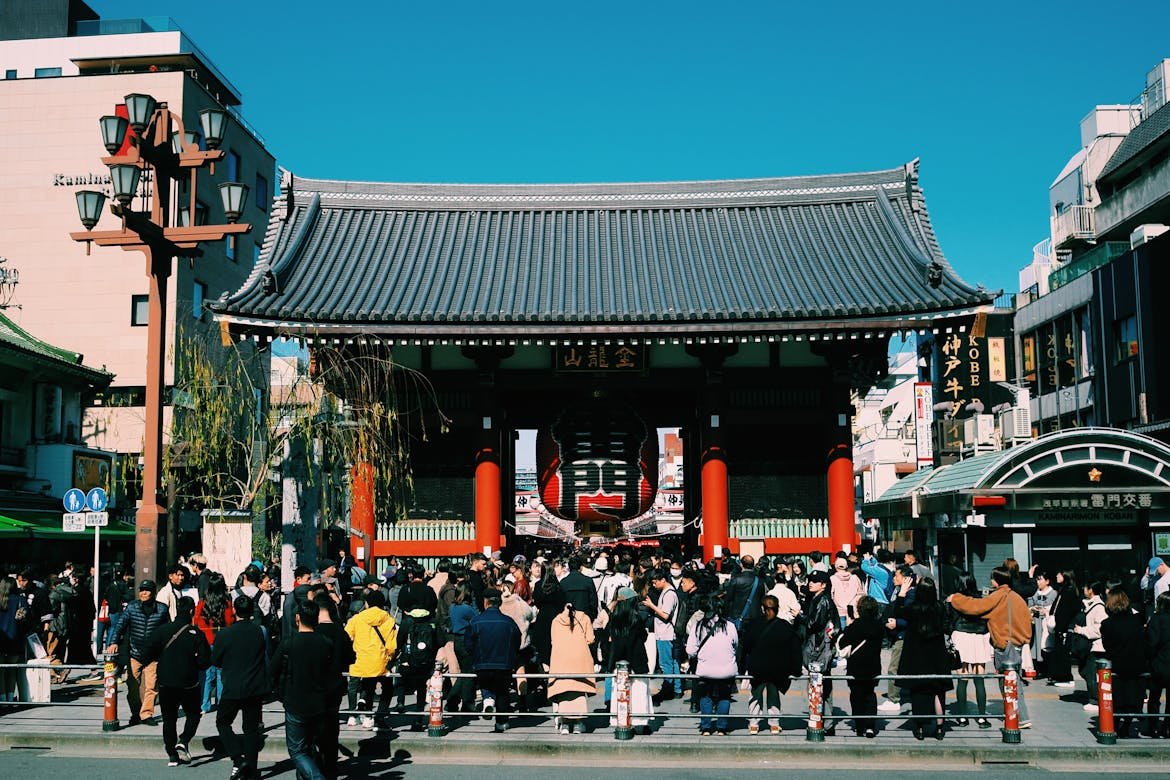

Japan’s government has approved a new tourism promotion plan that sets a formal target to expand overtourism measures to 100 areas by 2030, up from 47 areas in 2025. The decision marks the first time Tokyo has attached a national numerical target to managing tourism pressure at the local level. It also reflects a more direct acknowledgment that record inbound growth is creating friction in some of the country’s most visited districts.
The five-year plan, which runs from fiscal 2026 through 2030, keeps Japan’s broader tourism ambitions intact. The government is still aiming for 60 million inbound visitors and 15 trillion yen in annual visitor spending by 2030. At the same time, officials are now framing congestion, resident quality of life, and visitor behavior as central policy issues rather than side effects of growth.
The numbers explain the shift. Japan recorded an estimated 42.7 million foreign visitors in 2025, a new annual high, while inbound spending reached about 9.5 trillion yen. February alone set a monthly record of roughly 3.47 million arrivals. Those gains have supported the economy, but they have also intensified strain in places such as Kyoto and parts of Tokyo, where large visitor flows are colliding with daily life and transport capacity.
Under the new plan, the government will support local authorities with subsidies and broader use of revenue from the international tourist tax, which is scheduled to rise in July to 3,000 yen per person from 1,000 yen. The policy framework includes measures to reduce road congestion, limit visitor numbers in certain areas, and address inappropriate behavior. Officials are also considering guidelines for public tourism facilities that would allow different pricing for residents and inbound visitors.
A second pillar of the strategy is geographic redistribution. The government wants to improve transport access and encourage more travel to regional destinations, an approach designed to ease pressure on heavily visited urban corridors while spreading tourism revenue more widely. The plan also calls for tighter enforcement against improper private lodging operators, another issue that has become more visible as visitor numbers have climbed.
Japan is also trying to improve the quality of visitor demand, not just the quantity. By 2030, the government wants per capita spending to rise from 229,000 yen in 2025 to 250,000 yen, while repeat international visitors are expected to increase from 27.61 million to 40 million. With arrivals from China under pressure, officials are expected to focus more on travelers from the United States, Europe, Australia, and other markets with higher spending potential and broader regional travel patterns.