Spain’s 10 Blue Flag Beaches for 2026
Spain’s 2026 Blue Flag record confirms its global lead in clean, safe and well-managed beaches. These 10 beaches show the country’s coastal range at its best.
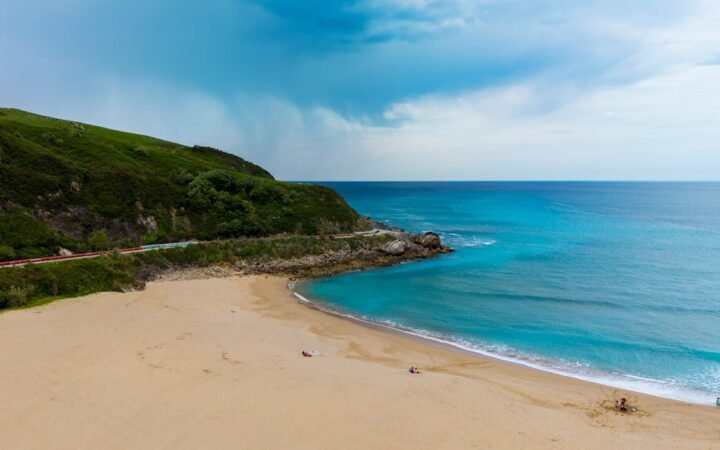
Spain has entered the 2026 beach season with a new national record, earning 794 Blue Flags across beaches, marinas and tourism boats. The country remains the global benchmark for certified beach quality, with Blue Flags recognizing standards such as water quality, safety, accessibility, environmental management and visitor services. Spain’s 677 Blue Flag beaches represent about 15% of all certified beaches worldwide, while the Valencian Community again led the country with 152 beach awards.
That makes choosing only 10 beaches difficult. Spain’s coast stretches from the Atlantic to the Mediterranean and from the Balearic Islands to the Canaries, with urban beaches, wild dunes, island coves and family-friendly resort strands all competing for attention. For 2026, these are 10 of the most interesting Blue Flag beaches to consider – not just because they meet the standard, but because each one shows a different side of Spain’s beach culture.
La Malvarrosa, Valencia
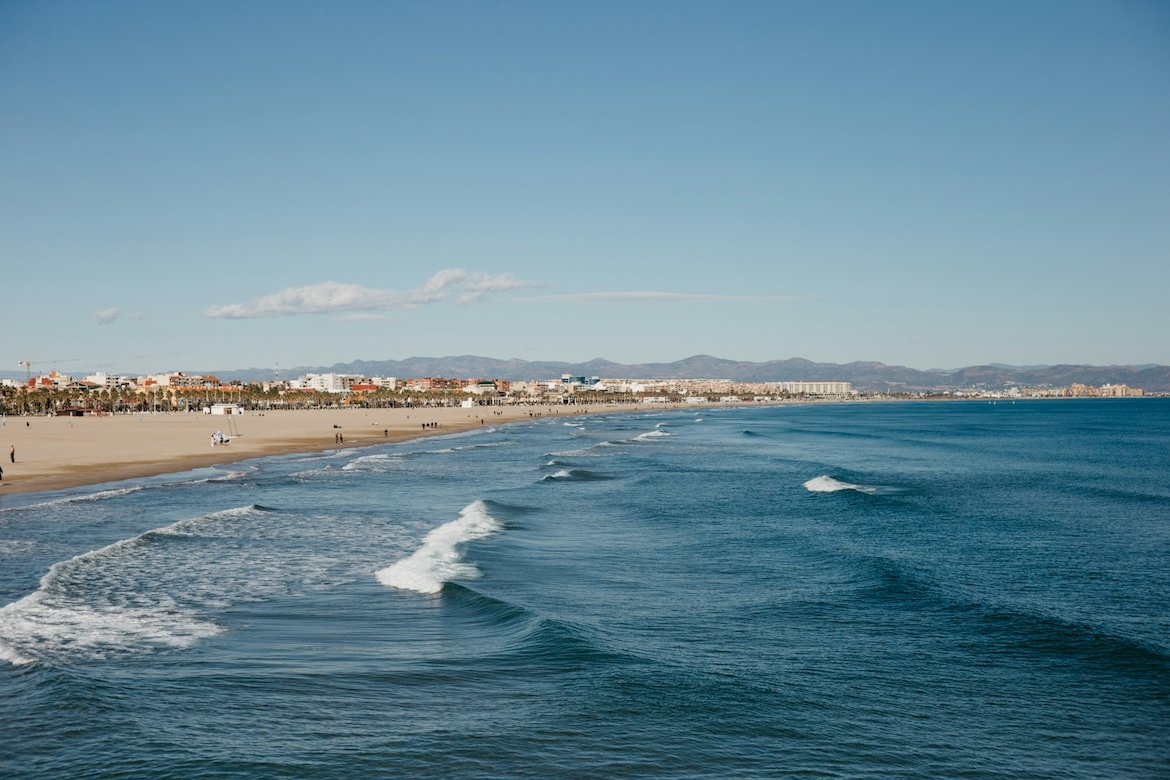
La Malvarrosa is one of Spain’s great urban beaches, a wide and accessible stretch of sand that gives Valencia a direct connection to the Mediterranean. It works especially well for travelers who want a beach day without leaving the city, combining swimming, cycling, restaurants, beach bars and a long promenade in one easy setting.
The beach has a practical advantage: it is simple to reach, easy to understand and built for everyday use. Visitors can spend the morning in Valencia’s historic center or at the City of Arts and Sciences, then move to La Malvarrosa for lunch and an afternoon swim.
Its Blue Flag status reinforces what makes the beach valuable for travelers. La Malvarrosa is not a remote escape, but a managed urban shoreline where water quality, accessibility and safety matter because so many locals and visitors use it throughout the season.
Sant Joan, Alicante
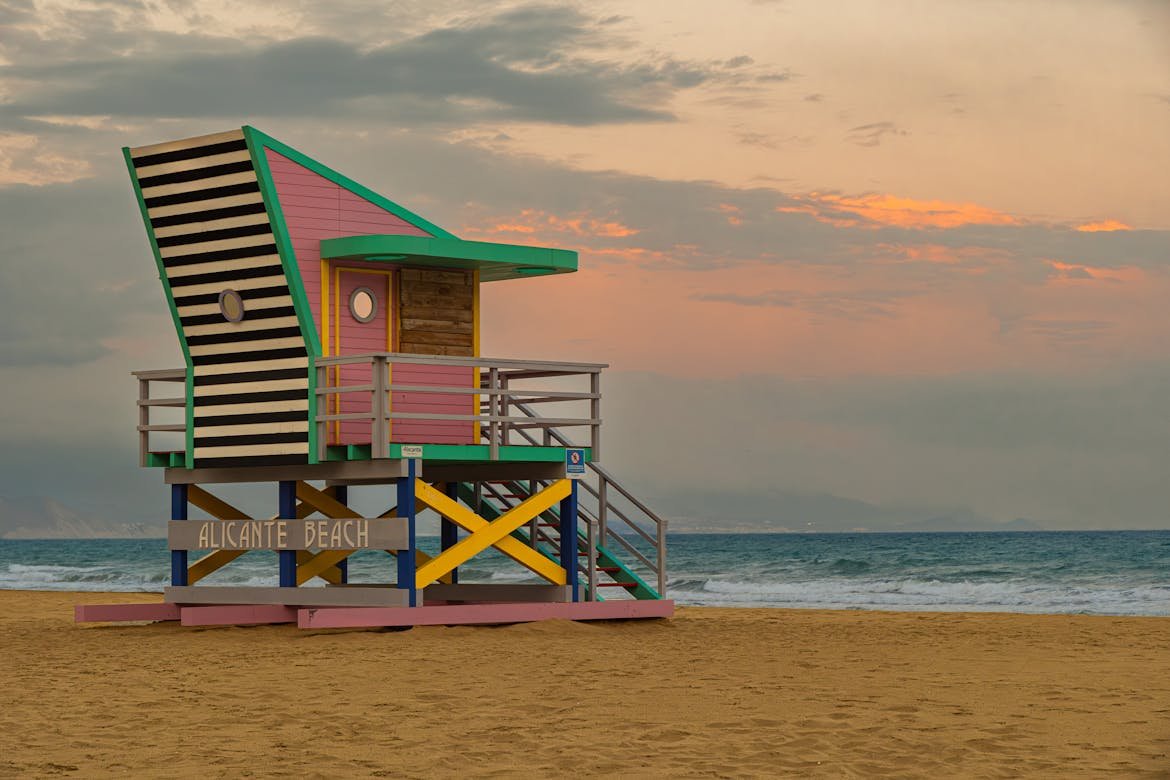
Playa de Sant Joan is one of the Costa Blanca’s most reliable summer beaches, stretching for several kilometers along Alicante’s northern coast. It is broad, bright and easy to enjoy, with enough space to absorb summer crowds while still feeling open.
For families, Sant Joan is especially practical. The beach has a long promenade, nearby restaurants, public transport access, sports areas and shallow sections that make it comfortable for longer beach days. It also gives visitors the option to stay outside Alicante’s center while remaining close to the city.
Sant Joan is part of the Valencian Community’s strong Blue Flag performance in 2026, with Alicante province again standing out as one of Spain’s most awarded coastal areas. For travelers who want a classic Mediterranean beach with strong infrastructure, it is one of the safest choices on the list.
La Fossa, Calpe
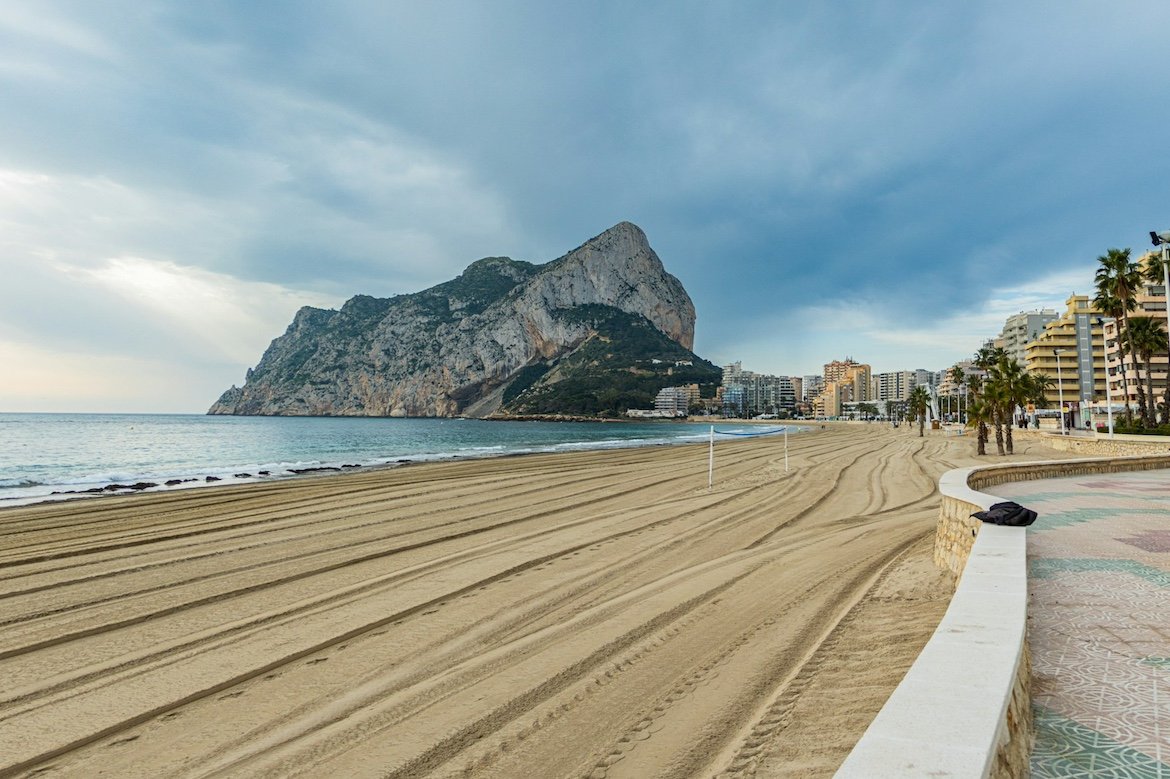
La Fossa is one of Calpe’s signature beaches, framed by the dramatic Peñón de Ifach, the limestone rock that has become one of the Costa Blanca’s defining coastal landmarks. The view gives the beach a sense of place that many resort beaches lack.
The beach itself is easygoing and polished, with clear water, a promenade, restaurants and apartment-style accommodations nearby. It is well suited for families, couples and travelers who want a comfortable base rather than a wild or isolated beach.
Calpe has been especially strong in Spain’s Blue Flag rankings, with several certified beaches and a well-developed coastal tourism offer. La Fossa stands out because it combines those practical standards with one of the most recognizable landscapes on Spain’s Mediterranean coast.
Carrer la Mar, El Campello
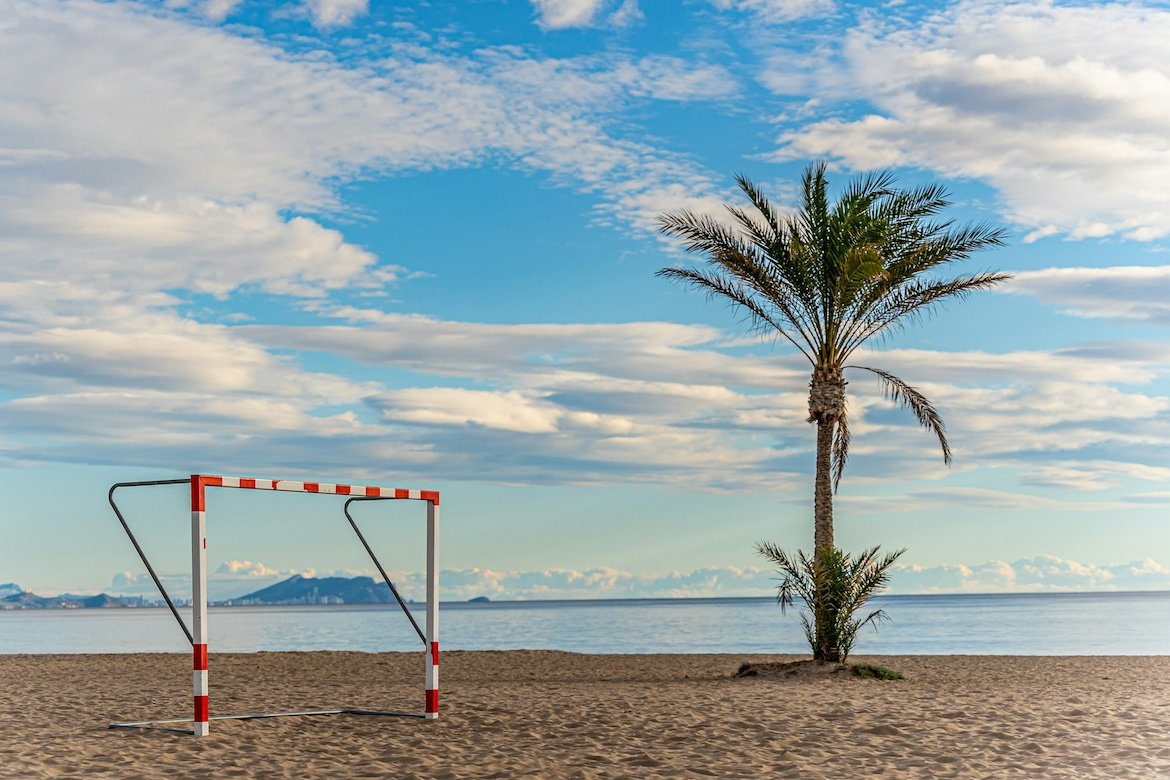
Carrer la Mar in El Campello is a strong choice for travelers who want the Costa Blanca without the intensity of larger resort cities. It has a more local rhythm than some nearby beaches, with a long seafront, restaurants and easy access from Alicante by tram.
The beach is sandy, accessible and well integrated into town life. That makes it appealing for visitors who prefer a beach destination where they can walk from breakfast to the sea, spend the afternoon swimming and stay for dinner along the promenade.
El Campello is also a useful base for exploring smaller coves and coastal trails nearby. Carrer la Mar gives travelers the convenience of a certified town beach while keeping the atmosphere more relaxed than Alicante’s bigger urban stretches.
Playa de Ses Illetes, Formentera
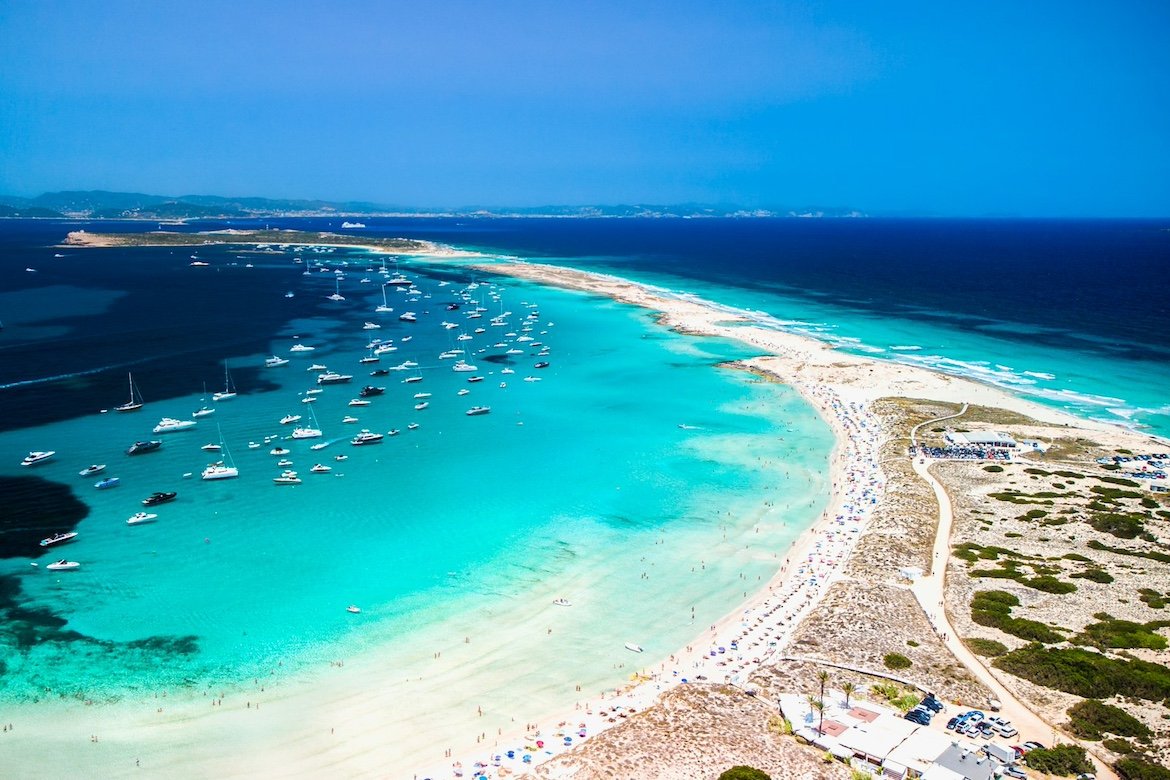
Playa de Ses Illetes is one of Spain’s most famous island beaches, and for good reason. Located on Formentera, it is known for pale sand, shallow turquoise water and a setting that often feels closer to the Caribbean than the western Mediterranean.
Ses Illetes is not the quiet secret it once was, especially in high summer, but it remains one of the Balearic Islands’ most memorable beach experiences. The key is to arrive early, travel light and treat the area with care, since its beauty depends on a fragile coastal environment.
Formentera’s appeal is built on simplicity: bicycles, beach roads, low-rise stays, clear water and a slower pace than neighboring Ibiza. Ses Illetes captures that identity perfectly, making it one of the most iconic Blue Flag beaches to include in any Spain beach list.
Cala Comte, Ibiza
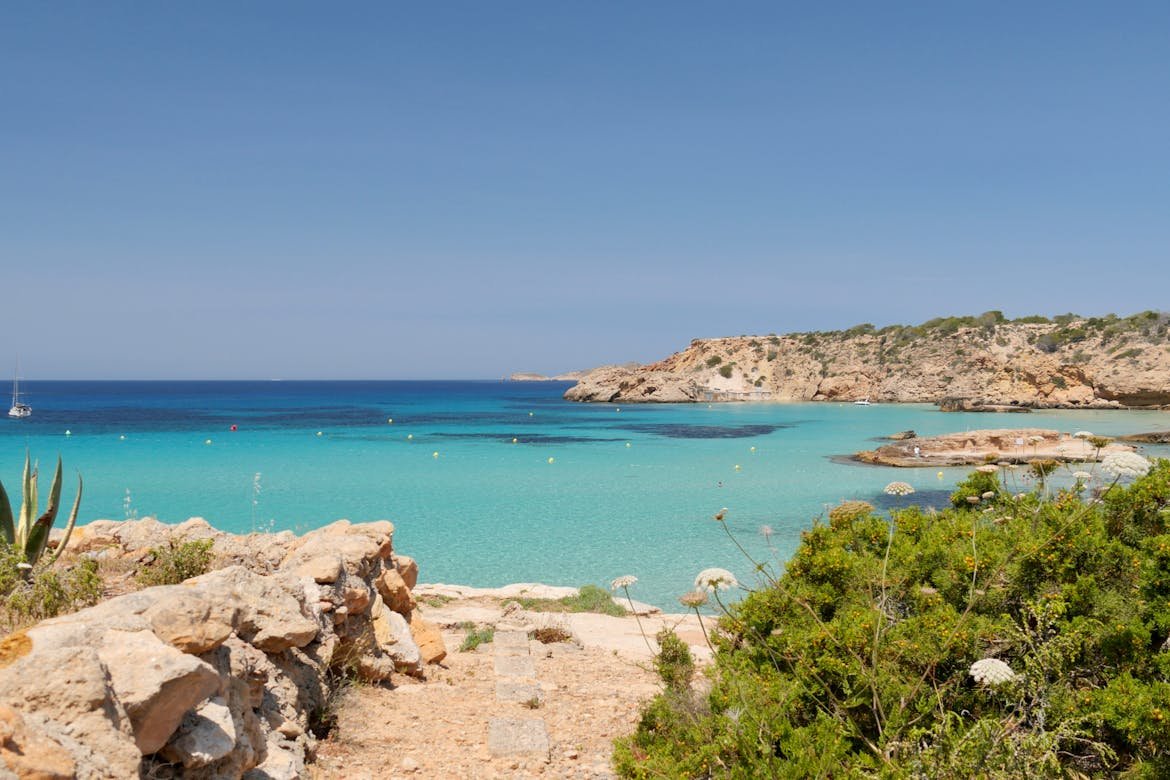
Cala Comte shows a softer, more scenic side of Ibiza, far from the island’s club-focused reputation. The beach is famous for clear water, rocky islets, golden light and sunset views that make it one of the most photographed places on the island.
It is not a large beach, so summer visits require planning. Arriving early is the best way to enjoy the water before the busiest hours, while late afternoon is ideal for travelers who want the classic Ibiza sunset atmosphere.
Cala Comte works because it offers more than a swim. The surrounding rocks, small coves and open views give the beach a layered landscape, making it a strong choice for travelers who want Ibiza’s natural beauty without giving up the island’s social energy.
Playa de la Concha, San Sebastián
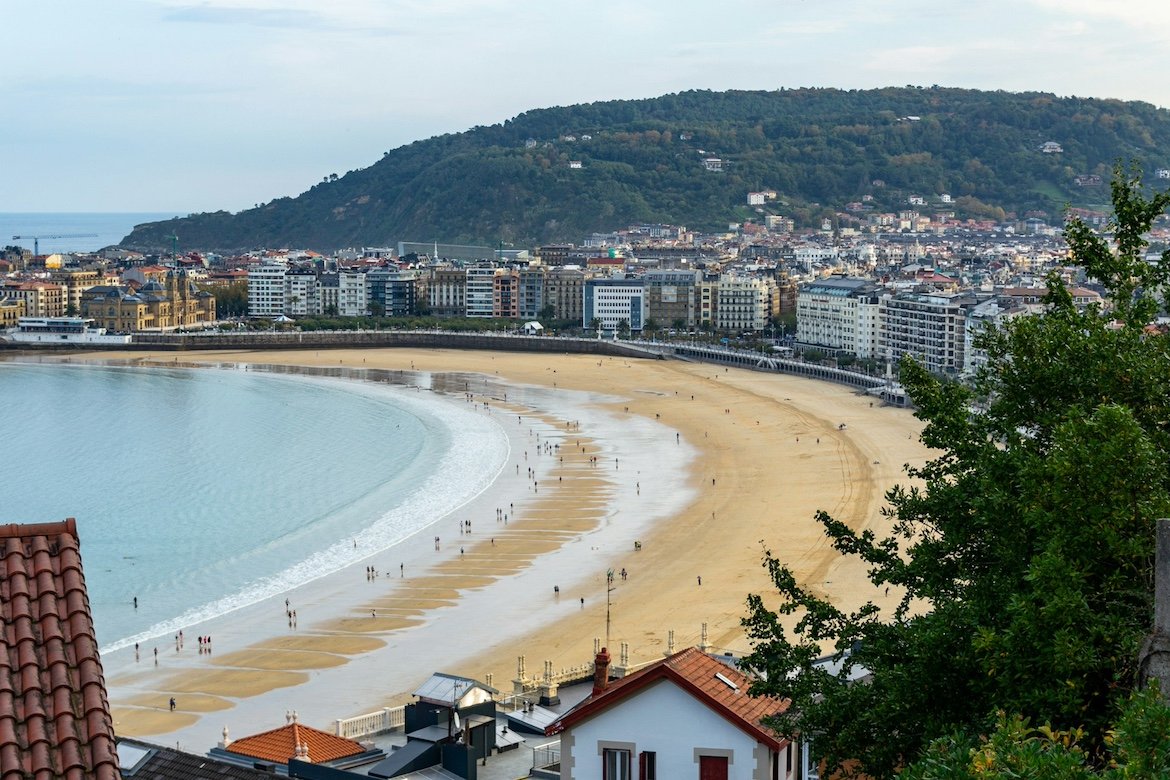
Playa de la Concha is one of Europe’s great city beaches, curving elegantly along San Sebastián’s bay with Monte Urgull and Monte Igueldo framing the view. It feels refined, walkable and deeply connected to the city around it.
Unlike many Spanish summer beaches, La Concha is not defined only by sunbathing. It is part of San Sebastián’s daily life, used for swimming, walking, kayaking and evening strolls along one of the country’s most beautiful promenades.
The beach also pairs naturally with the city’s food culture. Travelers can swim in the morning, eat pintxos in the old town at lunch and return to the bay for a sunset walk. For visitors who want a beach break with urban sophistication, La Concha is hard to match.
Playa de Rodas, Galicia
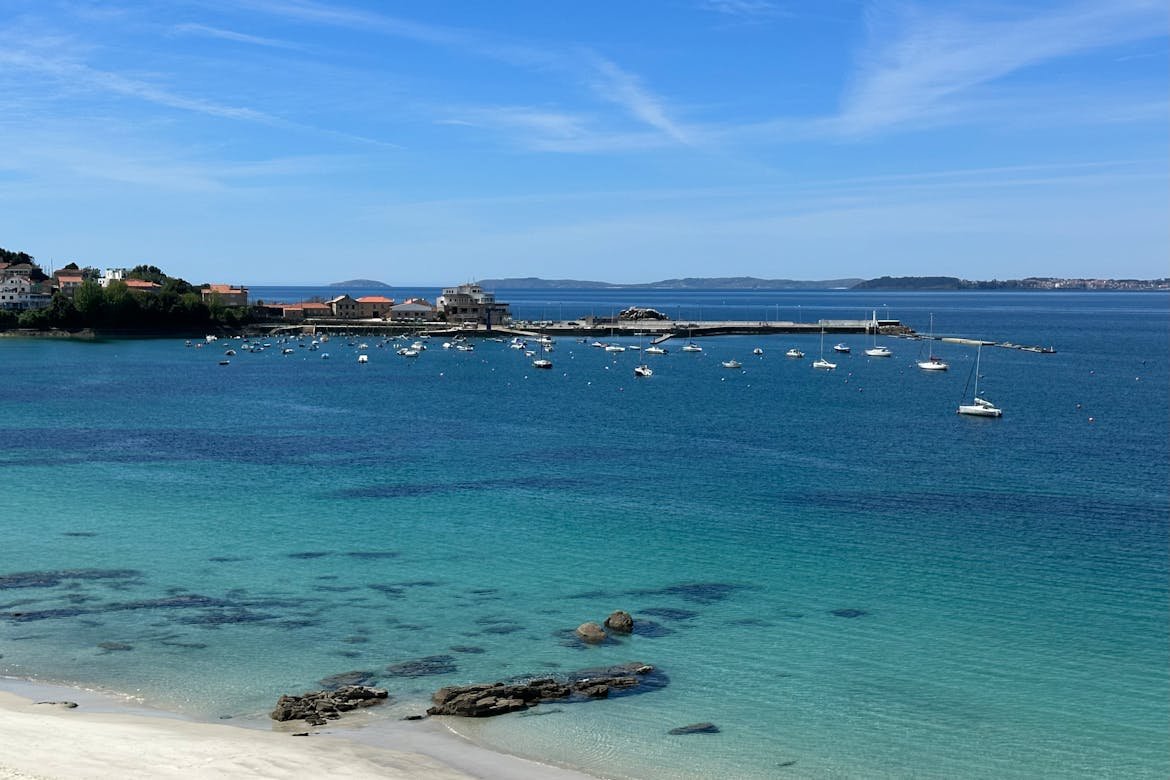
Playa de Rodas, in Galicia’s Cíes Islands, offers a very different version of Spain’s coastline. Instead of Mediterranean heat and resort promenades, it gives travelers Atlantic water, protected natural scenery and a sense of arrival by boat.
The beach is often praised for its white sand and clear water, but its setting is the real draw. The Cíes Islands are part of a protected natural area, which means access is controlled and visitors need to plan ahead during the busiest months.
Rodas is ideal for travelers who want nature to be the main experience. It is less about beach clubs or nightlife and more about walking trails, sea views, birdlife and the feeling of being on a wilder edge of Spain.
Playa de Bolonia, Cádiz
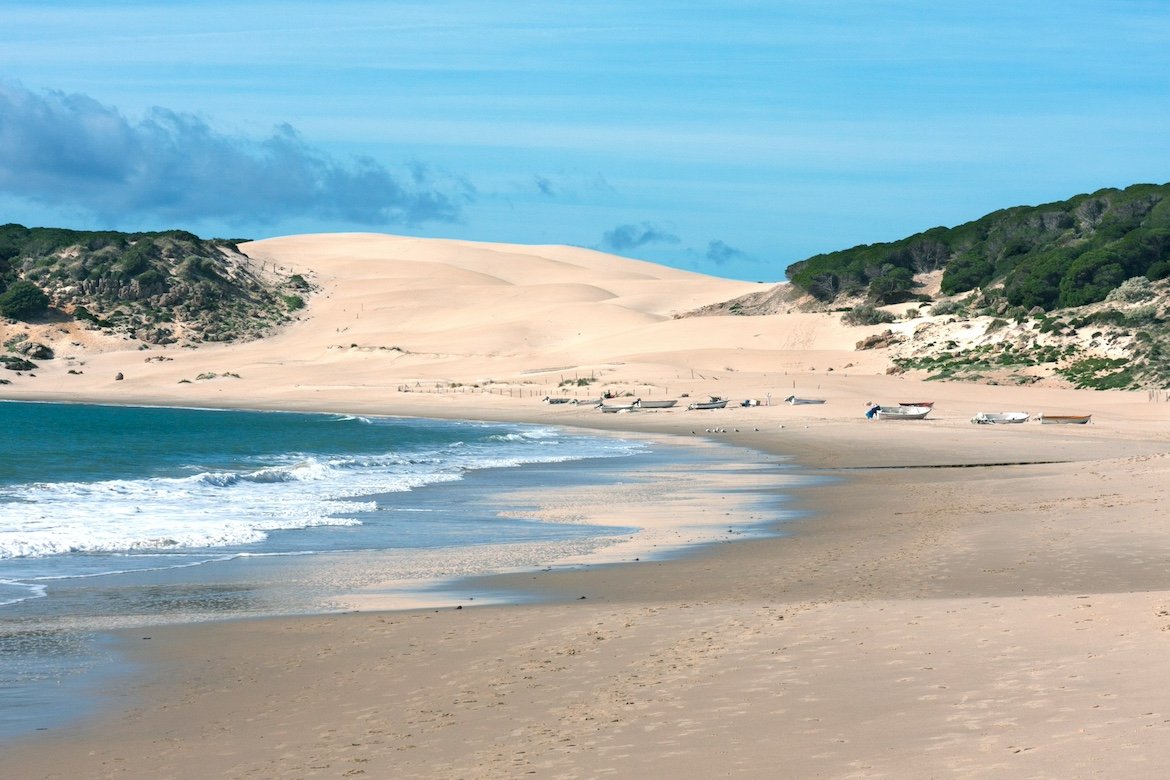
Playa de Bolonia is one of Andalusia’s most distinctive beaches, combining wide sand, dunes, Atlantic wind and the Roman ruins of Baelo Claudia nearby. It feels open and elemental, with a landscape that is much less developed than many Mediterranean resorts.
The beach is especially appealing for travelers who want space. Its setting near Tarifa gives it a windswept quality, and the large dune behind the beach creates one of the most dramatic coastal views in southern Spain.
Bolonia is also a reminder that a beach trip can include history. The nearby archaeological site adds depth to a visit, making it possible to combine swimming, walking and cultural exploration in the same day.
Playa de Sotavento de Jandía, Fuerteventura
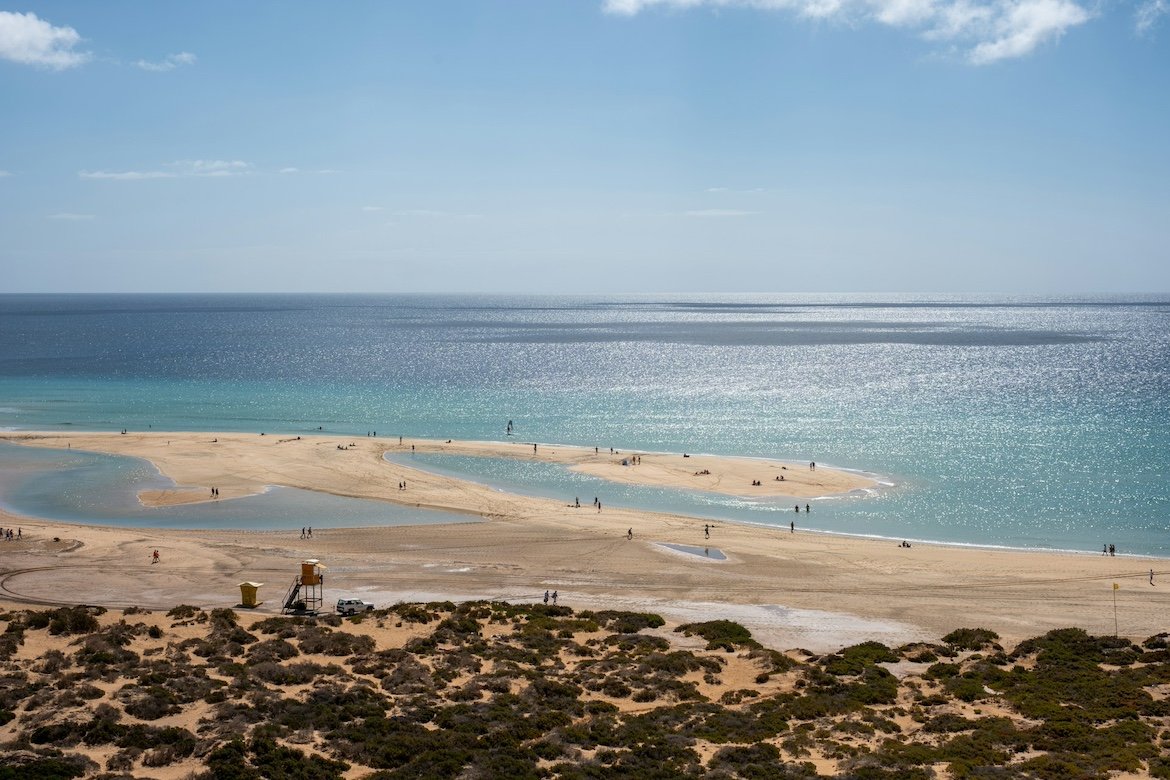
Playa de Sotavento de Jandía is one of the Canary Islands’ most spectacular beaches, known for its long sweep of pale sand, shallow lagoons and wind-shaped landscape. It is especially popular with windsurfers and kitesurfers, but it also works for travelers who simply want a vast, open beach.
Because it is so exposed, Sotavento feels different from the calmer coves of the Balearics or the polished resort beaches of the mainland. The wind, tides and open horizon are part of the experience, giving the beach a wild and cinematic quality.
For summer travelers, Fuerteventura offers a strong alternative to mainland Spain and the Balearics. Sotavento captures the island’s appeal best: spacious, active, sunlit and built around nature rather than density.
Disclaimer: TravelCapybara is an independent media brand owned and operated by NuvexMedia LLC, publishing travel news, destination guides, research, and insights. NuvexMedia LLC may invest in or collaborate with companies across the travel, hospitality, technology, and digital media sectors. These relationships do not influence TravelCapybara’s editorial coverage. While we strive for accuracy, travel requirements, prices, schedules, availability, and local conditions may change without notice. Readers should independently verify information before making travel or purchasing decisions. This content is for informational purposes only and does not constitute professional advice. © 2026 NuvexMedia LLC. All rights reserved.