
European airlines are rapidly adjusting their long-haul strategies as geopolitical tensions in the Middle East disrupt one of the world’s most important aviation corridors. With airspace closures, flight cancellations, and reduced operations at major Gulf hubs, carriers are increasing direct connections between Europe, Asia, and Africa to meet shifting passenger demand.
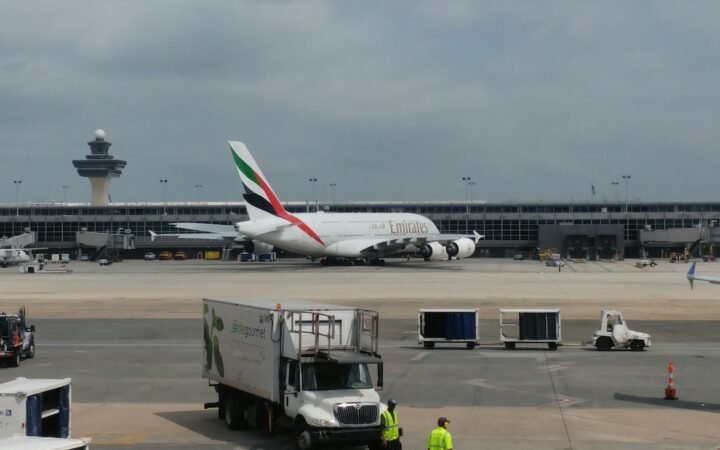
For decades, airports in Dubai, Doha, and Abu Dhabi have served as key transit points linking Europe with destinations across Asia and Africa. The current conflict, however, has significantly reduced capacity through these hubs, prompting both operational challenges for airlines and growing hesitation among travelers to route journeys through the region.
As a result, airlines are accelerating a shift toward point-to-point travel. The change reflects not only short-term disruption but also a broader reassessment of how global air networks function in times of geopolitical instability.
Airlines Reconfigure Networks and Capacity
Major European carriers have responded quickly by adding flights, increasing aircraft capacity, and expanding direct routes. Lufthansa has introduced additional services from Munich to Singapore and expanded its long-haul presence in Africa with extra flights to Cape Town. Austrian Airlines has added multiple flights between Vienna and Bangkok, responding to what it described as a sharp rise in demand.
Air France is deploying larger aircraft on routes to key Asian cities, including Bangkok, Singapore, Delhi, and Tokyo, while also scheduling additional services on some of these routes. British Airways has increased frequencies to Singapore and Bangkok, even as it suspends operations to several Middle Eastern destinations.
The adjustments are not limited to traditional full-service carriers. Airlines across Europe are reviewing route economics and network resilience, seeking to maintain connectivity without relying on transit hubs that have become operationally uncertain.
At the same time, previously planned route expansions are gaining renewed importance. Lufthansa’s new Frankfurt to Kuala Lumpur service, British Airways’ planned return to Colombo, and Virgin Atlantic’s launch of flights to Seoul all align with a growing emphasis on direct long-haul connectivity.
Shifting Passenger Behavior and Long-Term Implications
The surge in direct flights is being driven as much by passenger sentiment as by operational necessity. Travelers are increasingly avoiding routes that involve connections in the Middle East, either due to perceived safety risks or concerns about travel disruptions. In some cases, government travel advisories have reinforced this trend by applying warnings not only to destinations but also to transit points.
This shift is redirecting demand toward alternative regions and routes. Asia remains a strong draw, continuing its recovery from the pandemic, while Africa is seeing steady growth in visitor numbers. Airlines are capitalizing on this demand by strengthening direct links to destinations that can be reached without passing through contested airspace.
However, the rapid reconfiguration of routes presents its own challenges. Adding capacity at short notice requires available aircraft, crew, and airport slots, while longer direct flights can increase operational costs due to fuel consumption and scheduling complexity.
In the longer term, the current disruption may accelerate structural changes in global aviation. Airlines could place greater emphasis on network flexibility, diversify routing options, and reduce reliance on a small number of transit hubs. For passengers, the shift may result in more direct travel options, but potentially at higher prices as airlines adjust to new cost structures.
For now, the industry remains in a period of adjustment. As the situation in the Middle East evolves, airlines are balancing immediate operational needs with longer-term strategic planning, reshaping global connectivity in real time.