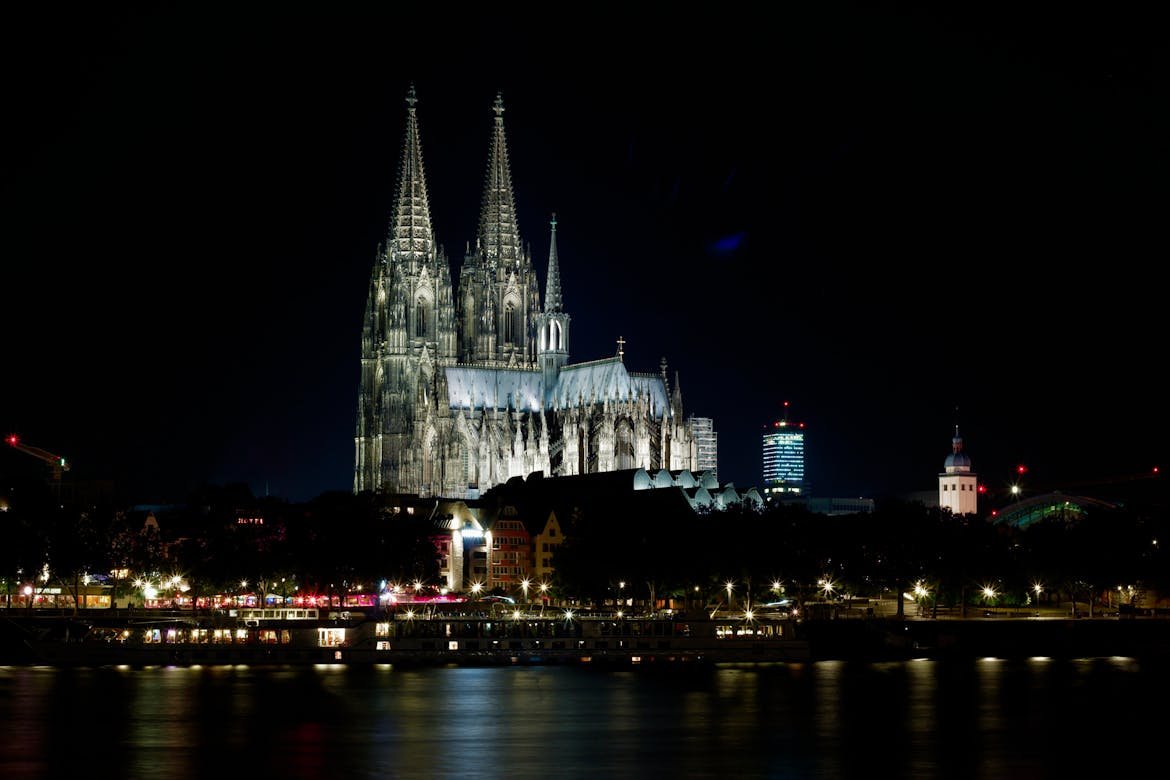

Cologne Cathedral, one of Germany’s most recognizable landmarks and a UNESCO World Heritage Site, will begin charging tourists an admission fee starting in the second half of 2026. The decision marks the end of decades of free entry for visitors exploring the Gothic cathedral, which dominates the skyline of the western German city of Cologne and attracts millions of travelers each year.
Church officials announced the change during a press conference, explaining that the new fee will apply primarily to sightseeing visitors. Entry will remain free for worshippers, churchgoers, and individuals visiting designated prayer areas within the cathedral. The exact price of the admission ticket has not yet been confirmed, but officials say the measure is necessary to ensure the long term financial stability of the historic building.
Cologne Cathedral is widely considered Germany’s most visited landmark, drawing around six million visitors annually. The cathedral’s twin towers rise approximately 157 meters above the city and have stood as a defining feature of Cologne for centuries. Construction on the Gothic structure began in 1248 and continued for more than six hundred years before the cathedral was finally completed in 1880.
Despite the passage of time and the destruction of much of Cologne during World War II, the cathedral survived largely intact and remains one of the few major historic structures in the city that endured the conflict. Today it is regarded as both an architectural symbol of Germany and one of Europe’s most significant religious monuments.
Cathedral administrators say the growing costs of maintaining such a large and historic structure have made the introduction of a tourist admission fee unavoidable. Officials estimate that maintaining and operating the cathedral costs roughly 16 million euros per year, equivalent to about 44,000 euros each day. Expenses include ongoing restoration work, security, staff, and preservation of the cathedral’s intricate stonework and stained glass.
According to church leaders, donations and existing revenue streams are no longer sufficient to cover these rising costs. Financial reserves supporting the cathedral have also been steadily declining in recent years, particularly following disruptions caused by the pandemic. Administrators say introducing a dedicated tourist entry fee is necessary to ensure the cathedral’s long term upkeep without relying entirely on public funding.
Tourists account for the overwhelming majority of visitors entering the cathedral each year, with officials estimating that sightseeing travelers represent roughly 99 percent of foot traffic. For church leaders, this makes a tourism based funding model a logical step as the building continues to function both as a religious site and a major international attraction.
The move also reflects a broader trend across Europe, where historic landmarks and major tourist destinations are increasingly introducing or expanding visitor fees to manage large crowds and cover the growing costs of preservation. As international travel continues to recover and visitor numbers rise, iconic sites like Cologne Cathedral are facing the challenge of balancing accessibility with the financial realities of maintaining centuries old cultural monuments.