Overtourism in Venice has become one of Europe’s most pressing travel issues, and in 2025 the city tried to respond by expanding its day-tripper fee. Introduced over 54 peak days between April and July, the measure targeted visitors who did not book overnight stays. These travelers were required to pay an entry fee – €5 for advance reservations and €10 for same-day arrivals. By the end of summer, the city reported raising about €5.4 million, more than double the revenue from the previous year’s pilot program.
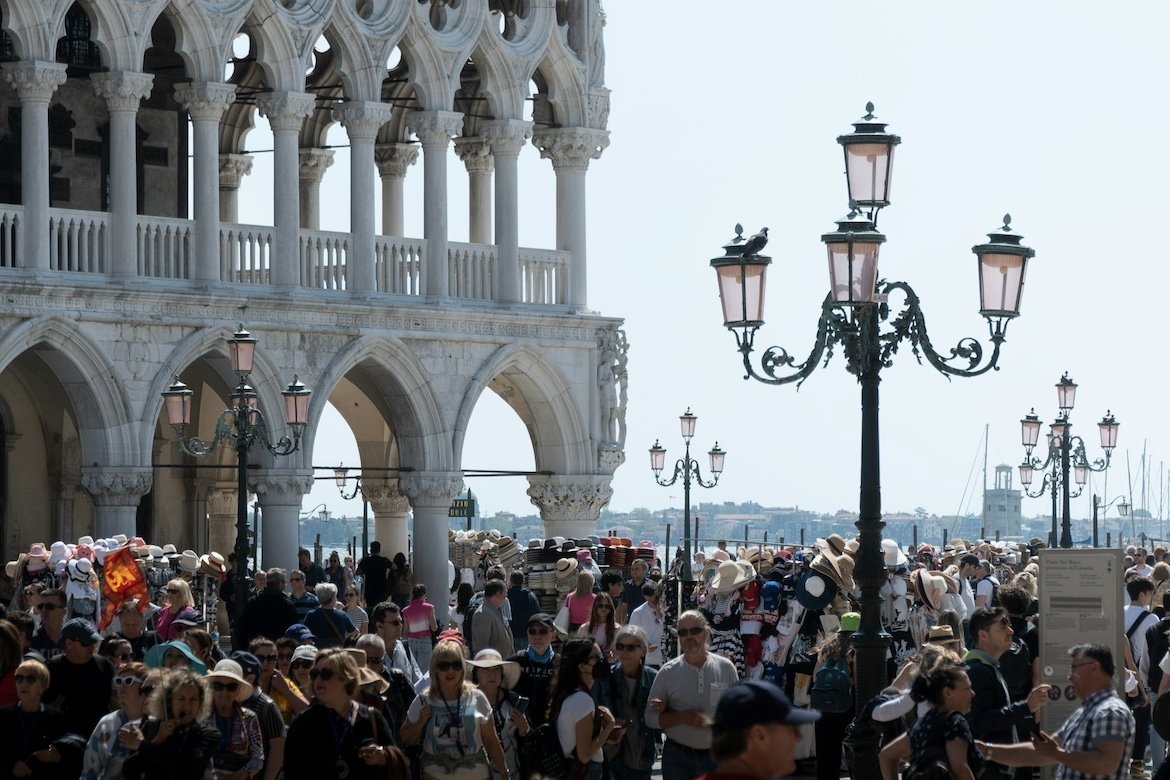
While the fee’s revenue exceeded expectations, it quickly sparked a deeper debate: does collecting more money actually reduce crowds? Despite higher last-minute costs, Venice’s narrow alleys, bridges, and vaporetti remained packed during peak hours, suggesting the measure may have done more to fund city services than to slow down foot traffic.
Did the Fee Change Visitor Behavior?
The main objective of the day-tripper fee was to discourage “hit-and-run” tourism that burdens infrastructure while offering little return to residents. Yet city data shows average daily visitor numbers were only slightly lower than before. On the busiest days, up to 25,000 non-overnight tourists still streamed into the city – roughly half of Venice’s resident population.
The incentive to pre-book entry also fell short. Many travelers simply paid the higher €10 rate rather than plan ahead, reducing the intended effect of spreading arrivals more evenly. Critics argue that without stricter limits or timed-entry systems, the fee alone cannot fundamentally change visitor behavior or relieve overtourism pressures.
New Revenue, Ongoing Challenges
Supporters emphasize that the funds raised are essential for maintaining Venice’s public services. Revenue from the fee supports canal maintenance, waste management, and other infrastructure strained by mass tourism. City leaders view the measure as a first step rather than a final solution and are already considering refinements – such as variable pricing, more enforcement days, and better communication – to achieve greater impact.
At the same time, high-profile events continue to draw attention to the city’s struggles. We recently highlighted the protests surrounding Jeff Bezos’s wedding celebrations in Venice and how they sparked fresh debate over mass tourism in heritage cities. This episode underlines the tension between glamorous global events and the daily lives of residents, showing that fees alone cannot solve overtourism.
Looking ahead, officials are exploring ways to combine the day-tripper fee with broader policies – such as managing short-term rentals, offering incentives for longer stays, and distributing visitors to lesser-known neighborhoods. The 2025 season has provided valuable data that could help build a more sustainable model for tourism, one that protects Venice’s fragile heritage while still welcoming visitors from around the world.