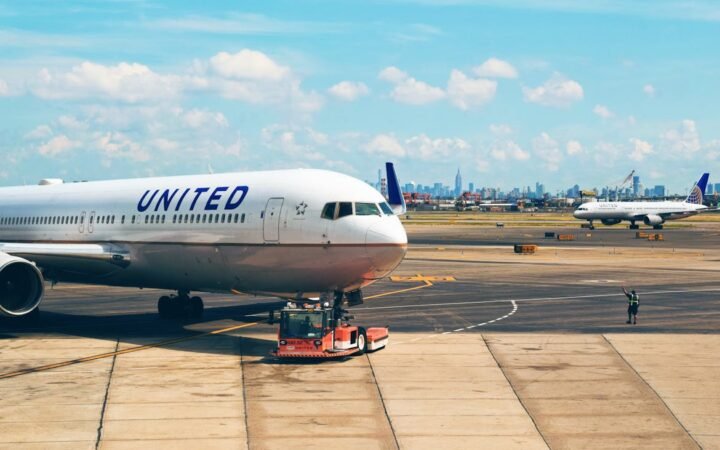
United Airlines recently began equipping its fleet with Starlink satellite Wi-Fi, aiming to offer passengers faster and more reliable internet access while in the air. However, shortly after the initial rollout, some flights have faced service interruptions and slower-than-expected speeds, raising questions about the technology’s readiness for commercial aviation.
The airline’s first flight equipped with Starlink Wi-Fi took place in May 2025, marking a significant step forward in in-flight connectivity. Passengers welcomed the promise of streaming, video calls, and real-time work capabilities at 35,000 feet. Yet, despite the enthusiasm, reports quickly emerged about intermittent disconnections and static service on some flights, prompting United to investigate.
Early Challenges in Connectivity
Starlink’s satellite-based network, developed by SpaceX, is designed to deliver high-speed internet globally via a constellation of low-earth orbit satellites. While the technology is revolutionary, its integration into aircraft presents unique challenges, including maintaining stable connections at high speeds and altitudes, managing satellite handoffs, and avoiding interference.
United Airlines has acknowledged these issues as part of the “early deployment phase,” with technical teams actively working alongside SpaceX to optimize performance. Passengers on affected flights have experienced varying connectivity quality, with some disruptions linked to transitions between satellite coverage areas and atmospheric conditions.
What’s Next for United and Starlink Wi-Fi
Despite the initial hiccups, United remains committed to fully rolling out Starlink Wi-Fi across its domestic fleet by 2026. The airline sees this partnership as a critical upgrade over existing in-flight internet providers, which often suffer from slow speeds and limited bandwidth.
SpaceX continues to enhance Starlink’s technology with software updates and additional satellites planned to increase network capacity and stability. United has promised transparent communication with customers and ongoing improvements, with expectations that service will stabilize as the system matures.
In the meantime, passengers can expect a gradual expansion of Starlink-equipped planes, and United aims to maintain alternative connectivity options on aircraft still transitioning to the new system. The rollout represents a bold step in transforming the passenger experience, signalling a future where reliable broadband connectivity at cruising altitude is the norm rather than the exception.