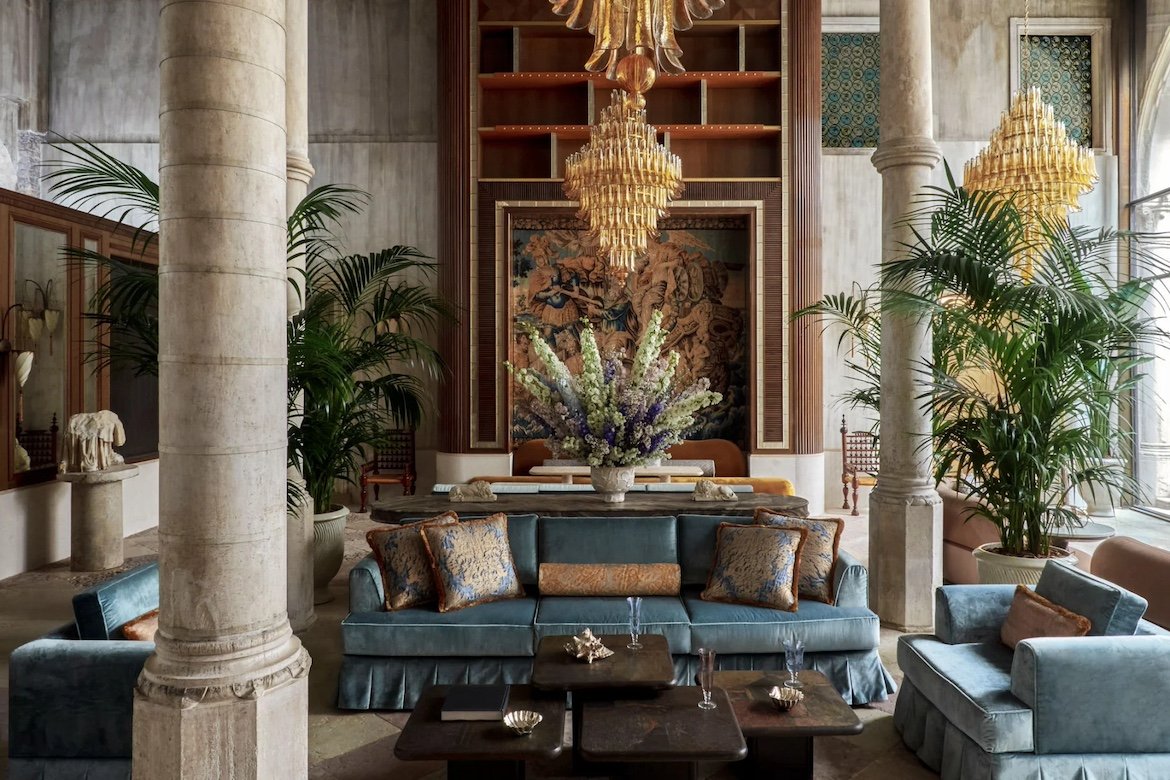

Orient Express has opened its second hotel with the debut of Orient Express Venezia, a 47-key property set inside the 15th-century Palazzo Donà Giovannelli in Venice’s Cannaregio district. The opening gives the brand another high-profile address in Italy and adds momentum to Accor’s effort to rebuild Orient Express as a broader luxury travel platform rather than a heritage rail name alone.
The Venice property follows the opening of Orient Express La Minerva in Rome and arrives as the brand extends into multiple formats at once. In recent years, Accor has been assembling an ultraluxury portfolio under the Orient Express label that now includes hotels, a luxury train, and an upcoming sailing yacht. Venice fits neatly into that strategy because it offers both destination prestige and historical depth, two qualities the company is leaning on heavily as it tries to make the brand feel immersive rather than simply nostalgic.
At the center of the project is the palazzo itself. The building sits in a quieter, more residential part of Venice, away from the most crowded visitor corridors, which gives the hotel a slightly different positioning from the city’s more obvious luxury addresses.
The restoration, which reportedly took eight years, appears designed to preserve that sense of place while translating it into a hotel product. Murals, frescoes, marble fireplaces, Murano chandeliers, and other historical details have been retained, while the interiors fold in contemporary design cues rather than treating the building like a museum piece.
A Brand Expansion Built Around Experience
That approach is consistent with what Orient Express is trying to sell. The company is not just opening luxury hotels. It is trying to construct a travel identity that connects hospitality, transport, and cultural staging under one narrative. In Venice, that means the property is being presented almost as a theatrical setting, with references to the original train carried into details such as the Wagon Bar, an Art Deco-influenced lounge that nods to the classic lounge cars of the old Orient Express.
The food and beverage program also signals how seriously the brand is taking the hotel format. The property includes three dining venues, among them Heinz Beck Venezia, led by the three-Michelin-starred chef, along with an all-day restaurant and a bar designed to extend the brand atmosphere beyond the guest room. Salone Vittoria, an event space accessible by boat, reinforces the idea that the palazzo is meant to function as both hotel and stage.
For Venice, the opening lands at a time when luxury hospitality continues to gravitate toward restored historic buildings that can deliver a stronger sense of uniqueness than new construction. For Accor, the bigger test is whether Orient Express can translate brand romance into repeatable commercial strength across categories.
That challenge should not be understated. Train mythology and hotel operations do not automatically support each other, and luxury travelers tend to be less interested in branding exercises than in whether the service, design, and experience feel coherent. Still, the Venice opening suggests the company is trying to build that coherence carefully, using Italy as the foundation.
If Rome established the hotel concept, Venice gives it more credibility. It shows that Orient Express is not simply reviving a famous name. It is trying to turn that name into a multi-format luxury business with destination hotels at its core.