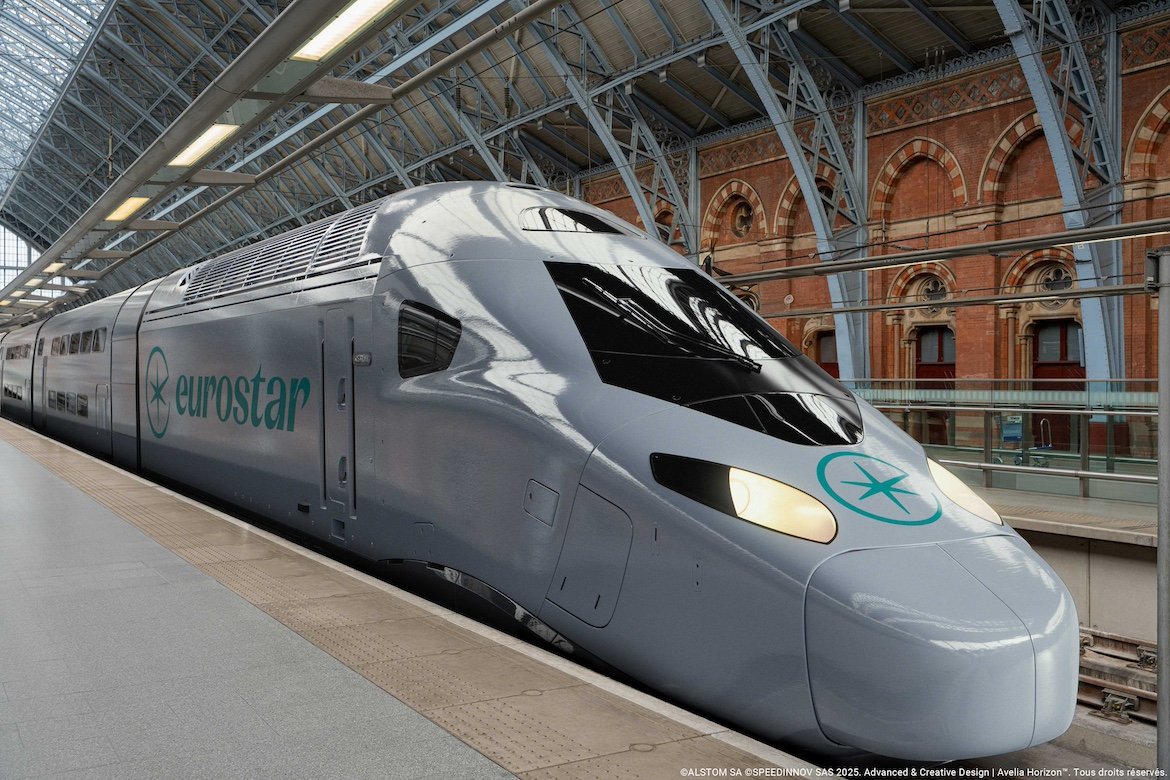
Eurostar has announced its most significant fleet investment to date: a €2 billion contract with manufacturer Alstom for at least 30 double-deck high-speed trains, branded the ‘Celestia,’ with options for up to 50.
Scheduled to enter service in 2031, these are the first double-deck trains designed to operate through the Channel Tunnel and across the UK mainland from London. Each train is designed to carry over 1,000 passengers, about 20 % more seats than Eurostar’s existing sets.
The new fleet helps Eurostar target a ridership goal of 30 million passengers annually and supports the company’s commitment to expand its network and improve capacity as European demand for rail travel climbs.
Engineered for both innovation and compatibility, the Celestia trains are only 16 cm taller than current units to meet the clearance requirements of the Channel Tunnel and UK infrastructure. Despite their size, they will include extra space for wheelchairs, bicycles, and enhanced legroom – while retaining high-speed performance.
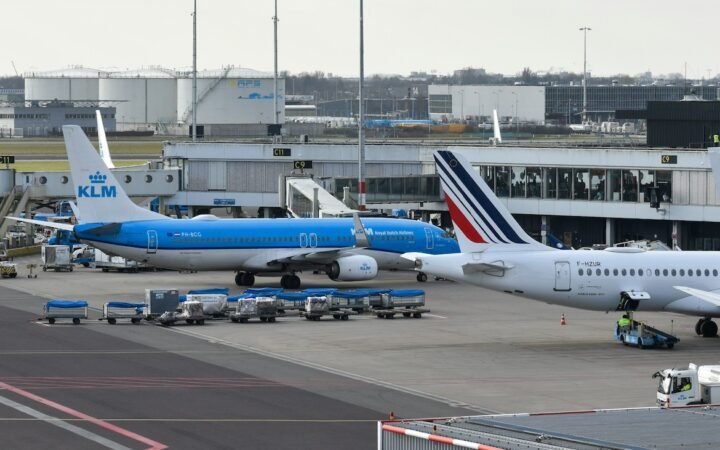
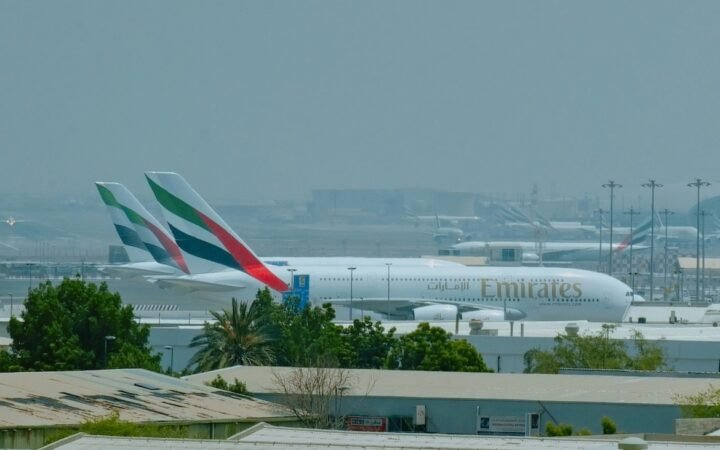
The order also includes modernisation at Eurostar’s Temple Mills depot in London, where maintenance facilities will be upgraded at a cost of €80 million, creating around 350 new jobs. This investment signals a major step toward positioning rail as a viable alternative to short-haul flights, especially as sustainability takes centre stage in international travel.
What It Means for Travellers
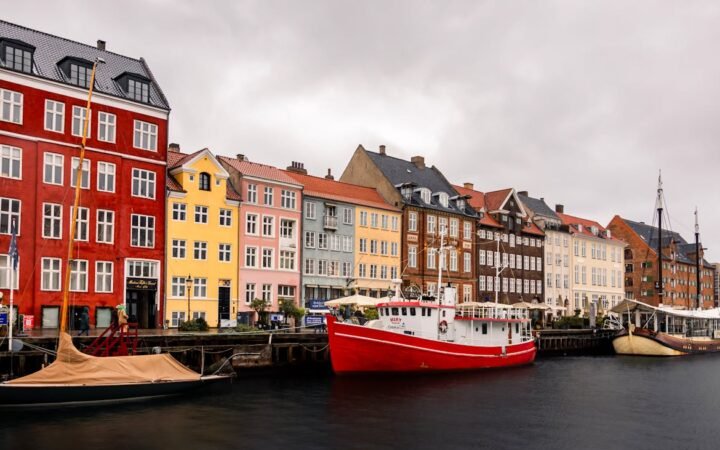
For international travellers and rail enthusiasts, the introduction of double-deck high-speed trains is poised to raise the bar. More capacity means that popular routes between London, Paris, Brussels, Amsterdam, and Hamburg (and future destinations like Frankfurt and Geneva) could become more frequent and comfortable.
With extra seating and innovative interior design, Eurostar envisions improved accessibility, better comfort, and more economical travel – especially as rail competes with air in the under-four-hour range. These changes arrive at a time when the European high-speed network is increasingly looking to cross-border linkages and sustainability credentials to remain relevant.
From a travel-experience perspective, the new trains could ease congestion on the busiest channels and free up capacity for faster, premium services. Passengers may benefit from more flexible ticket options, expanded services, and seating – even on peak routes. The shift toward high-capacity, environmentally friendly train travel aligns with broader trends in sustainable tourism, where rail is increasingly chosen over flights for its lower carbon footprint and city-centre to city-centre convenience.
However, industry observers note that infrastructure readiness remains key. While the Channel Tunnel and its access routes are already built to continental standards, challenges like signalling integration, station capacity and competitor access to essential depots still loom.
Eurostar’s dominance of the Temple Mills facility grants it a strategic advantage, but regulatory decisions and competitive pressure are rising. For now, though, the message for travellers is clear: more seats, bigger trains, and a brighter future for international rail journeys in Europe.
In short, the arrival of Eurostar’s double-deck fleet in 2031 marks a turning point in how travellers will cross Europe by rail. As sustainability, comfort and connectivity converge, rail travel is positioning itself not just as an alternative – but often a superior choice – over short-haul flights. The journey between capital cities is about to get bigger, faster, and greener.