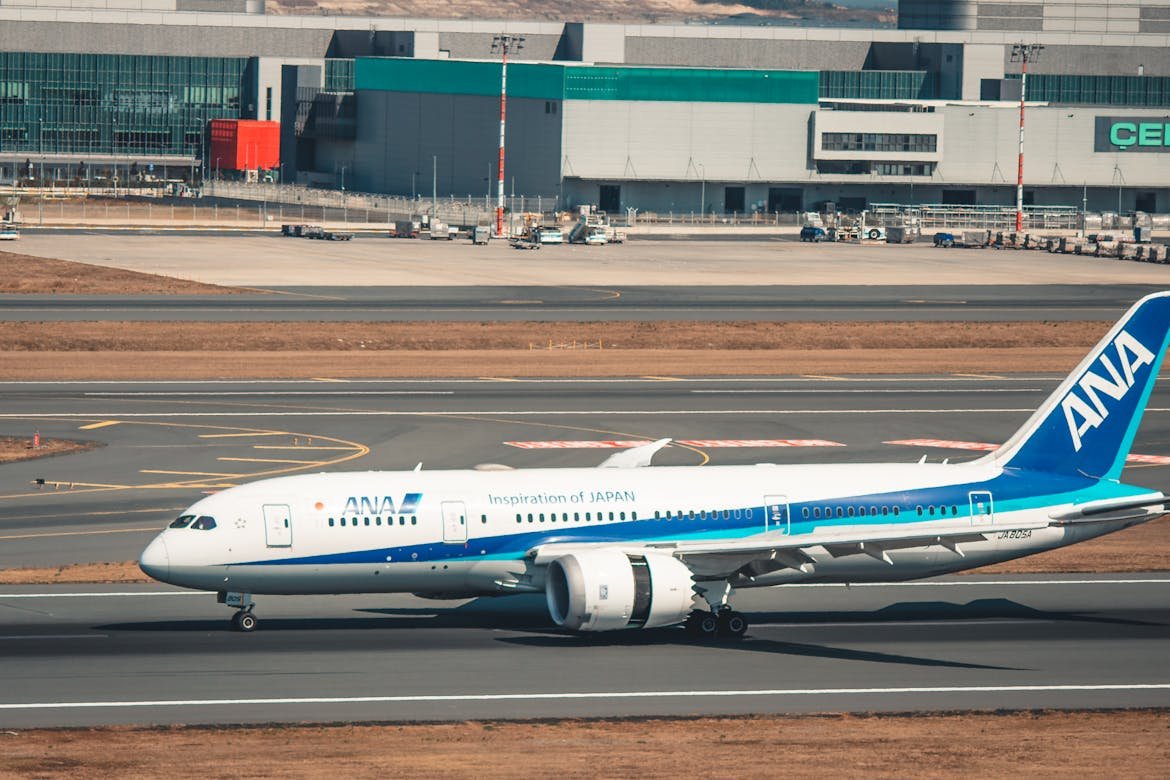

All Nippon Airways (ANA) has taken aviation safety to the next level by implementing the world’s first AI-based turbulence prediction system. Developed in collaboration with BlueWX and Keio University, the model uses deep learning and more than ten years of turbulence data. Operational trials with over 2,500 ANA pilots confirmed the system’s impressive 86% accuracy, prompting its full integration into the airline’s weather data infrastructure.
Harnessing AI to Stay Ahead of Turbulence
Since 2019, ANA and Keio University have collaborated on developing this pioneering technology, eventually forming BlueWX in 2023 to drive commercialization of safety innovations. The AI model operates by analyzing atmospheric patterns and historical turbulence data to deliver forecasts in real time, empowering pilots to adjust routes or altitudes proactively.
In tests that began in 2021, pilots widely praised the technology’s value – highlighting its strong correlation with actual flight conditions and improved reliability over traditional forecasting tools. Turbulence remains one of aviation’s most persistent safety threats, contributing to 30–50% of flight incidents, as noted by the NTSB. In addition to risking passenger injury, turbulence leads to expensive delays, cargo damage, and unscheduled inspections.
By adopting this system, ANA establishes itself as a leader not only in aeronautical safety but also in how airlines embrace AI for risk mitigation. Integrating the model into operations streamlines communication from weather systems into the cockpit, eliminating the latency often associated with centralized weather warnings and enhancing real-time decision-making.
Industry Impact and Path to Broader Adoption
This rollout marks more than a safety upgrade – it represents an industry milestone. BlueWX plans to offer its turbulence prediction system to other airlines and global partners, offering the potential to transform flight safety across carriers worldwide. In an era of increasingly unpredictable weather patterns driven by climate change, the shared benefits are clear.
Furthermore, BlueWX is expanding development into supplementary weather models – like wind speed and direction forecasting – that could optimize routing and reduce fuel burn. These enhancements align with the aviation industry’s long-term decarbonization goals and operational efficiency initiatives.
For passengers, the benefits are tangible: fewer turbulence-related disruptions, smoother flights, and increased reliability. For the airline, predictive turbulence foresight can unlock operational efficiencies through better flight planning, fuel savings from smoother altitude transitions, and fewer delays caused by weather-related issues.
As turbulence episodes grow more frequent and severe, ANA’s adoption of AI forecasting serves as both a bold safety measure and a signal of where aviation technology is headed. In industry terms, it’s the fusion of predictive science and real-world operations – and it may well become a standard for flight safety in years to come.