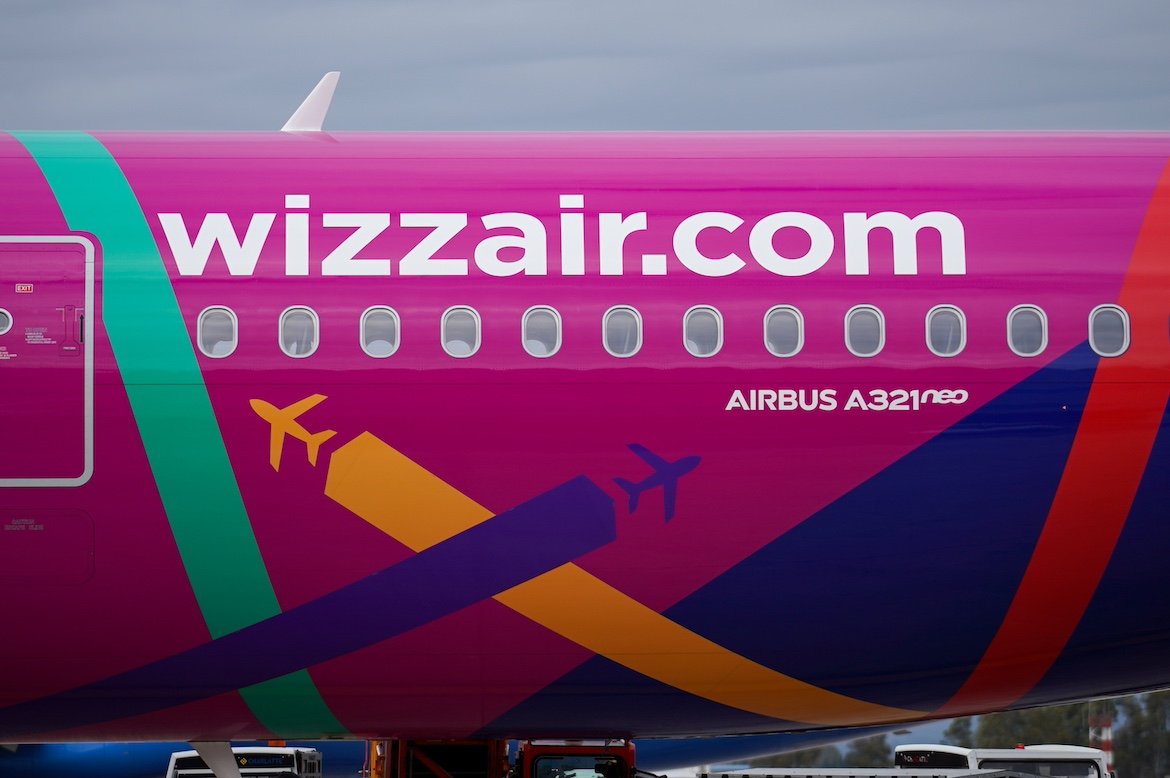

Wizz Air has reached a significant milestone, carrying more than 500 million passengers since launching operations just over two decades ago. Founded in 2004, the airline has grown from a small Central European operator into one of the continent’s largest low-cost carriers.
Its expansion has been driven by aggressive route development, a young fleet, and a strong presence in emerging and secondary European markets.
The carrier’s rise has been particularly rapid in the past decade, fueled by demand for affordable point-to-point travel. Wizz Air now operates hundreds of routes across Europe, the Middle East, and parts of Asia, with a fleet centered on Airbus A320 and A321 aircraft.
This scale has allowed the airline to maintain low fares while steadily increasing capacity, even during periods of industry disruption.
From Ultra-Low-Cost Roots to New Ambitions
While Wizz Air remains firmly rooted in the low-cost model, recent moves suggest a broader strategic vision. The airline has introduced a new product called Wizz Class, aimed at attracting business travelers and passengers willing to pay more for comfort and flexibility. This marks a notable shift for a carrier traditionally associated with no-frills flying.
Wizz Class does not represent a traditional long-haul business class, but rather a premium short-haul experience. Passengers receive enhanced seating, additional personal space, priority services, and greater flexibility with ticket changes. The offering is designed to appeal to corporate travelers who still prioritize efficiency and value but expect a higher level of comfort than standard economy seating.
Balancing Scale, Comfort, and Cost
The launch of Wizz Class reflects broader changes in the European aviation market, where distinctions between low-cost and full-service airlines continue to blur. Business travel demand has gradually recovered, and many companies are seeking cost-conscious alternatives to legacy carriers. Wizz Air appears positioned to capture this segment by offering a simplified premium product without the overhead of traditional business class cabins.
At the same time, the airline continues to focus on fleet efficiency and cost control. Its emphasis on high-density aircraft layouts, fast turnaround times, and ancillary revenue remains central to its business model. The challenge will be integrating premium offerings without undermining the operational simplicity that has fueled its growth.
Reaching 500 million passengers underscores the scale Wizz Air has achieved in a relatively short time. Few European airlines have expanded so quickly while maintaining profitability across multiple markets. As the carrier looks ahead, its success may depend on how effectively it balances mass-market affordability with selective upgrades aimed at higher-yield travelers.
The introduction of Wizz Class suggests that Wizz Air sees opportunity beyond pure volume growth. By refining its product mix while continuing to expand its network, the airline is signaling that the next phase of its evolution will focus not just on how many passengers it carries, but on who those passengers are and what they expect from the journey.