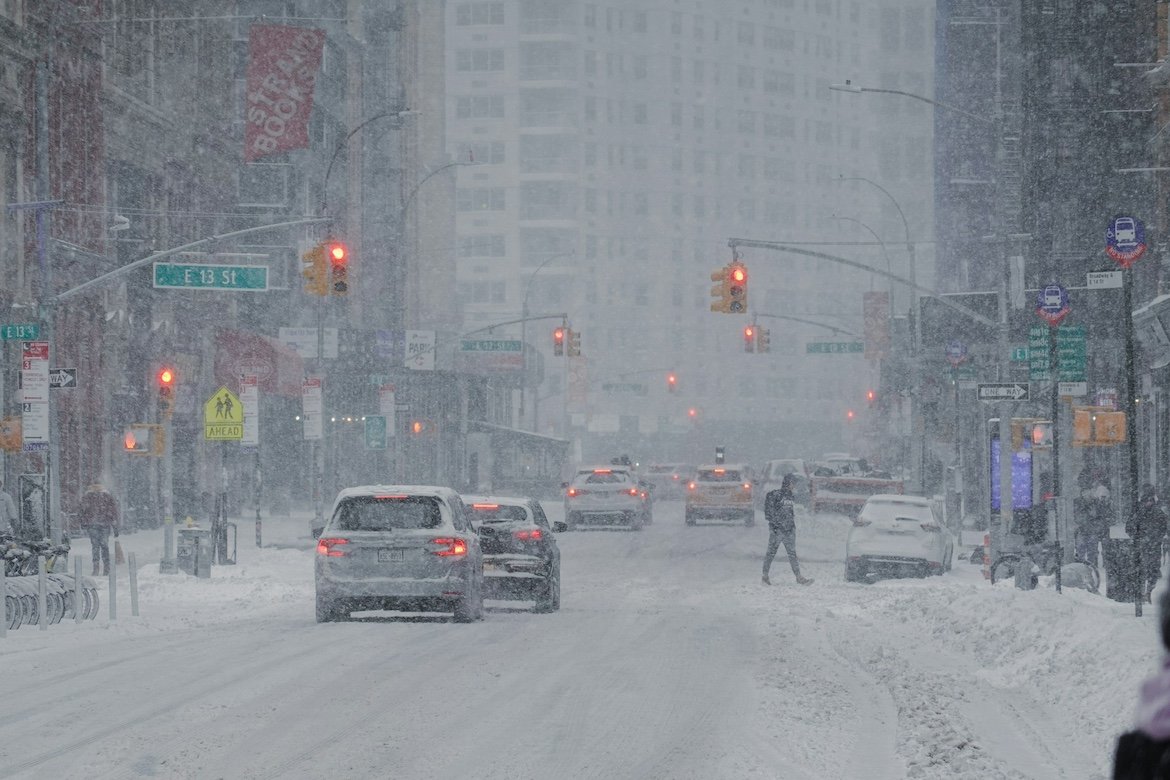

A powerful winter storm is sweeping across the United States, prompting urgent warnings from meteorologists and transportation authorities as millions of travelers brace for dangerous conditions.
The storm, driven by an intense Arctic blast, is expected to stretch over a 2,000-mile corridor from the southern Plains to the Northeast, bringing heavy snow, freezing rain, and record-breaking cold temperatures. Officials say the combination of prolonged snowfall, icy roads, and severe wind chills could make travel extremely hazardous throughout the weekend and into early next week.
The National Weather Service has warned that wind chills could plunge well below zero across large portions of the country, with some northern regions experiencing conditions cold enough to cause frostbite in minutes. Sub-zero temperatures are forecast to spread from the northern Plains into the Midwest, the Ohio Valley, and eventually the East Coast.
In southern states, where winter storms of this magnitude are less common, freezing rain and snow are expected to create especially dangerous driving conditions and strain local infrastructure.
Travel Disruptions and Emergency Measures
Transportation networks are already feeling the impact as airlines, airports, and highway authorities prepare for widespread delays and cancellations. Major cities including Dallas, Chicago, Memphis, Nashville, Washington DC, Baltimore, Philadelphia, and New York are forecast to see significant snowfall, while parts of Texas, Arkansas, Georgia, and the Carolinas face a mix of ice and snow.
Officials have cautioned that driving may become nearly impossible during the peak of the storm, particularly across southern and mid-Atlantic states unaccustomed to sustained winter weather.
Several state governors have declared states of emergency, enabling rapid deployment of emergency services and National Guard units. Airlines have issued travel advisories and are offering flexible rebooking options as conditions deteriorate. Energy providers in colder regions are also urging residents to conserve electricity, warning that heavy snow and ice could trigger power outages at a time when heating demand is at its highest.
A Broad Impact Across North America
Beyond the United States, the cold snap is extending into Canada, where freezing temperatures and snowfall are already affecting eastern and Atlantic provinces. Meteorologists caution that the slow-moving nature of the storm means communities could endure several days of extreme cold even after snowfall ends. In some areas, record-low temperatures are expected to persist well into the following week, compounding risks for travelers and residents alike.
Authorities are urging travelers to reconsider non-essential trips, closely monitor airline updates, and follow guidance from local officials. With conditions expected to evolve rapidly, flexibility and caution are key. For those already on the move, the coming days may test patience as airports, highways, and rail networks work to manage one of the most disruptive winter storms of the season.