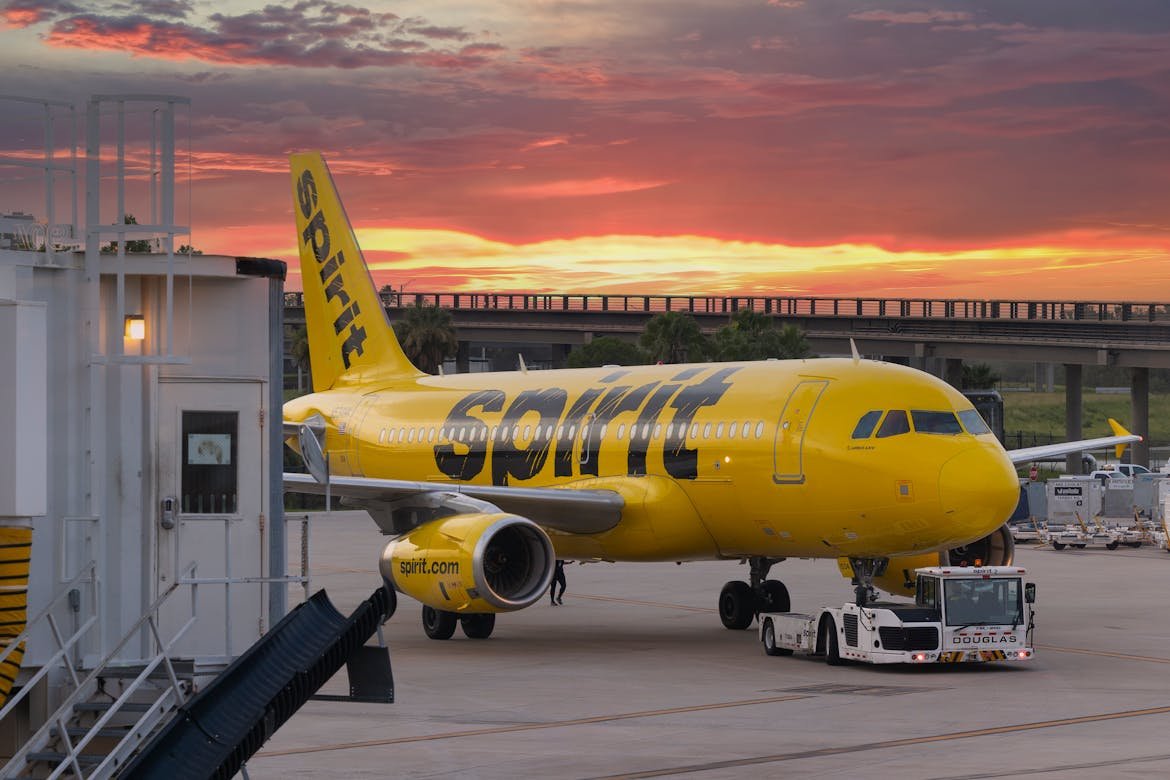
Spirit Airlines is once again under intense financial pressure, just months after emerging from its initial Chapter 11 bankruptcy earlier this year. The budget carrier, long known for its ultra-low-cost model, has failed to stabilize its balance sheet despite restructuring efforts in March 2025.
Now, financial advisers have been brought in to evaluate a second restructuring, raising serious concerns about the airline’s future and the broader low-cost travel sector in the United States.
Mounting Financial Strain
The airline’s cash reserves are shrinking rapidly, with analysts warning of a potential cash burn surpassing $500 million this year. Operating costs, including fuel prices and maintenance expenses, remain high, while Spirit continues to grapple with competitive pressures from rivals like Frontier and larger carriers expanding into the low-cost market. Credit rating agencies have downgraded Spirit, flagging an increased risk of default and a limited window for recovery.
To address these pressures, Spirit is evaluating options such as asset sales, including aircraft and airport gate slots, to generate liquidity. Management is also exploring ways to cut routes that have been underperforming and renegotiate contracts with suppliers. While these measures could buy time, industry experts believe they may not be sufficient without deeper structural changes. The airline has also struggled to win back investor confidence, as many question whether its business model can withstand rising costs and intensifying competition.
Adding to the uncertainty is Spirit’s heavy debt load, much of which was restructured earlier this year but still poses long-term risks. With interest payments looming, the company’s financial breathing room is narrowing. Analysts suggest that without bold action, the airline may find itself unable to maintain regular operations by early 2026.
Exploring Strategic Alternatives
Beyond cost-cutting, Spirit is actively weighing larger moves to ensure its survival. One possibility is seeking a merger or acquisition, an option that has been discussed before but never realized. The collapse of its planned merger with JetBlue earlier this year left Spirit vulnerable and operating without a strategic partner. Industry analysts now speculate that another tie-up, possibly with a different low-cost carrier, could be the airline’s best chance to stay competitive.
For travelers, Spirit’s situation adds uncertainty to an already volatile air travel market. Should the carrier scale back operations or, in a worst-case scenario, cease flying altogether, passengers would face fewer choices and potentially higher fares. Spirit’s model has historically pushed down prices across many U.S. routes, so its struggles could have ripple effects beyond its own customer base.
Despite the challenges, Spirit continues to operate flights and insists it remains committed to affordable travel. Still, the coming months will be crucial. Whether through restructuring, asset sales, or a merger, the airline must make decisive moves if it hopes to avoid collapse and remain a fixture in America’s budget travel landscape.