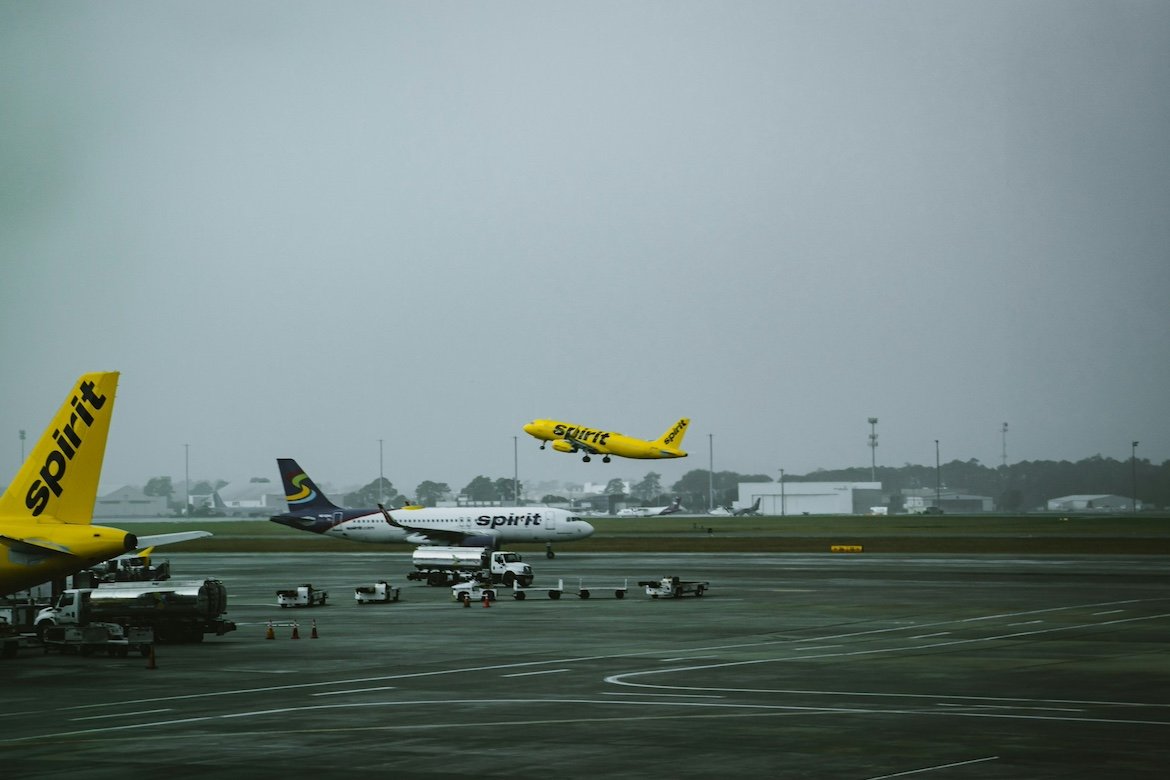

Spirit Airlines is taking another dramatic step in its ongoing restructuring by announcing plans to reduce its fleet by 87 aircraft. The decision, confirmed by the company’s leadership, comes as the carrier struggles to stabilize operations under the weight of bankruptcy protection.
For one of America’s most prominent low-cost airlines, the move represents both a significant cutback and an attempt to rebuild on firmer financial ground.
Fleet Reduction and Strategic Impact
The reduction means Spirit will reject leases on dozens of planes, drastically reshaping its future route map and schedule. By trimming the fleet, the airline hopes to lower operating costs, improve efficiency, and match capacity with current demand levels. Executives argue that operating a smaller, more focused fleet will give the airline greater flexibility as it seeks a path back to profitability.
Spirit’s low-cost model depends on high aircraft utilization and aggressive expansion, but the financial pressures of rising costs and mounting debt have forced a change in strategy. With nearly 100 aircraft leaving service, certain city pairs and less profitable markets are likely to be abandoned. While some routes may be taken over by competitors, others could simply vanish, limiting options for travelers who rely on Spirit’s low fares.
This restructuring phase highlights the challenges for budget carriers operating in a volatile market, where small shifts in costs or demand can create outsized pressures. Spirit’s leadership insists, however, that this is not the end of its ultra-low-cost vision but a recalibration of its growth trajectory.
Broader Challenges and Future Outlook
The fleet cuts also raise questions about Spirit’s long-term competitiveness. Other low-cost carriers, including Frontier and Allegiant, continue to grow aggressively, filling the gaps left behind by Spirit’s pullback. Industry analysts warn that downsizing on this scale could make it harder for Spirit to quickly bounce back when demand recovers fully.
Passengers, meanwhile, face uncertainty as flight schedules are adjusted. Many travelers have come to rely on Spirit for budget-friendly fares, particularly on routes to leisure destinations in Florida, the Caribbean, and Latin America. With fewer aircraft available, those options will shrink, and prices across the market could rise.
This isn’t the first major cutback Spirit has announced in recent months. We recently wrote about this in our article on Spirit Airlines staff furloughs, where workforce reductions were highlighted as a key part of restructuring. Now, with the fleet reduction, it is clear the company is pursuing a comprehensive reset, cutting both operational capacity and staffing levels in tandem.
Despite the turbulence, Spirit maintains that it intends to remain a key player in the U.S. low-cost market. Executives continue to emphasize their commitment to offering affordable travel once the restructuring is complete. Whether the airline can achieve this balance while operating with a smaller fleet remains to be seen, but its future will depend on careful execution and a more disciplined approach.
For now, Spirit Airlines passengers, employees, and industry watchers are left to monitor how these deep cuts reshape not just the airline but the competitive landscape of low-cost travel in the United States.