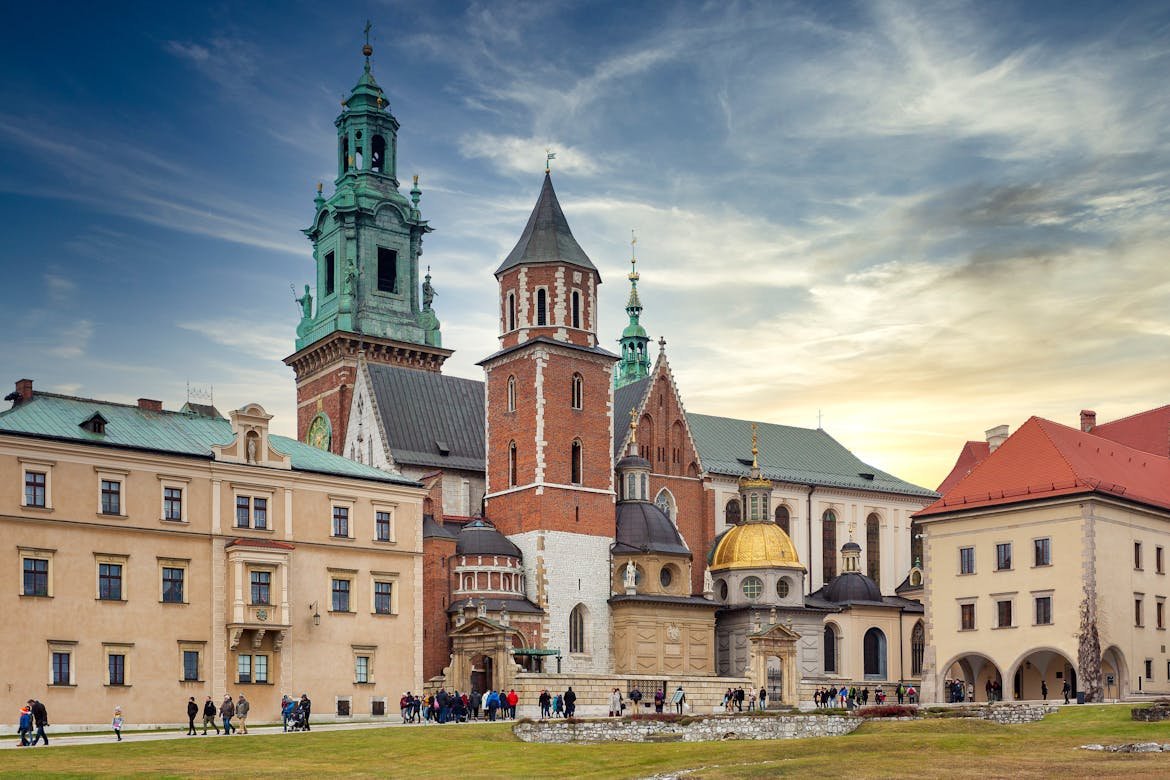

Krakow and Warsaw have emerged as the two best cities in Europe for remote work, according to a new ranking by PlayersTime, reinforcing Central and Eastern Europe’s growing appeal for digital nomads seeking lower costs without sacrificing infrastructure or quality of life.
The study assessed 35 of Europe’s most visited cities using a mix of practical factors that matter most to remote workers: accommodation costs, food prices, internet speed and cost, public transport affordability, and safety. The results suggest that while Western and Northern Europe continue to dominate in visibility and prestige, they are increasingly being undercut on value by cities farther east.
Krakow took the top spot with 161 points out of 175, helped by a strong safety score, low food costs, and particularly affordable internet. Monthly expenses there were estimated at around €1,423, placing it in the middle of the pack on absolute cost but well ahead on overall balance. The city’s combination of livability, walkable urban form, and relatively low day-to-day expenses appears to have pushed it above better-known remote work hubs.
Warsaw ranked second, with lower estimated monthly costs of about €1,265 and a similarly strong safety profile. While Krakow scored better overall because of its stronger lifestyle and cost balance, Warsaw stood out for offering some of the most affordable combined expenses for housing, transport, food, and internet among all cities analyzed. Together, the two Polish cities point to a broader regional advantage: remote workers are increasingly finding that the best value in Europe lies outside the continent’s traditional big-ticket capitals.
Budapest placed third, followed by Prague and Tallinn, giving Central Europe four of the top five spots. Madrid, Seville, Lisbon, Dubrovnik, and Porto rounded out the top 10. The pattern is notable. Cities that performed well were not necessarily the cheapest in absolute terms, but they offered a more compelling mix of affordability, safety, and usable infrastructure than many higher-cost destinations.
The contrast with Western Europe was sharp. Dublin, Reykjavik, and Amsterdam ranked among the most expensive cities overall, while London stood out for having the highest public transport costs in the survey. Prague, by comparison, offered the cheapest monthly transit pass among the ranked cities. Dubrovnik posted the highest safety score, while Lyon ranked lowest on that measure.
For digital nomads, the findings reflect a clear market shift. Remote work destinations are no longer being judged only by aesthetics, climate, or visa access. Cost efficiency, connectivity, and daily practicality are becoming decisive factors. On those measures, Krakow and Warsaw now look less like underrated alternatives and more like Europe’s new benchmark for remote work.
Europe’s Best Cities for Digital Nomads in 2026
- Krakow, Poland
- Warsaw, Poland
- Budapest, Hungary
- Prague, Czech Republic
- Tallinn, Estonia
- Madrid, Spain
- Seville, Spain
- Lisbon, Portugal
- Dubrovnik, Croatia
- Porto, Portugal