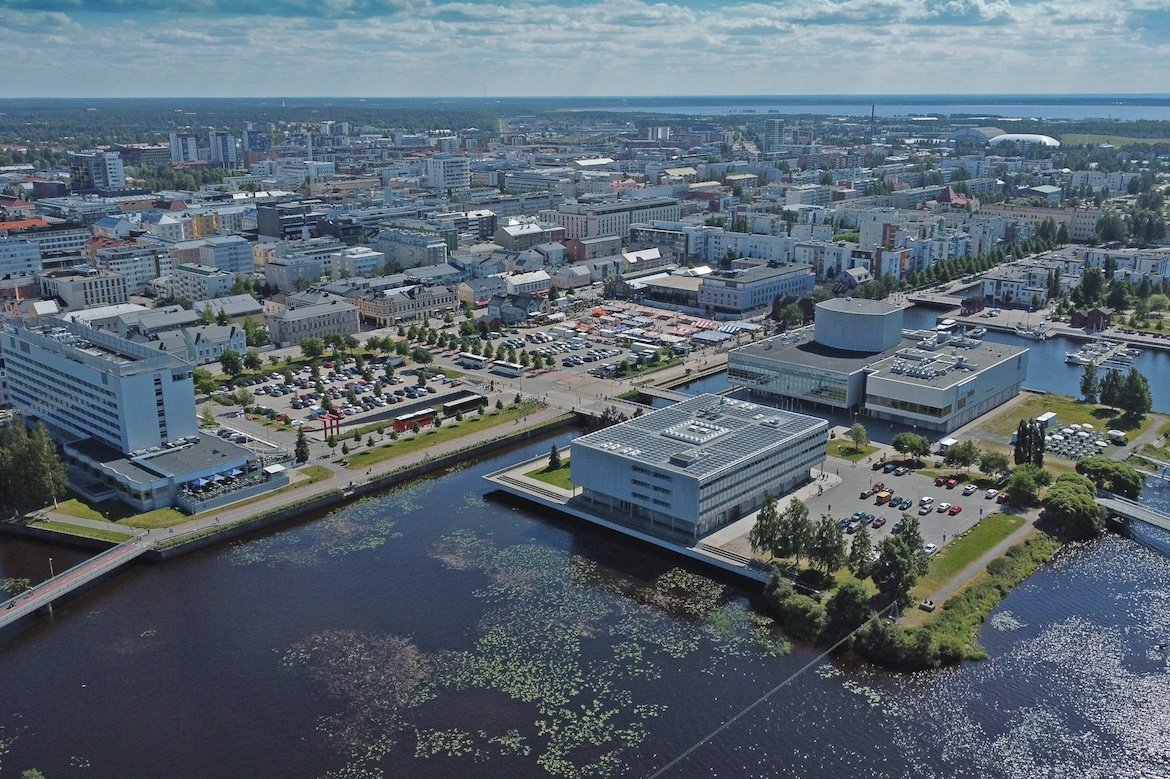

Oulu, a coastal city in northern Finland, has officially taken on the title of European Capital of Culture for 2026, marking a major moment for both the city and the wider Arctic region. Following an opening festival earlier this year, Oulu begins a twelve-month program designed to showcase cultural innovation, Indigenous heritage, and the realities of life shaped by extreme seasons.
The designation places Oulu alongside previous title holders such as Nova Gorica in Slovenia, Gorizia in Italy, and Chemnitz in Germany, while sharing the 2026 spotlight with Trenčín in Slovakia.
Long known for its technology sector and proximity to nature, Oulu is using the Capital of Culture year to redefine itself as a creative hub of the north. Nearly 500 events are planned across the city and surrounding areas, with programming built around long-term urban and cultural development rather than a single festival year. The goal is to strengthen local creative industries, attract international visitors, and leave a lasting cultural legacy well beyond 2026.
Climate, seasons, and art in the Arctic north
A central theme of Oulu 2026 is climate change, interpreted both environmentally and culturally. In June, the Climate Clock art trail will launch with seven site-specific installations by Finnish and international artists. These works explore melting ice, fragile ecosystems, and the passage of time in a warming Arctic environment, using Oulu’s public spaces as an open-air gallery.
Seasonal extremes also play a key role in the program. During winter, events like the Nallikari SnowFest invite artists to create large-scale snow sculptures on the frozen coast, while Frozen People, an electronic music festival held on the frozen sea, blends contemporary culture with Arctic conditions.
In summer, Oulu celebrates near-endless daylight with events such as a midnight sun run in July, offering distances from short races to a full marathon under glowing northern skies. As autumn arrives, the Lumo Art and Tech Festival in November brings digital installations and light-based works into the city’s darkening streets.
Food culture is woven throughout the year via the Arctic Food Lab, which highlights northern ingredients and local traditions through tastings, workshops, and culinary events that connect climate, culture, and everyday life.
Sámi culture and a broader European role
Sámi culture holds a prominent place in Oulu’s Capital of Culture program. Through opera, exhibitions, and contemporary art, Indigenous voices from across northern Finland, Sweden, Norway, and parts of Russia are given an international platform. Productions such as the opera Ovllá explore Sámi history and the lasting effects of forced assimilation, while the Sápmi Triennial at Oulu Art Museum presents both modern Sámi art and traditional handicrafts.
Beyond Oulu itself, the European Capital of Culture title reflects a wider ambition to shift cultural attention northward. By emphasizing collaboration, sustainability, and regional identity, Oulu 2026 positions northern Finland as an active contributor to Europe’s cultural landscape. The year is not just about attracting visitors, but about reshaping how Arctic cities are perceived, lived in, and celebrated across the continent.