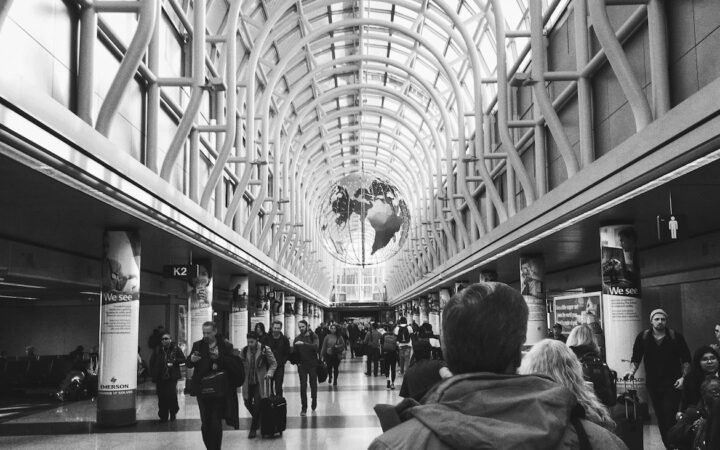
Chicago’s O’Hare International Airport, one of the world’s busiest aviation hubs, has officially broken ground on a major new infrastructure project. Mayor Brandon Johnson, alongside aviation officials and airline leaders, marked the start of construction for Concourse D, a $1.3 billion satellite terminal that marks O’Hare’s first major concourse addition in over 30 years.
Slated for completion in late 2028, Concourse D will feature 19 new gates – designed for narrow-body jets but adaptable for wide-body aircraft – and will be connected to United’s existing Concourse C via a pedestrian bridge. The new facility forms the first phase of a larger modernization effort known as O’Hare 21, which aims to transform the entire airport complex over the next decade.
A Gateway Designed for the Next Generation of Travel
The new Concourse D represents a sweeping leap forward in passenger experience and operational capacity. The concourse will span roughly 590,000 square feet and house 20,000 square feet of lounge space along with 30,000 square feet dedicated to retail and dining. A standout architectural feature is a soaring 40-foot-high atrium adorned with an oculus to bring natural light into the space, creating an inviting and airy ambiance.
The design incorporates tree-like structural columns – a deliberate nod to the former apple orchard that once occupied the site – designed by Skidmore, Owings & Merrill in collaboration with Ross Barney Architects, Arup, and Juan Gabriel Moreno Arquitectos. Interior planning also includes a dedicated children’s play area, modern amenities, and infrastructure upgrades such as a new central cooling plant, with additional airfield utility improvements expected.
Chicago’s aviation commissioner emphasized that Concourse D alone will generate more than 3,800 construction jobs – an economic boost to the region. The project stands as a key part of ORDNext, the initial phase of the Terminal Area Plan under the O’Hare 21 umbrella. Following this, the plan calls for a new Global Terminal replacing Terminal 2, construction of a second satellite concourse (Concourse E), and an underground tunnel to seamlessly connect the sprawling campus.