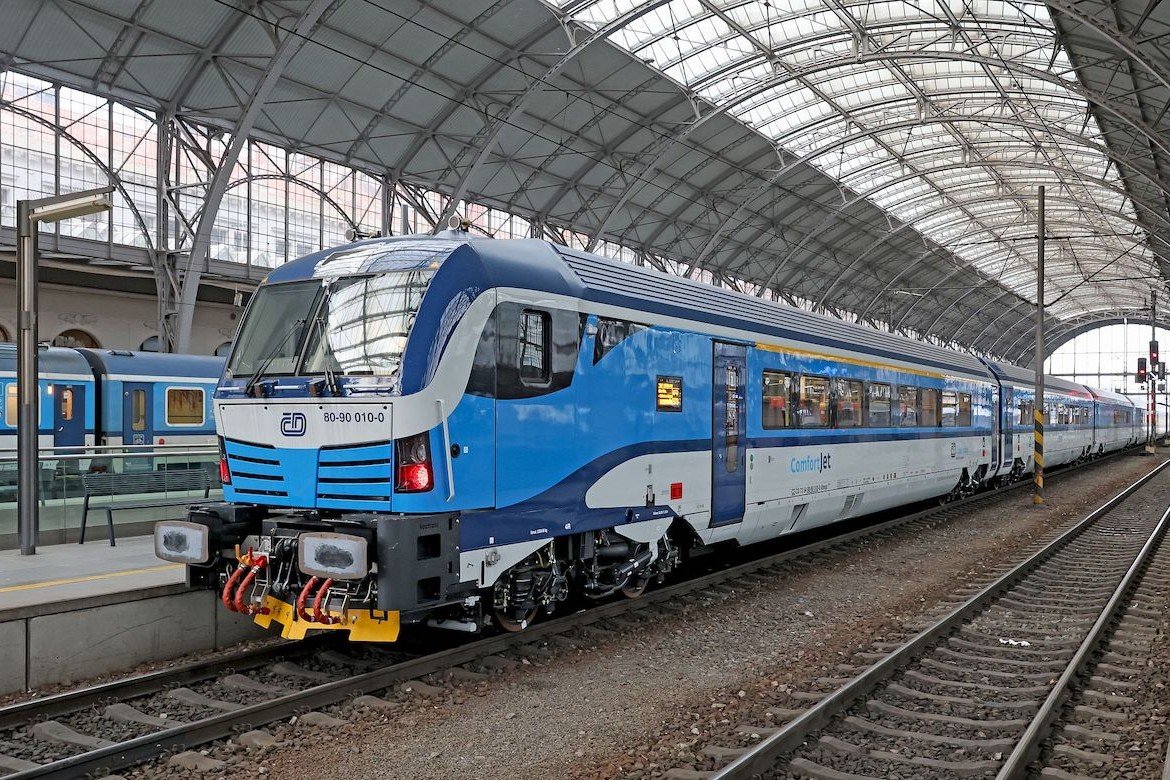
Europe’s rail renaissance continues with the announcement of a Prague–Berlin–Copenhagen ComfortJet route launching in May 2026. Operated by Czech Railways (ČD), Deutsche Bahn (DB), and Danish State Railways (DSB), the service promises a seamless direct connection across three major capitals.
Hej, Hallo, Ahoj👋
International long-distance rail transport is booming, and a new direct rail connection Prague-Berlin-Copenhagen will give it another boost.@DB_Presse, @omDSB, & @ceskedrahy_ are partnering to offer this new direct rail connection, starting on May 2026. pic.twitter.com/TmRqu0cJbz
— CER🚆 #OnTrackForEurope (@CER_railways) July 9, 2025
After more than a decade without a direct link, travelers can finally enjoy a fast and comfortable train journey through central Europe. Journey time between Berlin and Copenhagen will be about seven hours, while Prague to Copenhagen trips are expected to take roughly eleven hours. The route will run twice daily year-round, with an additional seasonal night service extending existing Hamburg – Copenhagen trains to Prague – offering convenience and flexibility for both daytime and overnight travelers.
Modern Comfort on the Rails
Powered by ČD’s new ComfortJet trains, the service brings upgraded amenities to long-distance European rail. With a capacity for 555 passengers, including 99 in first class, the train offers a restaurant car, children’s cinema, and bike storage. Accessibility features such as wheelchair lifts and radio-transparent windows ensure guests stay connected with better signal reception—details that highlight a modern travel experience.
These upgrades redefine comfort on board and signal a compelling alternative to short-haul flights, especially as environmental concerns drive passengers toward greener travel modes.
A Flagship Project in Europe’s Rail Strategy
The new Prague–Berlin–Copenhagen connection is part of the European Commission’s pilot for ten cross-border rail routes, promoting sustainable transportation and regional cohesion. EU officials suggest it sends a clear message: when strategic investment meets political will, rail can compete with air travel and bridge borders.
Added stops in Dresden and Hamburg enhance regional integration, while system-wide improvements—including streamlined ticketing and timetable coordination—are expected gradually, paving the way for a more coherent long-distance rail network across Europe.
Supporting infrastructure like the Fehmarn Belt Tunnel, expected to open later in the decade, will further reduce travel times by rail – making this Prague–Copenhagen link a foundational piece of a much broader trans-European vision.