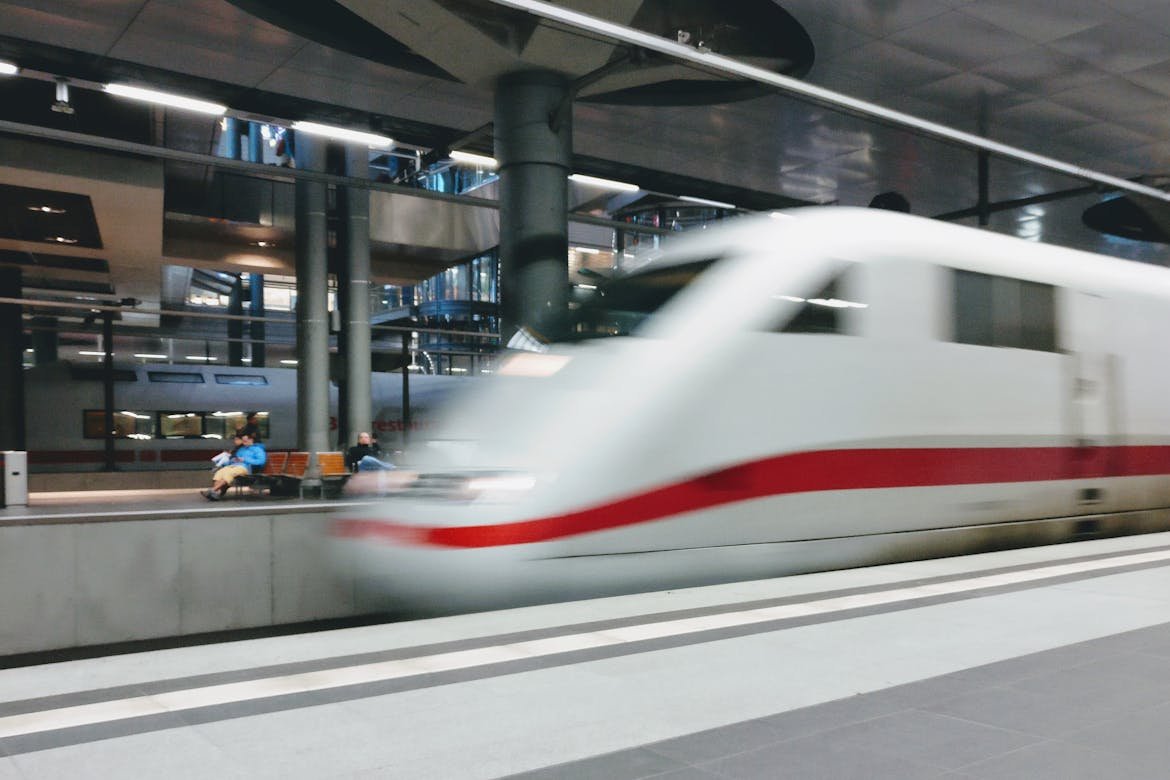
Europe’s high-speed rail dream is shifting from concept to concrete strategy as the European Commission lays out its bold vision for the future of travel. The newly announced plan spans an extraordinary 49,400 kilometers of high-speed tracks across the continent, backed by a projected €546 billion investment. It seeks not only to slash travel times between capitals but also to position rail as the dominant choice over short-haul flights, aligning with Europe’s climate ambitions.
At present, rail accounts for less than 10% of cross-border passenger travel in the EU. The Commission’s goal is to double that figure by 2030 and triple it by 2050 – a change that could dramatically cut greenhouse gas emissions and ease congestion in air and road transport.
Breaking Down Borders and Budget Barriers
One of the biggest challenges the plan addresses is Europe’s fragmented rail landscape. Differences in track gauges, signaling systems, and national regulations have long complicated the dream of a truly seamless network.
The new strategy calls for the adoption of unified technical standards, including interoperable trains and a harmonized European Rail Traffic Management System (ERTMS). This would enable high-speed trains to cross multiple borders without technical adjustments or delays.
Another key priority is ticketing. Currently, booking a multi-country rail trip can be more complex – and often more expensive – than flying. The EU envisions integrated booking platforms, transparent pricing, and better coordination between operators to make cross-border train journeys straightforward and competitively priced.
From Vision to Reality: Financing and Implementation
Transforming this ambitious plan into reality will require unprecedented cooperation between EU institutions, member states, and the private sector. Funding will come from a mix of EU grants, national budgets, and private investment, with the Commission highlighting the long-term economic and environmental returns.
Beyond the financial dimension, the project also needs political alignment. Member states will have to commit to construction timelines, coordinate cross-border projects, and streamline approval processes.
If successful, the network will not only enhance mobility but also create thousands of jobs, stimulate regional economies, and reinforce the EU’s position as a leader in sustainable transport. The Commission emphasizes that this is not just about moving people faster – it’s about reshaping how Europeans travel, live, and connect.