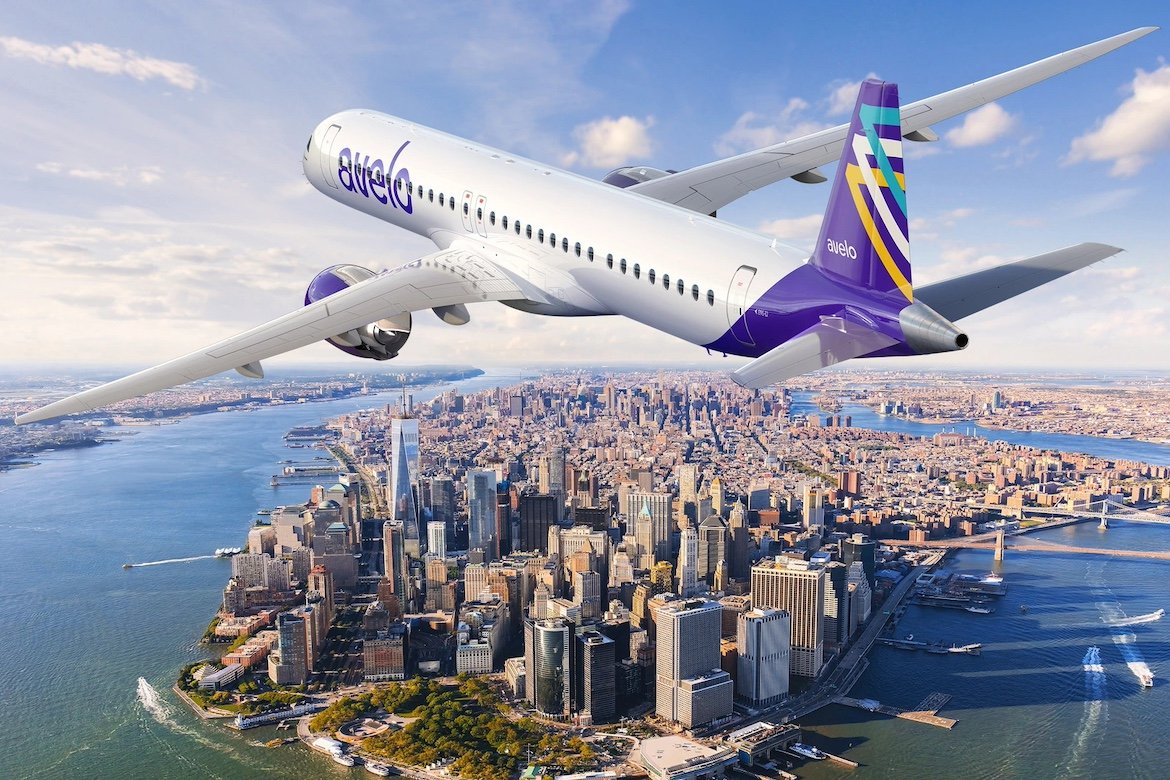
Avelo Airlines has taken a bold step in modernizing its fleet, placing a firm order for 50 Embraer E195-E2 aircraft, with purchase rights for an additional 50. This commitment marks the first U.S. airline order of this specific Embraer model and signals a broader strategy focused on efficiency, expansion, and adaptability.
Under this agreement, deliveries are expected to begin in the first half of 2027, gradually transforming the composition of Avelo’s fleet and possibly affecting route networks and airport operations.
The deal is valued at roughly US$4.4 billion at list prices, not accounting for the additional purchase rights. Although list prices often differ from final negotiated values, the scale of the purchase underscores both confidence in future demand and the importance of newer, more efficient aircraft.
Avelo intends to use the E195-E2s to complement its existing Boeing 737-800 fleet, gradually shifting toward planes that can deliver better fuel efficiency, lower operating costs, and performance on shorter runways.
Performance, Efficiency, and Strategic Advantages
One key benefit of the E195-E2 is its enhanced short-field takeoff capability, which opens up airports with runway constraints that larger aircraft struggle with. That opens up possibilities for Avelo to connect to more underserved or regional airports, boosting its flexibility in route selection.
The modern E2 design also includes improvements in fuel consumption, emissions, and noise footprint – factors that are increasingly important in regulatory, environmental, and community contexts.
Efficiency isn’t just about fuel. Maintenance costs, turnaround times, and overall lifecycle economics play critical roles when scaling up operations. By introducing a fleet of E195-E2s, Avelo seeks to reduce its unit costs per seat-mile, streamline its operations, and improve margins – especially in competitive markets where pricing sensitivity is high.
Growth, Network Expansion, and Competitive Positioning
For Avelo, this order is not just about replacing old equipment – it’s about seizing strategic growth opportunities. With aircraft deliveries starting in 2027, the airline will have time to plan network expansion, schedule adjustments, and infrastructure readiness.
The newer jets’ runway versatility could allow Avelo to serve smaller markets it previously avoided, or to increase frequencies on routes where demand exists but larger aircraft were inefficient.
Moreover, this move strengthens Avelo’s position in the U.S. low-cost carrier space. As other airlines grapple with rising fuel costs, regulatory pressure, and environmental expectations, committing to a modern fleet sends signals to both consumers and competitors.
It’s an investment in brand positioning: better onboard experience, lower environmental impact, and potentially more attractive ticket pricing if savings from efficiency are passed on.
Overall, Avelo’s imminent fleet transformation reveals how regional and low-cost carriers are evolving. The airline is betting that newer, more efficient aircraft will reduce costs, enhance flexibility, and unlock new markets.
If everything goes according to plan, the A195-E2s could be a game changer – not just for Avelo, but for how smaller and mid-sized carriers structure fleet growth in the years ahead.