Ryanair is set to cut millions of seats and withdraw from multiple European routes in 2026, citing rising airport fees, aviation taxes, and shifting operational priorities.
By Yuliya Karotkaya
Published:
Updated:
A Ryanair aircraft on the runway preparing for takeoff. Photo: Andrew Cutajar / Pexels
Ryanair has announced a significant round of route reductions across Europe for 2026, marking one of the airline’s most extensive network pullbacks in recent years.
While 2025 has seen expansion in select markets, including the UK, Italy, and parts of Northern Europe, the carrier is now preparing to scale back operations in countries where it says rising aviation taxes and airport charges have undermined its low-cost model.
In total, the changes are expected to remove around three million seats from Ryanair’s European network, with smaller cities and regional airports facing the greatest impact.
The decision comes against a backdrop of broader challenges for the airline. Persistent delivery delays from Boeing have constrained fleet growth, while operational changes such as the phase-out of physical boarding passes have drawn criticism from passengers.
At the same time, Ryanair continues to pressure governments and airport operators to lower costs, warning that higher fees inevitably lead to fewer routes and higher fares. The airline has repeatedly argued that Europe risks losing affordable connectivity if policymakers continue to increase taxes on short-haul travel.
Portugal and Western Europe Face Deep Reductions
One of the most dramatic cutbacks will take place in Portugal, where Ryanair plans to eliminate all six of its routes to and from the Azores by the end of March 2026. The move will affect roughly 400,000 passengers annually and reduce the airline’s total capacity in Portugal by about 22 percent.
Key mainland hubs such as Lisbon and Porto will also feel the impact, as the Azores routes play a central role in Ryanair’s Portuguese network.
The airline has pointed to a combination of higher air traffic control fees, the EU Emissions Trading System, and the introduction of a new €2 travel tax as reasons for the withdrawal. According to Ryanair, these costs disproportionately affect short-haul routes to island destinations while leaving longer flights relatively untouched. Ongoing labor disputes and airport staff strikes in Portugal have further complicated operations, adding to the carrier’s frustration.
Similar pressures are driving route cuts in other parts of Western Europe. Ryanair has confirmed it will reduce services in Germany, Belgium, France, and Spain, including routes linking major cities such as Berlin with leisure destinations like Tenerife. In Belgium, the airline has warned that aviation taxes could sharply reduce traffic and push fares higher, echoing trends it claims to have already seen in Austria and Germany.
Balkans and Network Rebalancing for Summer Demand
Beyond Western Europe, Ryanair is also trimming capacity in parts of the Balkans as it reallocates aircraft to markets with stronger seasonal demand. In Bosnia and Herzegovina, the airline will reduce flights from Banja Luka, cutting weekly departures and scaling back services to destinations including Vienna, Memmingen, and Baden-Baden. Serbia will see similar reductions, with fewer weekly flights from Niš to cities such as Vienna and Malta.
Ryanair says these changes reflect a strategic shift rather than a full retreat, as resources are redirected toward faster-growing markets like Croatia, where summer demand continues to rise. Even so, the cuts are likely to be felt locally, particularly in regional airports that rely heavily on low-cost carriers for international connectivity.
As Europe heads into 2026, Ryanair’s route adjustments highlight the growing tension between government efforts to tax aviation and airlines’ insistence that low fares depend on low costs. For travelers, the result may be fewer nonstop options and higher prices on remaining routes, especially in smaller and peripheral markets.
Aegean Airlines confirmed a return to normal operations on January 5, 2026, after a rare technical failure in Greece’s air traffic control system caused widespread flight cancellations and diversions.
By Yuliya Karotkaya
Published:
Updated:
Aircraft on the apron at Athens International Airport, Greece. Photo: john Mprakopoulos / Pexels
Aegean Airlines has announced that its flight schedule returned to normal on Monday, January 5, 2026, following a major disruption to air travel across Greece caused by a technical failure in national air traffic control systems. The incident, which unfolded on Sunday, January 4, led to the grounding, cancellation, and diversion of hundreds of flights and affected thousands of passengers during one of the busiest travel periods of the winter season.
The disruption was triggered by a malfunction in radio communication systems operated by the Hellenic Civil Aviation Authority. According to official statements, interference described as continuous “noise” appeared across multiple operational frequencies, including backup systems, making it impossible for air traffic controllers to communicate safely with aircraft. As a precautionary measure, authorities ordered a complete halt to all domestic flights and many international services between mid-morning and early afternoon.
During the initial grounding period, no aircraft were permitted to take off or land anywhere in Greek airspace. When limited operations resumed later in the day, capacity within the Athens Flight Information Region was sharply reduced to a fraction of normal levels. This created a significant backlog that rippled across Europe and the eastern Mediterranean, forcing airlines to divert incoming flights to alternative airports.
Aegean Airlines canceled 48 flights on Sunday, representing roughly 12 percent of its scheduled operations for the day. Other carriers, including EasyJet, British Airways, and Ryanair, also faced extensive disruptions. Flights bound for Athens were diverted to cities such as Rome and Dubrovnik, while passengers traveling to Thessaloniki, Crete, and other Greek destinations found themselves rerouted to airports in Italy, Croatia, Hungary, Albania, and Cyprus. Many travelers were stranded overnight as aircraft and crews were displaced across the region.
By early evening, aviation authorities confirmed that communication systems had been fully restored and that airspace capacity was gradually returning to normal. Aegean Airlines said residual delays were possible as aircraft rotations and crew schedules were repositioned, but emphasized that the majority of flights would operate as planned from Monday onward. Airlines introduced flexible rebooking options and waived change fees to assist affected passengers, although compensation under EU rules may not apply due to the extraordinary nature of the technical failure.
Greek officials stressed that flight safety was never compromised and stated that the incident was unlikely to have been caused by a cyberattack. Nevertheless, a judicial inquiry and internal investigations have been launched to determine how the failure occurred and why it affected such a wide range of frequencies simultaneously. Air traffic controllers’ representatives renewed calls for accelerated modernization of aging infrastructure, warning that similar disruptions could occur again without significant investment.
The episode marked one of the most extensive air traffic disruptions Greece has experienced in recent years, highlighting both the vulnerability of critical aviation systems and the importance of rapid coordination between airlines, airports, and regulators when failures occur.
U.S. airlines are working to restore Caribbean schedules after temporary airspace restrictions caused hundreds of cancellations and stranded tens of thousands of travelers during the peak holiday period.
By Yuliya Karotkaya
Published:
Updated:
Panoramic view of Caracas, Venezuela, with the city skyline set against the surrounding mountains. Photo: Bona Lee / Unsplash
Air travel across the Caribbean is gradually returning to normal after U.S. authorities lifted temporary airspace restrictions that forced airlines to cancel hundreds of flights and stranded tens of thousands of travelers at the height of the holiday travel season. The restrictions, imposed over safety concerns linked to escalating military activity near Venezuela, disrupted operations for major U.S. carriers and rippled across international aviation networks.
The FFA confirmed that the curbs expired overnight, allowing U.S. airlines to resume flights and begin restoring schedules. Transportation officials said carriers were notified in advance and moved quickly to restart operations, though the impact of the shutdown is expected to linger for several days. Airlines now face the complex task of repositioning aircraft, crews, and passengers after a sudden and large-scale interruption.
Major U.S. carriers including American Airlines, Delta Air Lines, United Airlines, Spirit Airlines, Southwest Airlines, Frontier Airlines, and JetBlue had canceled large numbers of flights in line with the FAA directive. JetBlue alone scrapped more than 200 flights, while airports across the Eastern Caribbean saw cancellations surge from normal levels to several hundred in a single day.
Although flight tracking data showed a sharp drop in cancellations once the airspace reopened, airlines warned that restoring normal operations would take time due to packed schedules and limited spare capacity.
Airlines Scramble to Rebook Stranded Travelers
The disruptions stranded large numbers of travelers at the tail end of the New Year holiday period, when flights were already heavily booked. Many passengers reported difficulties finding available seats back to the United States for several days, with some facing unexpected hotel costs or uncertainty over accommodation. Airlines acknowledged the strain and began adding extra flights, increasing seat capacity, and deploying larger aircraft to ease the backlog.
American Airlines added thousands of additional seats to and from the Caribbean, supplementing scheduled service with extra flights and widebody aircraft typically used on long-haul routes. Delta and United also worked to restore full service, adjusting schedules and reallocating resources as planes and crews became available. Southwest and other carriers followed similar strategies, adding round-trip services on key routes and exploring further capacity increases in the days ahead.
Despite these efforts, demand quickly outpaced supply as rebooked passengers competed for limited seats. Even newly added flights sold out rapidly, highlighting how vulnerable peak travel periods can be to sudden geopolitical or security-related disruptions. Industry analysts noted that airlines were effectively dealing with a full day’s worth of stranded passengers layered on top of already full schedules, making a rapid recovery difficult.
The FAA said the original closure was implemented due to safety-of-flight risks associated with military activity in the region. While U.S. airlines were cleared to resume operations, authorities continued to caution non-U.S. carriers against flying near Venezuelan airspace, citing potential risks from heightened military operations. Commercial air traffic over Venezuela itself appeared to halt almost entirely during the incident.
To mitigate customer impact, airlines broadly waived change fees and fare differences for affected travelers, allowing passengers to rebook without penalty. However, consumer advocates stressed that waivers do not fully address the financial and logistical strain placed on travelers caught in sudden disruptions.
The episode underscores the fragile balance between aviation safety and global connectivity, particularly during high-demand travel periods. While flights are now resuming and schedules stabilizing, the Caribbean disruption serves as a reminder of how quickly geopolitical events can ripple through the travel industry, leaving airlines and passengers scrambling to adapt.
Saudi Arabia is rolling out mandatory beach regulations and a centralized digital guide in 2026, reshaping how coastal tourism is managed across the Red Sea under Vision 2030.
By Yuliya Karotkaya
Published:
Updated:
A panoramic view of Saudi Arabia’s Red Sea coastline. Photo: Suhrid / Unsplash
Saudi Arabia is taking a decisive step toward professionalizing its coastal tourism sector with the introduction of mandatory beach regulations and a new digital guide set to take effect in 2026.
Announced by the Saudi Red Sea Authority, the framework represents the Kingdom’s first formal governance of beach operations and signals a shift from voluntary standards to enforceable national rules. The move aligns with Vision 2030’s broader ambition to position the Red Sea as a globally competitive, sustainable tourism destination.
The new rules apply to all public and private beaches operating along the Red Sea coast and establish uniform requirements covering safety, health, environmental protection, and accessibility. Authorities say the aim is to eliminate inconsistencies between beach operators and ensure a predictable, high-quality experience for visitors, regardless of location or operator.
A New Regulatory Standard for Red Sea Beaches
Under the Beach Operators’ Requirements and Conditions, safety is a central pillar. Licensed beaches must employ trained lifeguards, clearly mark swimming and boating zones, and maintain documented emergency response procedures. These measures are designed to reduce accidents and align Saudi Arabia’s beaches with international safety expectations.
Public health standards are also being formalized. Operators are required to maintain restrooms, showers, and changing facilities to specified hygiene benchmarks, while regular inspections will monitor compliance. Environmental stewardship is another core requirement, with beaches obligated to implement waste management systems, limit pollution, and actively monitor marine ecosystems. The goal is to protect fragile coral reefs and coastal habitats as visitor numbers rise.
Accessibility has been built into the framework as well. All beach infrastructure must comply with national building codes to ensure access for people with disabilities, reflecting a broader push toward inclusive tourism. Existing beach operators have been granted a one-year transition period to meet the new technical and environmental standards before full enforcement begins.
A Digital Guide to Simplify Coastal Tourism
Alongside the regulatory framework, Saudi Arabia is launching a digital Introductory Guide to Coastal Tourism Activities. Designed as a centralized reference point, the platform consolidates rules, permits, and operational guidance that were previously spread across multiple agencies. For travelers, it offers clarity on certified beaches, approved activities, and permitted practices. For investors and operators, it streamlines licensing and reduces administrative complexity.
The first phase of the digital guide focuses on the yachting sector, reflecting Saudi Arabia’s ambition to attract international yacht traffic during the winter season. The platform provides clear arrival and departure procedures, directories of licensed marinas and maritime agents, and practical guidance for operating in Saudi waters.
These reforms are expected to have a significant economic impact. Coastal tourism is projected to contribute tens of billions of riyals to the Saudi economy by the end of the decade while supporting thousands of jobs. By enforcing consistent standards and improving transparency, Saudi Arabia is betting that reliability and regulation will become key competitive advantages for the Red Sea.
For visitors, the changes promise a more structured and secure beach experience. For the Kingdom, they mark a strategic step toward transforming its coastline into one of the world’s most professionally managed tourism zones.
A U.S. appeals court has temporarily blocked Hawaii’s new cruise tax just hours before it was due to take effect, pausing a controversial measure challenged by the cruise industry.
By Yuliya Karotkaya
Published:
Updated:
Cruise ships docked in Hawaii with the coastline visible in the background. Photo: Keoni Ide / Unsplash
A federal appeals court has temporarily blocked Hawaii’s new cruise tax, delivering a last-minute victory for cruise lines just hours before the levy was set to take effect. The decision, issued on December 31 by the U.S. Court of Appeals for the Ninth Circuit, prevents the tax from being implemented while the court considers a broader legal challenge brought by the cruise industry.
The tax, an 11 percent charge applied to cruise ship accommodations, was scheduled to begin on January 1 as an expansion of Hawaii’s existing Transient Accommodation Tax. State lawmakers approved the measure as part of a broader effort to ensure that visitors contribute more directly to environmental protection and climate resilience initiatives across the islands. Revenue from cruise passengers was intended to support sustainability programs aimed at addressing the pressures of overtourism and climate-related risks.
The appeals court’s order came less than two weeks after a federal district court ruling cleared the way for the tax to move forward. On December 23, a U.S. district judge had denied a request from the cruise industry to stop the measure, prompting cruise lines to immediately seek emergency relief at the appellate level. The Ninth Circuit’s decision effectively pauses the tax until it reaches a final ruling on the case, with the court signaling that the review process will be expedited.
The lawsuit challenging the tax was filed in August by the cruise industry’s main trade group, which argues that Hawaii’s measure violates the U.S. Constitution and longstanding federal laws governing taxation of maritime commerce. According to the plaintiffs, individual states are limited in their ability to impose taxes on vessels engaged in interstate and international travel, particularly when those taxes are based on time spent in port rather than services consumed on land.
The legal fight escalated further in November when the U.S. federal government joined the case in support of the cruise industry. In its filing, the government argued that the tax unfairly targets American businesses and travelers and could set a precedent affecting maritime commerce nationwide. The intervention underscored the broader implications of the case beyond Hawaii, as other destinations watch closely for signals on how far local governments can go in regulating and taxing cruise tourism.
Hawaii officials have defended the tax as a reasonable and necessary step to protect the state’s natural resources. Governor Josh Green has said that visitors who benefit from Hawaii’s beaches, ecosystems, and infrastructure should share responsibility for preserving them. Supporters of the measure argue that cruise passengers place significant strain on local services while contributing less per visitor than overnight hotel guests.
For now, the ruling creates uncertainty for both the cruise industry and state planners. Cruise lines avoid an immediate increase in costs, while Hawaii faces delays in funding programs tied to the expected revenue. The appeals court’s final decision will determine whether the tax can be reinstated or whether Hawaii must revisit its approach to cruise tourism altogether.
From ultra-luxury yacht debuts to record-breaking megaships, 2026 is shaping up to be a defining year for the cruise industry’s next generation of vessels.
By Yuliya Karotkaya
Published:
Updated:
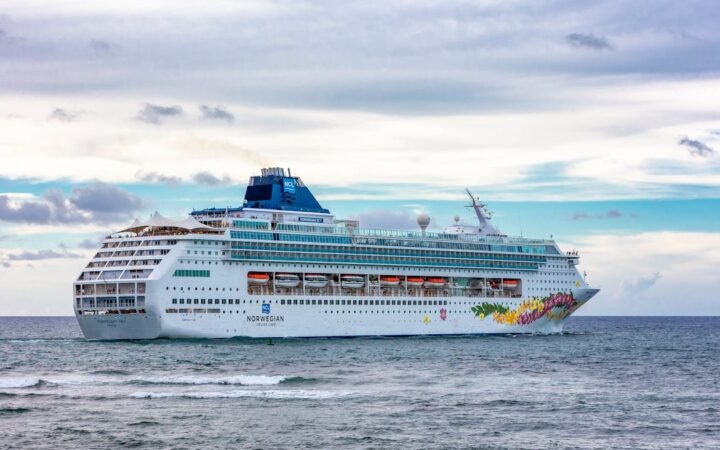
A modern cruise ship sailing in open waters under clear skies. Photo: id23 / Pexels
The cruise industry is heading into 2026 with a clear shift in focus: luxury is stealing the spotlight. While contemporary cruise brands will continue expanding their largest ship classes, it is the luxury segment that is redefining expectations at sea, with new brands launching, established players unveiling entirely new ship classes, and hospitality names extending their influence beyond land-based resorts.
Two highly anticipated debuts will mark the arrival of brand-new luxury cruise lines. Four Seasons Yachts will be the first to enter the market, launching Four Seasons I in March. The 34,000-gross-ton vessel completed sea trials late last year and will spend its inaugural summer sailing the Mediterranean. Designed with space as its defining feature, the ship’s largest suite spans nearly 10,000 square feet, setting a new benchmark for accommodation size on a luxury cruise ship.
Following closely behind is Orient Express Sailing Yachts, which will debut the Orient Express Corinthian in June. Unlike conventional cruise ships, this 110-passenger vessel is a tall ship with three masts, designed to operate under sail when conditions allow. Suites range from generous to extravagant, reinforcing the brand’s emphasis on elegance, intimacy, and a slower, more romantic style of travel. A second vessel is already under construction, signaling long-term ambition in the luxury cruise space.
Established Luxury Lines Redefine Space and Scale
Beyond new entrants, established luxury cruise brands are also making significant moves. Regent Seven Seas Cruises will introduce Seven Seas Prestige in December, opening its first new ship class in a decade. While the vessel is substantially larger than others in Regent’s fleet, the increase in passenger capacity is modest, allowing for more expansive suites and public areas. The Skyview Regent Suite alone covers nearly 8,800 square feet, underscoring the industry’s push toward residential-style cruising.
Emerald Cruises is also entering a new chapter with the launch of Emerald Kaia in April, the first in a series of small luxury yachts that will join the fleet over the next three years. Meanwhile, Explora Journeys will continue its steady expansion with Explora III arriving in July, and Viking will add two more ocean ships, including a hydrogen-powered vessel that reflects growing interest in alternative fuels and sustainability.
Megaships Continue to Grow, but Familiar Patterns Remain
While luxury commands attention, contemporary cruise lines are far from standing still. Norwegian Cruise Line will launch Norwegian Luna in March, the fourth ship in its Prima class, followed by Royal Caribbean’s Legend of the Seas in July. Notably, this Icon-class ship will be the first of its kind to operate a Mediterranean season. MSC Cruises will round out the year with MSC World Asia in December, reinforcing its presence in European waters.
Disney Cruise Line also plays a role in 2026’s evolving landscape with the delayed debut of Disney Adventure in Singapore. Now scheduled for March, the ship will become Disney’s largest vessel to date and anchor the brand’s expansion into Asia.
Taken together, these launches highlight a defining contrast for 2026: megaships continue to grow incrementally, but it is luxury cruising – through space, design, and brand prestige – that is setting the tone for the industry’s future at sea.
Prism, the parent company of OYO Hotels, has filed confidential IPO papers in India, aiming for a valuation of up to $8 billion after years of delayed listing plans.
Prism, the parent company of OYO Hotels, has taken a decisive step toward going public by filing confidential draft IPO papers with India’s markets regulator just days before the start of 2026. The move marks the company’s most concrete progress toward a listing after years of delays, withdrawals, and shifting market conditions, and signals renewed confidence in the outlook for both the business and the broader travel sector.
According to people familiar with the matter, Prism is targeting a valuation in the range of $7 billion to $8 billion and plans to raise up to INR 66 billion through the offering. The filing was made using the confidential pre-filing route, a process that allows companies to seek regulatory feedback while maintaining flexibility over timing, structure, and market conditions. This approach has become increasingly popular among large issuers seeking to avoid public scrutiny until they are confident in their readiness to proceed.
If completed, Prism’s IPO would rank as the largest listing ever by an Indian travel company, underscoring the scale OYO has achieved since its founding as a budget accommodation platform. The company’s decision to file now comes after receiving shareholder approval late last year, including backing from major investor SoftBank, which had previously expressed reservations during earlier listing attempts.
This marks Prism’s third attempt to go public. The company first filed for an IPO in 2021 with ambitious fundraising goals, only to withdraw amid regulatory questions and market volatility. A second attempt followed in 2023, which was also shelved as valuations in the global tech and travel sectors came under pressure. The latest filing suggests Prism believes conditions are stabilizing, even if the final launch timeline remains fluid.
The renewed IPO push comes as several travel and travel-tech companies move closer to public markets. Corporate travel platforms, experience booking companies, and expense management firms have all signaled IPO ambitions over the past year, reflecting investor interest in travel businesses with clearer paths to profitability and scale. For Prism, the confidential filing allows it to position itself within this broader momentum while avoiding the risks of committing to a fixed launch date.
For the Indian travel industry, Prism’s filing is symbolically significant. A successful listing would not only validate OYO’s long-term strategy after years of restructuring but also set a benchmark for future travel-related IPOs in the country. While questions remain around valuation, profitability, and market appetite, the confidential filing keeps Prism firmly in the IPO race and signals that, after years of missed windows, the company is once again serious about becoming a public market player.
Join our list to receive latest Blockchain, Crypto & Fintech news:
WordPress database error: [Table 'u752143311_aXVuj.wp_coingecko_coins' doesn't exist]
SELECT coins.*, meta.post_id as post_id
FROM `wp_coingecko_coins` coins
INNER JOIN wp_postmeta meta ON (meta.meta_key = 'wpcf-coin-main-tag' AND meta.meta_value = coins.slug )
ORDER BY market_cap_usd
DESC LIMIT 9