Naples, once known primarily as a quiet retirement destination on Florida’s Gulf Coast, is entering a new phase as a luxury travel hotspot. The opening of Naples Beach Club, A Four Seasons Resort marks one of the most significant hospitality developments the city has seen in decades, transforming a historic beachfront site into a modern high-end resort and residential community.
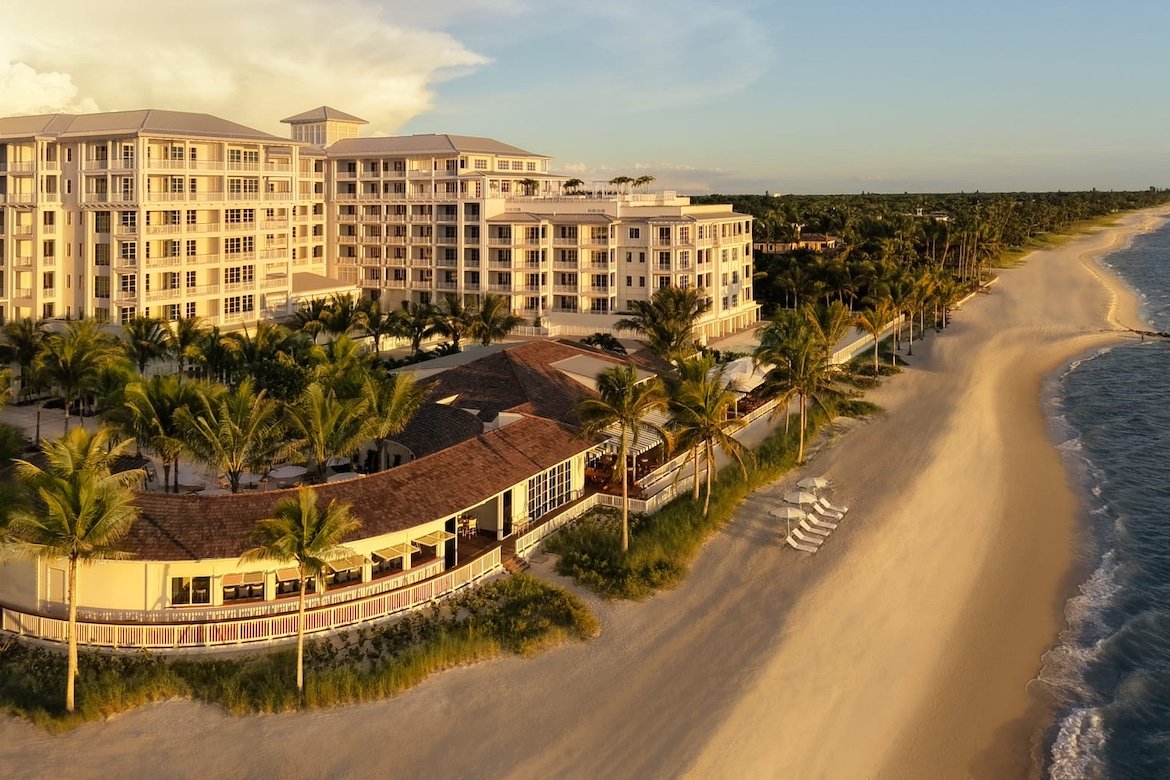
The property opened in November after a seven-year redevelopment of the former Naples Beach Hotel & Golf Club, a landmark resort that had long defined the local hospitality scene. Today, the reimagined destination combines a luxury beachfront resort, private residences and a golf course within a sprawling coastal enclave just north of downtown Naples.
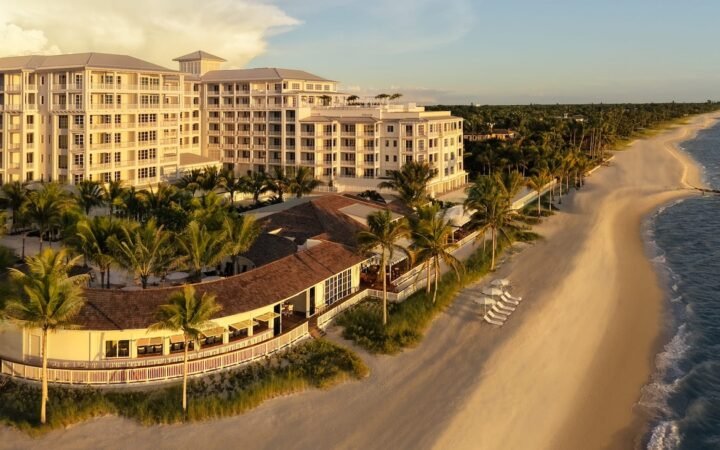
With 220 guestrooms facing the Gulf of Mexico and direct access to an 18-hole golf course, the property stands out as the only resort in Naples offering both beachfront accommodation and golf in a single location. The development positions the city as an increasingly competitive luxury destination in Florida, rivaling established enclaves such as Palm Beach.
A New Landmark Resort on the Gulf Coast
The Naples Beach Club blends contemporary design with subtle references to Old Florida style. Architectural details throughout the resort include natural materials, coastal color palettes and decorative elements inspired by the region’s maritime heritage. The result is a modern luxury environment that still reflects the relaxed character of the Gulf Coast.
Guestrooms are designed with light tones and ocean-inspired accents, with many featuring expansive balconies overlooking the resort’s pools, beach and the Gulf of Mexico. Large bathrooms, spacious living areas and carefully curated interiors reinforce the resort’s emphasis on comfort and understated elegance.
The resort’s layout centers around a large ocean-view pool surrounded by guestroom buildings arranged in a U-shaped design. Across the boulevard sits a broader complex of amenities including ballrooms, meeting spaces, sports facilities and entertainment areas.
Dining is a central part of the experience. The beachfront restaurant HB’s offers casual coastal cuisine close to the shoreline, while the Merchant Room restaurant specializes in steak and contemporary dining. The Sunset Bar continues a long-standing Naples tradition, drawing guests and locals alike to watch the sun set over the Gulf.
Wellness and recreation facilities are also extensive. The resort features a two-story spa measuring around 30,000 square feet, making it one of the largest spas across the Four Seasons portfolio. Additional amenities include multiple pools, tennis courts, a large fitness center and water sports activities along the resort’s white-sand beach.
Luxury Living and a Changing Naples
Beyond the hotel itself, Naples Beach Club is also part of a broader residential development that includes branded Four Seasons residences overlooking the Gulf. These luxury homes combine private beachfront living with access to resort services, golf and wellness facilities.
The residential component is designed to appeal to ultra-high-net-worth buyers seeking second homes or long-term coastal residences. The development spans roughly 125 acres and includes beachfront condominiums as well as estate-style homes set around the golf course.
The transformation of this historic property reflects a broader shift in Naples. Once associated mainly with seasonal retirees from the Midwest, the city has increasingly attracted wealthy residents, investors and luxury travelers seeking a quieter alternative to Florida’s more crowded resort markets.
Room rates at the resort reflect its premium positioning, with nightly prices starting around $1,200 and rising significantly for larger suites. At the top end, the property’s expansive presidential suite can reach prices of more than $40,000 per night.
With its beachfront setting, golf course and luxury amenities, the Naples Beach Club is expected to play a major role in redefining Naples as one of the most exclusive resort destinations in the United States. The arrival of a global luxury brand like Four Seasons signals that the city’s evolution from retirement town to elite coastal enclave is well underway.