Saudi Arabia and Qatar are planning a landmark high-speed rail connection between Riyadh and Doha, aiming to boost tourism, strengthen regional ties, and cut travel emissions.
By Yuliya Karotkaya
Published:
Updated:
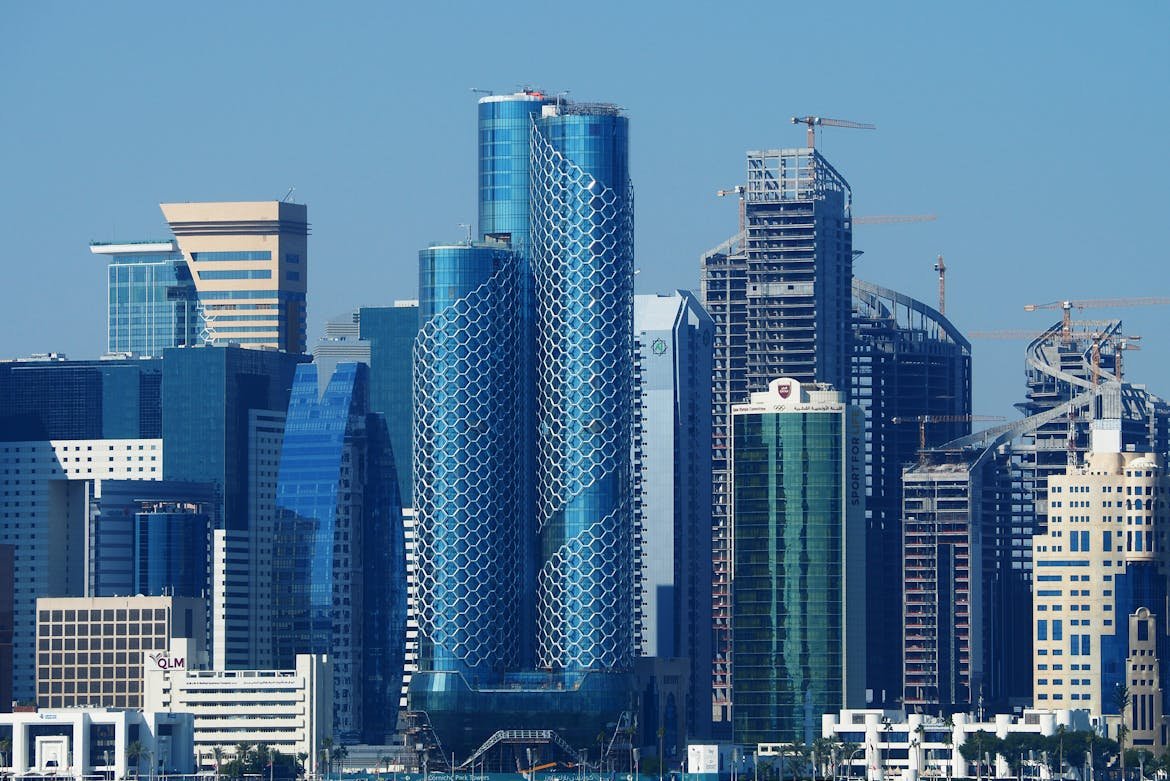
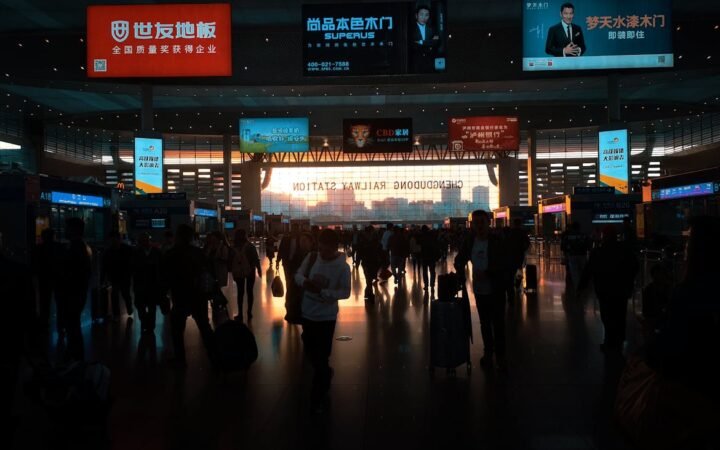
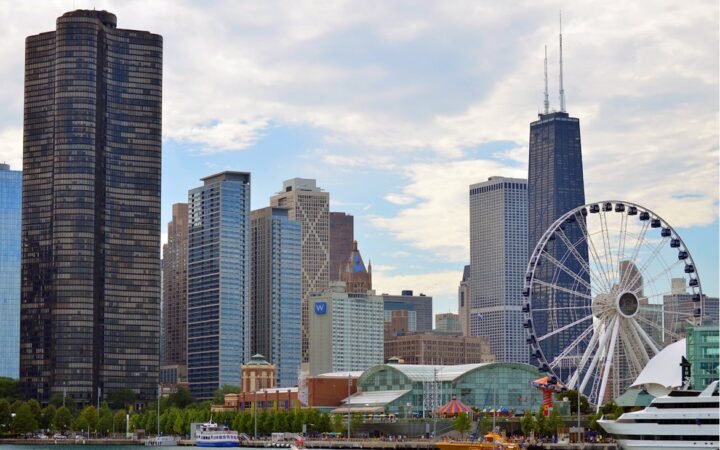
A modern city skyline representing the future of cross-border travel in the Gulf region. Photo: Rockwell branding agency / Pexels
Saudi Arabia and Qatar have confirmed plans for an ambitious high-speed rail link that could fundamentally reshape travel across the Gulf. The proposed electric railway would connect Riyadh and Doha over a distance of roughly 785 kilometers, cutting travel time between the two capitals to just under two hours.
If delivered on schedule, the service could begin operations by 2031, marking the first international high-speed rail connection in the region.
The project reflects a broader shift in how Gulf nations are rethinking mobility, tourism, and sustainability. Designed to operate at speeds of up to 300 kilometers per hour, the line is intended to compete directly with short-haul flights while offering a more energy-efficient alternative.
Planned stops include major transport hubs such as King Khalid International Airport in Riyadh and Hamad International Airport in Doha, positioning the rail link as a seamless extension of existing air travel networks.
Qatari officials estimate that the railway could carry more than 10 million passengers annually, signaling a major change in how people move between the two countries. By reducing reliance on air and road travel, the line is expected to significantly lower emissions, particularly if powered by renewable energy sources.
The environmental dimension has become increasingly central to large infrastructure projects in the region, as Gulf states pursue long-term decarbonization goals alongside economic growth.
Boosting Tourism, Trade, and Regional Integration
Beyond speed and sustainability, the Riyadh–Doha rail link is seen as a catalyst for tourism and cross-border economic integration. Faster, more convenient travel could encourage short leisure trips, business travel, and multi-destination itineraries that combine urban experiences, cultural tourism, and religious travel.
For Saudi Arabia, the connection aligns with broader efforts to expand tourism ahead of major global events and long-term development goals. For Qatar, it strengthens Doha’s position as a regional hub for visitors and transit travelers.
The route is expected to include several intermediate stations in key Saudi cities such as Hofuf and Dammam, helping spread economic benefits beyond the two capitals. In addition to passengers, the trains are planned to carry light and medium freight, improving logistics efficiency and supporting cross-border trade. This dual-use approach could reduce transport costs for businesses while easing congestion on highways.
Economically, the project is expected to generate tens of thousands of jobs across construction, engineering, operations, maintenance, and related services. While official cost estimates have not been finalized, early projections suggest an investment that could reach tens of billions of dollars. Both governments have indicated that the long-term economic returns, including tourism growth and productivity gains, would justify the scale of spending.
A Strategic Vision for the Gulf’s Future
The proposed rail link also carries symbolic weight, reflecting renewed cooperation between Saudi Arabia and Qatar following years of strained relations. By physically linking the two nations, the project underscores a broader commitment to regional connectivity and shared development. Officials have pointed to Europe’s rail networks as an example of how transport infrastructure can foster integration, urban growth, and economic resilience.
Importantly, the Riyadh–Doha line could eventually become part of a wider Gulf rail network. Saudi Arabia is already advancing domestic rail projects, including links between Riyadh and the Red Sea coast. Connecting these systems would open new travel corridors across the Arabian Peninsula, supporting tourism flows, pilgrimage travel, and regional mobility on an unprecedented scale.
While detailed engineering and financial planning are still underway, the announcement itself signals a clear intent. If realized, the Saudi Arabia–Qatar high-speed rail project would not only transform travel between two capitals, but also set a new benchmark for sustainable, cross-border transport in the Middle East.
LEGOLAND Deutschland will debut the world’s first LEGO Harry Potter Land, bringing iconic wizarding locations, themed rides, and immersive experiences to Europe.
By Yuliya Karotkaya
Published:
LEGO Harry Potter minifigure displayed as part of a themed attraction. Photo: LEGOLAND Deutschland
LEGOLAND Deutschland Resort is preparing to open the world’s first LEGO Harry Potter Land, a landmark development that signals a major expansion for both the LEGOLAND brand and the Harry Potter franchise in Europe.
Scheduled to open in the coming years, the new land will bring together the creativity of LEGO with the storytelling of the Wizarding World, offering families and fans a new destination built entirely around brick-based magic.
The announcement positions LEGOLAND Deutschland as a key hub for themed entertainment in Europe, especially for younger visitors and families seeking immersive but accessible fantasy experiences.
The new Harry Potter-themed land will reimagine iconic locations from the series through LEGO’s distinctive design language. Guests can expect familiar settings, characters, and magical moments recreated with millions of LEGO bricks, blending interactive play with themed attractions.
While specific ride details are still emerging, the concept emphasizes hands-on experiences, storytelling, and family-friendly adventure rather than thrill-focused rides. This approach aligns closely with LEGOLAND’s core audience, ensuring the wizarding world feels welcoming to children while still engaging longtime fans of the franchise.
Expanding the Wizarding World Through LEGO
This project marks the first time the Harry Potter universe has been adapted into a LEGO-themed land rather than a traditional studio-style park. The partnership reflects a strategic shift toward broadening the franchise’s reach beyond large-scale destination resorts.
By integrating Harry Potter into LEGOLAND’s playful format, the experience is designed to be lighter, more imaginative, and centered on creativity rather than cinematic realism. Visitors will be encouraged to explore, build, and interact with the environment, reinforcing LEGO’s educational and creative ethos.
The decision to launch the concept in Germany also highlights the growing importance of continental Europe in the global theme park market. LEGOLAND Deutschland already attracts millions of visitors annually, and the addition of a globally recognized intellectual property is expected to significantly boost attendance.
For international travelers, the new land adds another compelling reason to include Germany in family-focused European itineraries, especially as competition among theme parks intensifies across the region.
A Broader Trend in European Themed Attractions
The announcement also fits into a wider trend of expanding fantasy-driven experiences across Europe. In parallel with the LEGO Harry Potter Land, reports suggest that Europe may soon see its first Harry Potter-themed hotel, further signaling the franchise’s growing presence outside traditional studio parks.
Together, these developments indicate strong confidence in sustained demand for wizarding experiences, particularly those tailored to families and multi-generational travelers.
For LEGOLAND, the project represents one of its most ambitious themed expansions to date. Beyond rides and attractions, the land is expected to include themed dining, retail offerings, and interactive elements that extend the experience beyond a single visit.
This immersive approach supports longer stays and repeat visitation, strengthening the resort’s position within Europe’s competitive leisure landscape.
As construction plans move forward, anticipation is building among fans eager to see how LEGO’s playful design sensibility transforms the magical world of Harry Potter. When it opens, LEGO Harry Potter Land is poised to become a standout attraction, blending imagination, storytelling, and hands-on creativity into a uniquely European theme park experience.
Rome will begin charging tourists a small fee to access the Trevi Fountain’s inner viewing area in 2026, aiming to reduce crowding and protect one of the city’s most visited landmarks.
By Yuliya Karotkaya
Published:
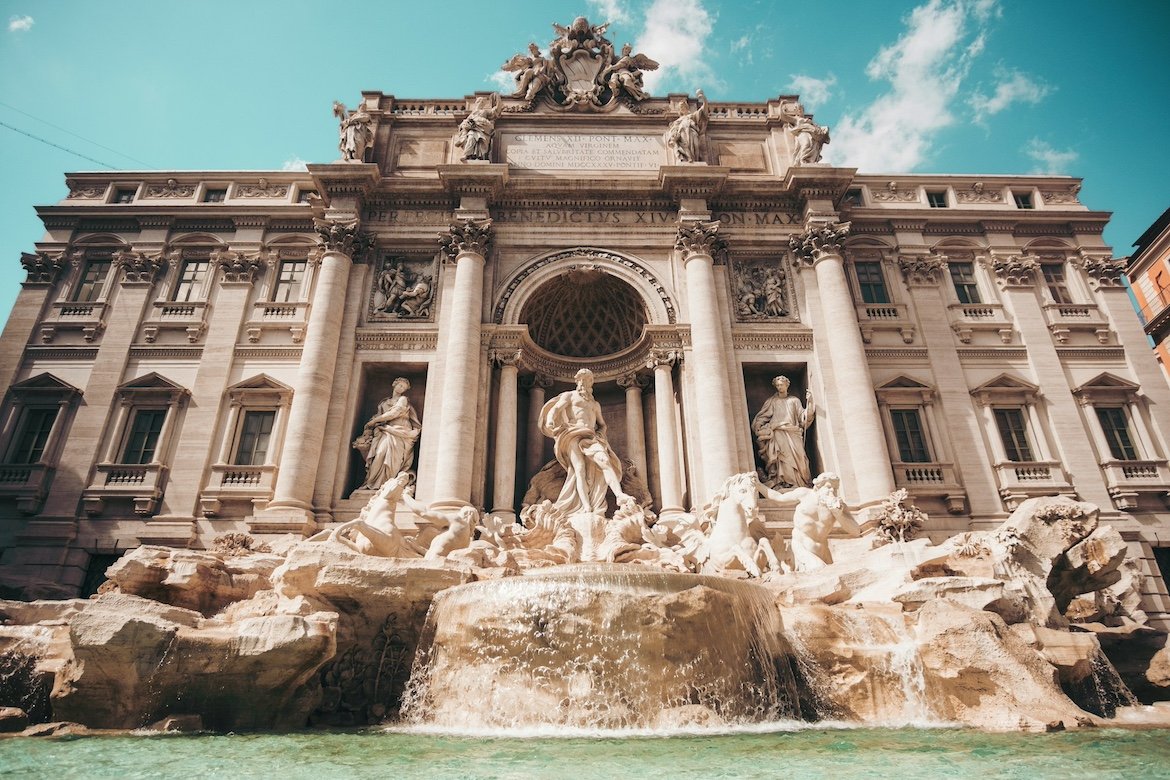
The Trevi Fountain, one of Rome’s most iconic landmarks. Photo: Cristina Gottardi / Unsplash
Rome is preparing to take a significant step in managing overtourism by introducing a new access fee for one of its most famous landmarks, the Trevi Fountain. From February 1, 2026, tourists will be required to pay €2 to enter the stone steps and close-up viewing area surrounding the fountain during designated daytime hours.
The move reflects growing pressure on the city to balance global demand with preservation, safety, and quality of experience in one of the most congested parts of the historic center.
The Trevi Fountain attracts extraordinary numbers of visitors, with daily crowds averaging around 30,000 people and surging to as many as 70,000 on peak days. In recent years, Rome has already introduced queue systems and visitor caps, limiting access to 400 people at a time between morning and evening hours.
City officials say the new fee builds on those measures by adding a modest financial barrier designed not to discourage visitors, but to regulate flows and reduce chaos at the site.
Why Rome Is Introducing the Fee
City leaders describe the €2 charge as a practical tool rather than a revenue grab. The fee is intended to support conservation efforts, cover staffing and crowd-control costs, and protect the monument from excessive wear.
While the coins traditionally tossed into the fountain are donated to charity, the new access revenue will be directed toward maintenance and visitor management. Officials estimate the system could generate approximately €6.5 million annually, funds that will be reinvested into preserving the site.
Rome’s mayor has emphasized that the fee is deliberately low to remain accessible while still encouraging more orderly behavior. The policy mirrors similar initiatives already introduced elsewhere in Italy, including paid entry to the Pantheon and Venice’s day-tripper access system.
Together, these measures signal a broader shift in how Italian cities approach mass tourism, prioritizing sustainability and livability alongside cultural access.
How the New System Will Work
The fee will apply daily from 9 a.m. to 10 p.m., including days when other major sites traditionally offer free admission. Visitors will be able to pay in advance, at ticket points, or while waiting in line. After nightfall, access to the fountain’s immediate area will remain free, allowing evening visitors to enjoy the site without charge.
Several exemptions have been built into the system. Residents of Rome, children aged five and under, and visitors with disabilities along with their companions will not be required to pay. Those who prefer not to purchase a ticket can still admire the fountain from the surrounding square, which remains open and unrestricted.
City officials argue that the goal is not exclusion, but improved quality of experience. By reducing congestion around the basin, authorities hope to create a safer, calmer environment where visitors can better appreciate the late Baroque masterpiece and its history. If successful, the Trevi Fountain model could become a template for managing access to other heavily visited landmarks across Rome.
As global tourism continues to rebound, Rome’s decision highlights a growing recognition that iconic destinations may need new rules to survive their own popularity.
Romania is moving forward with plans for Dracula Land, a €1 billion theme park near Bucharest that blends folklore, entertainment, and tourism on an unprecedented scale.
By Yuliya Karotkaya
Published:
Updated:
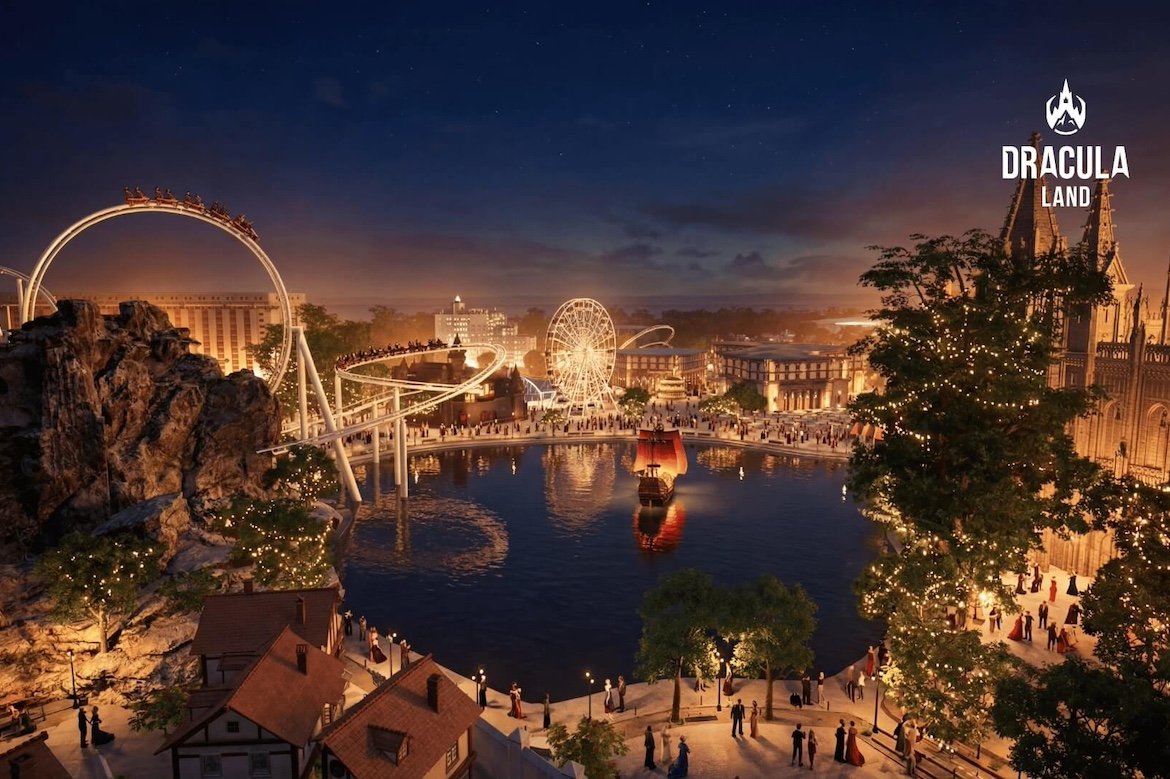
Concept visuals illustrate the planned Dracula Land theme park inspired by Romanian folklore and gothic architecture. Photo: Dracula Land
Romania is preparing to enter Europe’s major theme park arena with an ambitious new project inspired by one of the world’s most enduring legends.
A €1 billion development known as Dracula Land is planned near Bucharest, positioning the country as a destination for large-scale entertainment tourism while tapping into the global fascination with gothic mythology and local folklore. If completed as envisioned, the project would become one of Eastern Europe’s largest theme parks and a landmark attraction for Romania.
The park is designed to draw on the legacy of Dracula, a character rooted in Bram Stoker’s novel but closely associated with Romania through historical and cultural narratives. Developers aim to move beyond a simple horror concept, instead creating a multi-layered destination that blends fantasy, history, architecture, and modern attractions.
Plans indicate a year-round operation that appeals not only to thrill-seekers, but also to families, cultural travelers, and international visitors curious about Romania’s heritage.
A €1 Billion Vision for Entertainment and Tourism
Dracula Land is projected to cover a vast area outside Bucharest, with construction planned in multiple phases. The full concept includes themed zones, immersive rides, live shows, interactive experiences, hotels, restaurants, and extensive leisure infrastructure. Unlike seasonal amusement parks, the project is designed to operate throughout the year, with indoor attractions ensuring steady visitor numbers regardless of weather.
At its core, the park seeks to reframe Dracula as part of a broader storytelling universe. Visitors would encounter medieval-style villages, gothic castles, folklore-inspired experiences, and modern thrill rides, creating a balance between spectacle and cultural narrative. Developers have positioned the park as a driver of regional development, with expectations that it will generate thousands of jobs during construction and ongoing operations.
Officials and promoters see Dracula Land as a strategic tourism investment rather than a novelty attraction. Romania already draws visitors interested in castles, medieval towns, and natural landscapes, but lacks a flagship entertainment destination comparable to Western Europe’s major theme parks. The project aims to fill that gap, encouraging longer stays and higher visitor spending.
Reimagining Dracula for a Global Audience
The choice of Dracula as the park’s central theme reflects both international recognition and local reinterpretation. While the character is widely known through film and popular culture, the project emphasizes Romanian folklore, legends, and historical influences to create a more authentic narrative framework. This approach allows the park to appeal to global audiences without relying solely on horror imagery.
Location is also a key factor. Being near Bucharest offers access to Romania’s largest airport, rail connections, and urban infrastructure, making the park reachable for international tourists and domestic travelers alike. Developers believe proximity to the capital will help integrate the park into wider travel itineraries, combining city breaks with entertainment tourism.
If successful, Dracula Land could mark a turning point for Romania’s tourism positioning, shifting perceptions from niche cultural travel toward large-scale leisure experiences. The €1 billion investment signals confidence in long-term demand and reflects a broader trend of emerging destinations using iconic narratives to compete on the global tourism stage.
While timelines and final construction phases are still evolving, the vision behind Dracula Land is clear: to transform a legendary name into a modern, immersive destination capable of reshaping Romania’s tourism landscape for decades to come.
Hyatt strengthens its presence in Vietnam with the opening of Hyatt Regency Nha Trang, a 434-room beachfront hotel inspired by local fishing heritage and coastal living.
By Yuliya Karotkaya
Published:
Updated:
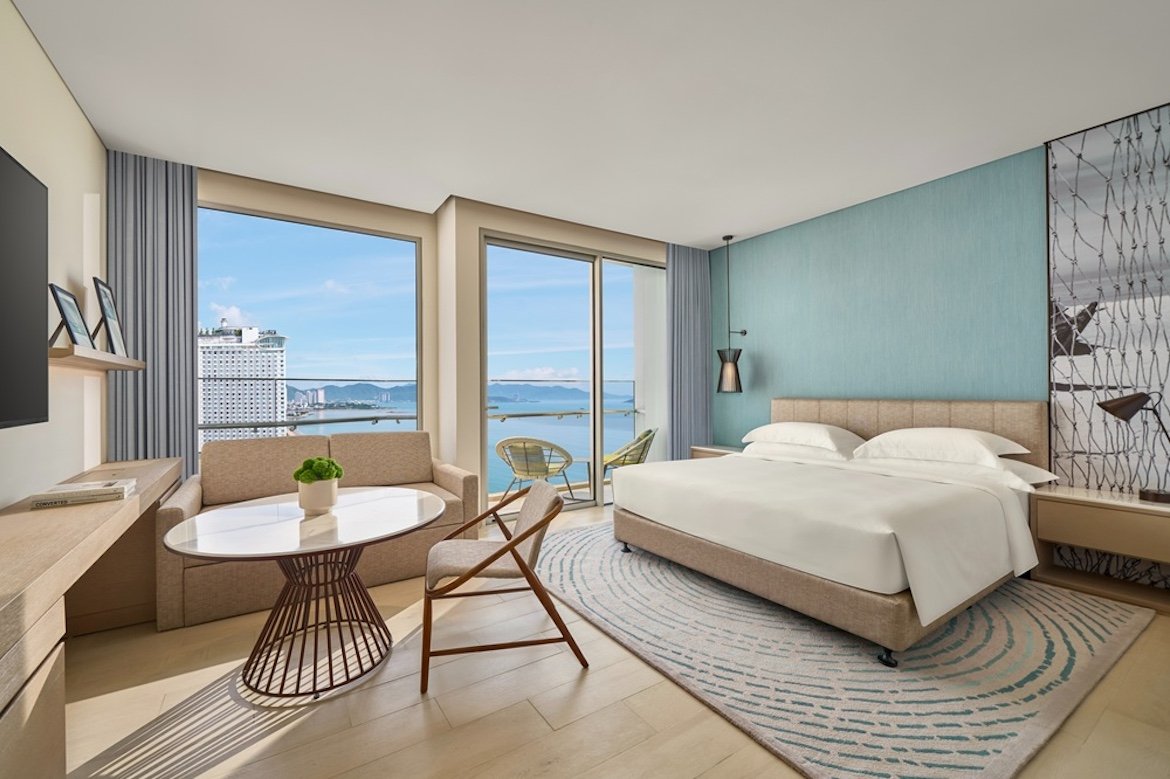
Beachfront views and contemporary interiors at Hyatt Regency Nha Trang along Vietnam’s south-central coast. Photo: Hyatt
Hyatt Regency Nha Trang has officially opened its doors, marking Hyatt’s first branded hotel in the coastal city of Nha Trang and a significant milestone in the company’s expansion across Vietnam.
Set directly along the white sands of the country’s south-central coastline, the 434-room property blends contemporary hospitality with design elements inspired by the region’s long-standing fishing traditions and maritime culture.
Located on Tran Phu Street, Nha Trang’s most iconic seaside boulevard, the hotel places guests in the heart of a lively urban setting framed by pastel-colored buildings, colonial-era architecture, and a growing mix of galleries, cafés, and local restaurants. The location reflects the city’s dual identity as both a relaxed beach destination and an emerging business hub, supported by its shipbuilding industry and improving transport links.
The hotel is just minutes from Nha Trang Train Station and within easy reach of Cam Ranh International Airport, making it well positioned for both leisure and corporate travelers.
Design, Dining, and Destination-Led Experiences
Architecturally, the hotel is designed to resemble a boat sailing toward the sea, a visual nod to Nha Trang’s coastal heritage. Interiors, created by EDC International, draw from the rhythms of the ocean and the textures of traditional fishing villages, using soft natural palettes, handcrafted accents, and light-filled spaces.
All guestrooms and suites are oriented to maximize ocean views, creating a sense of calm and openness that reflects the surrounding seascape. Modern comforts such as rainfall showers, smart in-room technology, and spacious layouts are balanced with a warm, understated aesthetic.
Dining plays a central role in the hotel’s identity, with experiences designed to highlight local ingredients and global influences. The all-day Market Café serves a blend of Vietnamese and Italian cuisine, where fresh local seafood appears alongside classics like pho and handmade pasta, prepared in open kitchens that invite interaction.
The Lounge offers a more relaxed setting for cakes and afternoon tea, while the Pool Bar on the upper levels provides cocktails and light coastal fare with panoramic views across Nha Trang Bay.
For guests seeking an elevated stay, the Regency Club lounge delivers a more exclusive experience with dedicated services, daily breakfast, and evening refreshments set against sweeping ocean vistas. Event and meeting facilities span more than 8,400 square feet and include a pillarless ballroom and multiple breakout rooms, designed to accommodate everything from corporate gatherings to private celebrations, with subtle local touches woven into each space.
Wellness and recreation are equally integral to the property. Facilities include a full-service spa, fitness center, yoga room, swimming pools, and family-friendly zones, reinforcing the hotel’s appeal to a broad range of travelers. Younger guests are welcomed through dedicated programs designed to connect them with local culture and nature, ensuring the destination itself becomes part of the stay.
With its opening, Hyatt Regency Nha Trang positions itself not just as a place to stay, but as a gateway to the city’s evolving coastal identity. By combining beachfront relaxation, urban energy, and locally inspired design, the hotel reflects a broader shift in Vietnam’s tourism landscape toward thoughtful, experience-driven travel.
Hyatt debuts Andaz One Bangkok within the ambitious One Bangkok district, blending design-led hospitality, park views, and a distinctly urban lifestyle concept.
By Yuliya Karotkaya
Published:
Updated:
Interior views of Andaz One Bangkok overlooking Lumphini Park in central Bangkok. Photo: Hyatt
Hyatt has expanded its lifestyle portfolio in Southeast Asia with the opening of Andaz One Bangkok, marking the brand’s debut in Thailand’s capital and its second property in the country. Located within the vast One Bangkok development on historic Wireless Road, the hotel places itself at the intersection of heritage, design, and modern urban living, directly overlooking the greenery of Lumphini Park.
The 244-room hotel is part of One Bangkok, a multi-billion-dollar mixed-use district designed to become a new commercial and cultural heart of Bangkok. With direct access to the MRT and convenient links to both of the city’s international airports, the property is positioned as a base for travelers who value connectivity as much as atmosphere. Hyatt describes the opening as a key step in strengthening its lifestyle presence in Asia under the Andaz brand, operated by Hyatt Hotels Corporation.
A Vertical Neighborhood Shaped by Bangkok
Rather than presenting itself as a standalone landmark, Andaz One Bangkok has been conceived as a “vertical neighborhood,” a concept developed by Thai design studio PIA. The interiors draw inspiration from Bangkok’s streets and sois, combining Thai mid-century architectural cues with contemporary materials, bold colors, and layered textures. Subtle references to local heritage appear throughout the property, from curved forms inspired by historic buildings to photographic works and bespoke art created by Thai female artists.
Guestrooms and suites range from compact yet generous city rooms to expansive suites, many of which face Lumphini Park. This park-facing orientation gives the hotel a rare sense of openness in a dense urban environment, allowing guests to look out over greenery rather than concrete. Interiors emphasize comfort without formality, pairing marble bathrooms and walk-in rain showers with practical details such as large-format televisions, curated minibars with local snacks, and thoughtfully designed work and relaxation spaces.
Social life at the hotel centers on the Andaz Lounge, a 24-hour space that shifts naturally from daytime meeting point to evening cocktail setting. Instead of traditional concierge desks, Andaz Hosts act as informal local guides, encouraging guests to explore the city beyond well-trodden tourist routes. Wellness amenities include an infinity pool overlooking the park and a fully equipped fitness center, reinforcing the hotel’s balance between energy and retreat.
Dining plays a major role in defining the property’s character. The hotel features three distinct venues, each designed to operate as a destination in its own right. From an all-day Chinese restaurant with open kitchens to an outdoor terrace focused on Asian-influenced dining and tea culture, the offerings reflect Bangkok’s diverse culinary landscape. Crowning the building is a Mediterranean restaurant and rooftop space that transitions from relaxed daytime dining into a lively evening scene, complete with music and a discreet speakeasy.
With its opening, Andaz One Bangkok signals Hyatt’s confidence in Bangkok’s evolving urban core and the growing appeal of large-scale, integrated districts. Rather than competing with resort-style escapes, the hotel embraces the city’s rhythm, positioning itself as a contemporary address for travelers who want to experience Bangkok as it is today – and as it is becoming.
Marriott International will open its first EDITION-branded hotel in Africa in 2026, introducing the luxury lifestyle concept to Cape Town’s iconic V&A Waterfront.
By Yuliya Karotkaya
Published:
Updated:
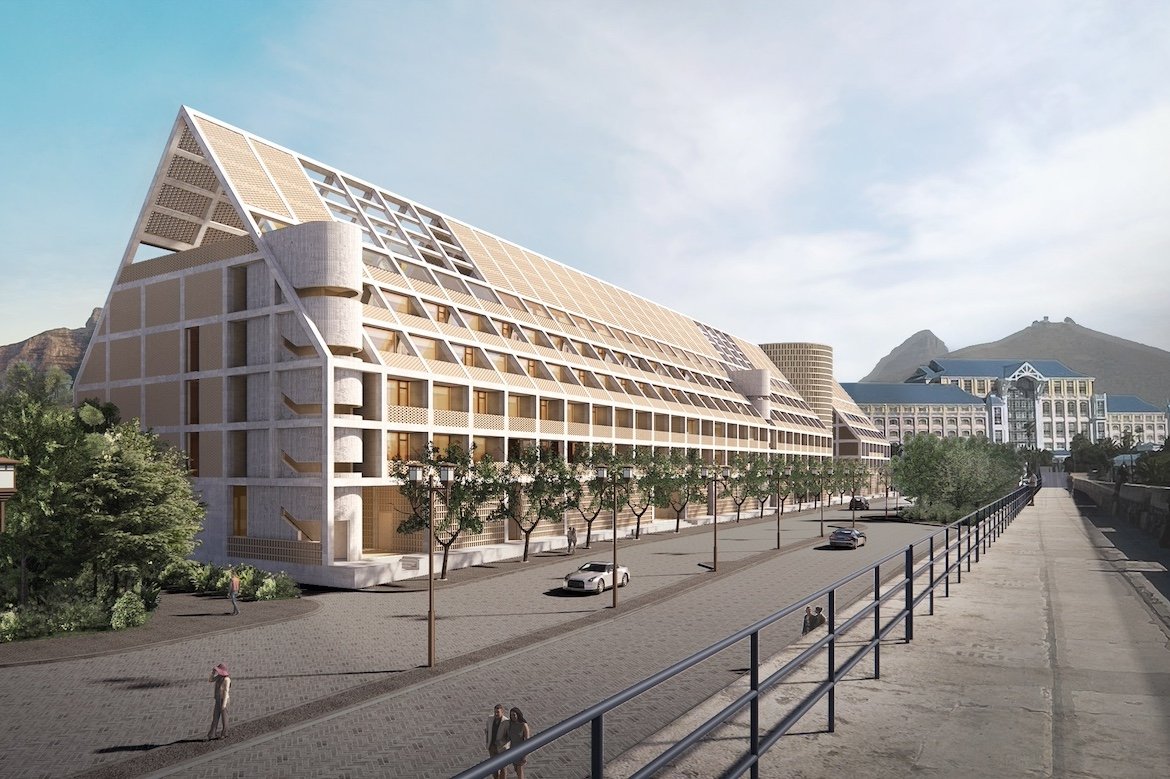
A view of Cape Town’s V&A Waterfront with Table Mountain in the background. Photo: Marriott Hotels
Marriott International is set to introduce its luxury lifestyle EDITION brand to Africa for the first time, with a new hotel planned to open in Cape Town in 2026. The project marks a significant expansion milestone for the global hospitality group and underscores growing confidence in Cape Town as a premier destination for high-end international travel.
Developed in partnership with V&A Waterfront Holdings, The Cape Town EDITION will be located within one of the city’s most visited and recognizable precincts, combining contemporary luxury with a strong sense of place.
The hotel will feature 142 guest rooms and suites, designed to reflect EDITION’s signature blend of refined minimalism, personalized service, and culturally rooted experiences. In addition to the hotel component, the development will also include six private branded residences, offering owners access to hotel services while maintaining a residential feel aligned with the brand’s modern luxury ethos.
The project is positioned at the edge of the Granger Bay area, a growing extension of the V&A Waterfront that connects the city to the Atlantic Ocean.
A Landmark Location at the V&A Waterfront
The V&A Waterfront remains one of Africa’s most visited destinations, known for its rare mix of working harbor, retail, dining, cultural attractions, and natural scenery. From its waterfront promenade to its panoramic views of Table Mountain, Lion’s Head, and Signal Hill, the area has long served as a focal point for both tourists and locals.
The Cape Town EDITION is expected to benefit from this setting, offering guests immediate access to restaurants, luxury shopping, charter cruises, and cultural venues, while also serving as a gateway to Cape Town’s broader attractions.
Architectural and interior design for the project will be led by Shanghai-based firm Neri & Hu, working in collaboration with South African studio StudioMAS. The design approach aims to balance global sophistication with local character, ensuring the hotel feels distinctly connected to Cape Town rather than transplanted from another market.
Plans for the property include a rooftop bar, spa, swimming pool, dining venues, and flexible meeting and event spaces, positioning the hotel as both a social hub and a destination in its own right.
EDITION’s Expansion and Africa’s Luxury Outlook
For Marriott International, the Cape Town opening represents a strategic step in expanding its luxury portfolio across emerging and high-growth markets. The EDITION brand, known for its focus on design-led experiences and understated elegance, has traditionally been concentrated in Europe, North America, and parts of Asia.
Its arrival in Africa reflects a broader shift in global travel demand, with affluent travelers increasingly seeking destinations that combine authenticity, culture, and premium hospitality.
Local partners also see the project as a catalyst for strengthening Cape Town’s international profile. With tourism demand continuing to rise and large-scale mixed-use developments reshaping the city’s waterfront, The Cape Town EDITION is expected to contribute to the evolution of the destination’s luxury landscape.
When it opens in 2026, the hotel will not only mark EDITION’s African debut but also signal Cape Town’s growing role on the global luxury travel map.
Prism, the parent company of OYO Hotels, has secured shareholder approval to raise $742 million through a fresh equity issue, reviving long-delayed IPO plans.
By Yuliya Karotkaya
Published:
Updated:
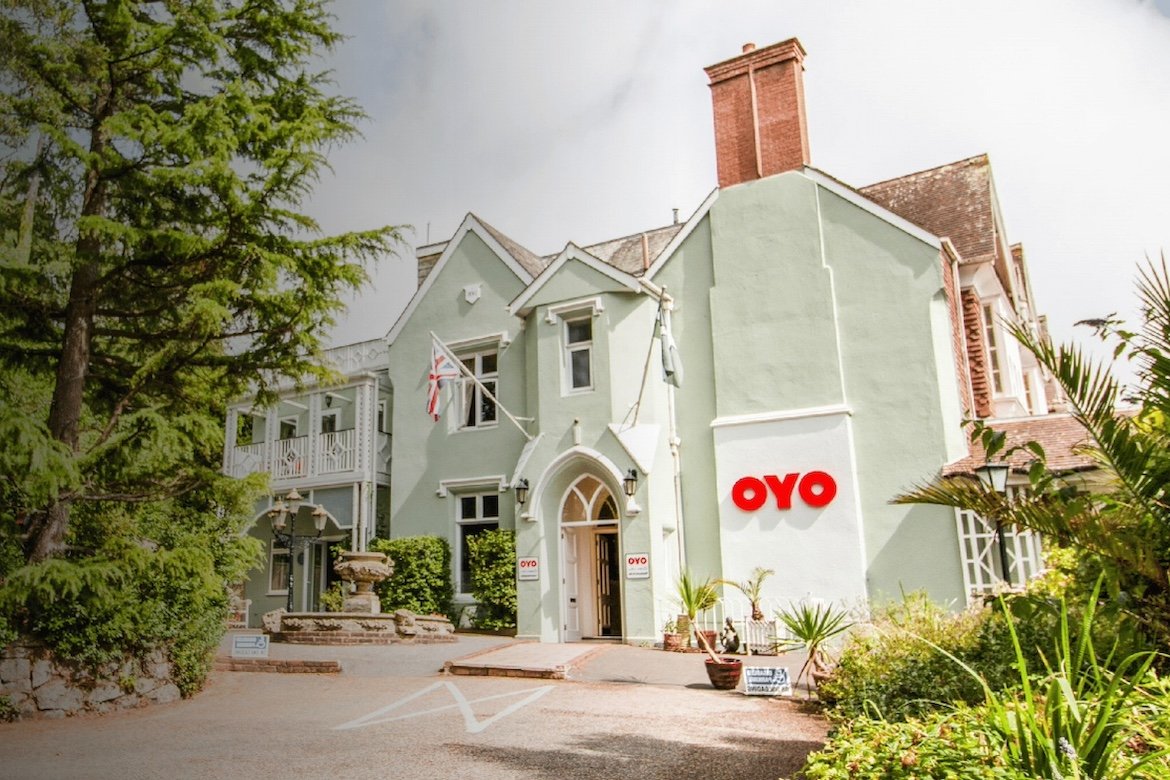
Exterior view of an OYO-branded hotel property. Photo: OYO
Prism, the parent company of Indian hospitality platform OYO, has taken a significant step toward a long-awaited stock market debut after shareholders approved plans to raise up to $742 million through a fresh equity issue. The decision revives IPO ambitions that have been repeatedly delayed over the past four years and gives the company flexibility to choose the timing of a public listing based on market conditions.
The shareholder approval does not set a fixed IPO date, instead allowing Prism to tap public markets when conditions are more favorable. This marks a strategic shift from earlier attempts, when the company pushed forward with ambitious valuation targets amid volatile market sentiment. OYO first filed for an IPO in 2021, seeking a valuation of around $12 billion, but faced multiple setbacks driven by regulatory scrutiny, investor concerns, and internal disagreements among shareholders.
Financially, Prism enters this new phase in a stronger position than during its previous IPO attempts. For the 2025 financial year, the company reported a 16 percent increase in revenue to approximately 62.5 billion rupees. Net profit after exceptional items rose by 6.6 percent to 2.45 billion rupees, while the company recorded its twelfth consecutive EBITDA-positive quarter. These results reflect tighter cost controls, improved operational efficiency, and a greater focus on higher-margin segments.
However, the company’s balance sheet remains a central issue for potential investors. Prism is carrying debt exceeding 70 billion rupees, accumulated during years of aggressive expansion and restructuring. Analysts expect a substantial portion of IPO proceeds to be allocated toward debt repayment rather than rapid growth initiatives. As a result, the offering is increasingly viewed as a financial reset rather than a purely expansion-driven listing.
Market expectations have adjusted accordingly. Reports suggest Prism may now target a valuation closer to $7–8 billion, significantly below earlier ambitions. This recalibration aligns with broader investor sentiment, which currently favors sustainable profitability and disciplined capital management over aggressive growth narratives, particularly in the travel and hospitality sector.
At the same time, OYO is evolving beyond its original budget accommodation model. Prism has been investing in premium and mid-scale properties, aiming to improve margins and diversify revenue streams. This shift could strengthen the brand’s long-term positioning but may also reshape relationships with hotel partners accustomed to OYO’s low-cost, high-volume approach.
The renewed IPO push comes at a critical moment for Prism. Public market investors will be watching closely for evidence that recent profitability gains are sustainable and that the company can balance growth ambitions with financial discipline. If successful, the IPO could mark a turning point for one of India’s most prominent travel startups. If delayed again, it may reinforce doubts about Prism’s ability to align strategy, valuation, and market reality.
Brazil welcomed a record nine million international visitors in 2025, surpassing national targets and previous highs as tourism spending and arrivals surged across key regions.
By Yuliya Karotkaya
Published:
Updated:
An urban and natural landscape in Brazil reflecting the country’s growing appeal among international travelers. Photo: Agustin Diaz Gargiulo / Unsplash
Brazil has closed out 2025 with a historic tourism milestone, welcoming nine million international visitors before the end of the year and firmly positioning itself among the world’s fastest-growing travel destinations.
The figure represents a dramatic leap from the previous record of 6.77 million visitors set in 2024 and comfortably surpasses the national target of 6.9 million outlined in the country’s 2024–2027 tourism strategy. The surge signals a turning point for Brazil, reflecting renewed global confidence in the destination and a broad recovery of long-haul travel.
Tourism spending rose alongside arrivals. Between January and November, international visitors injected $7.17 billion into Brazil’s economy, according to data from the Central Bank. That total marks an increase of more than eight percent compared with the same period last year and nearly matches the full-year total recorded in 2024.
The spending growth underscores tourism’s expanding role as an economic engine, supporting jobs, regional development, and infrastructure investment across the country.
Officials credit the results to a sustained effort to reposition Brazil’s global image and focus on priority source markets. Embratur, the country’s tourism promotion agency, has emphasized cultural diversity, natural attractions, and improved air connectivity in its international outreach.
Agency president Marcelo Freixo described the achievement as historic, highlighting tourism’s ability to generate income and opportunities well beyond traditional hotspots and into emerging destinations nationwide.
South America remained the strongest driver of inbound growth in 2025. Argentina led all source markets with 3.1 million visitors, representing an increase of more than 80 percent year over year.
Chile followed with more than 720,000 visitors, while the United States ranked third, sending nearly 678,000 travelers to Brazil during the same period. The steady rise in U.S. arrivals points to Brazil’s renewed appeal among North American travelers seeking both urban experiences and nature-based travel.
Entry patterns also reveal how international tourism is spreading across Brazil’s regions. São Paulo consolidated its role as the country’s primary gateway, welcoming close to 2.5 million international visitors between January and November.
Rio de Janeiro followed with just under two million arrivals, reaffirming its position as a global leisure icon. Southern states such as Rio Grande do Sul, Paraná, and Santa Catarina also recorded strong numbers, reflecting the growing importance of cross-border and regional travel.
Looking ahead, tourism officials expect momentum to continue into 2026, supported by increased international air capacity and expanding route networks. Rising ticket sales to Rio de Janeiro and new services at Galeão International Airport are expected to further stimulate demand during the upcoming summer season.
If current trends hold, Brazil’s record-breaking performance in 2025 may mark the beginning of a sustained growth cycle rather than a one-off rebound.
Together, the arrival and spending figures point to a tourism sector that has regained its footing and is evolving into one of Brazil’s most resilient and influential industries, with international travelers once again playing a central role in the country’s economic and cultural exchange with the world.
Emirates has unveiled a festive holiday video reimagining its iconic Airbus A380 as Santa’s sleigh, blending CGI artistry, brand storytelling, and seasonal cheer in a campaign that quickly captured global attention.
By Yuliya Karotkaya
Published:
Updated:
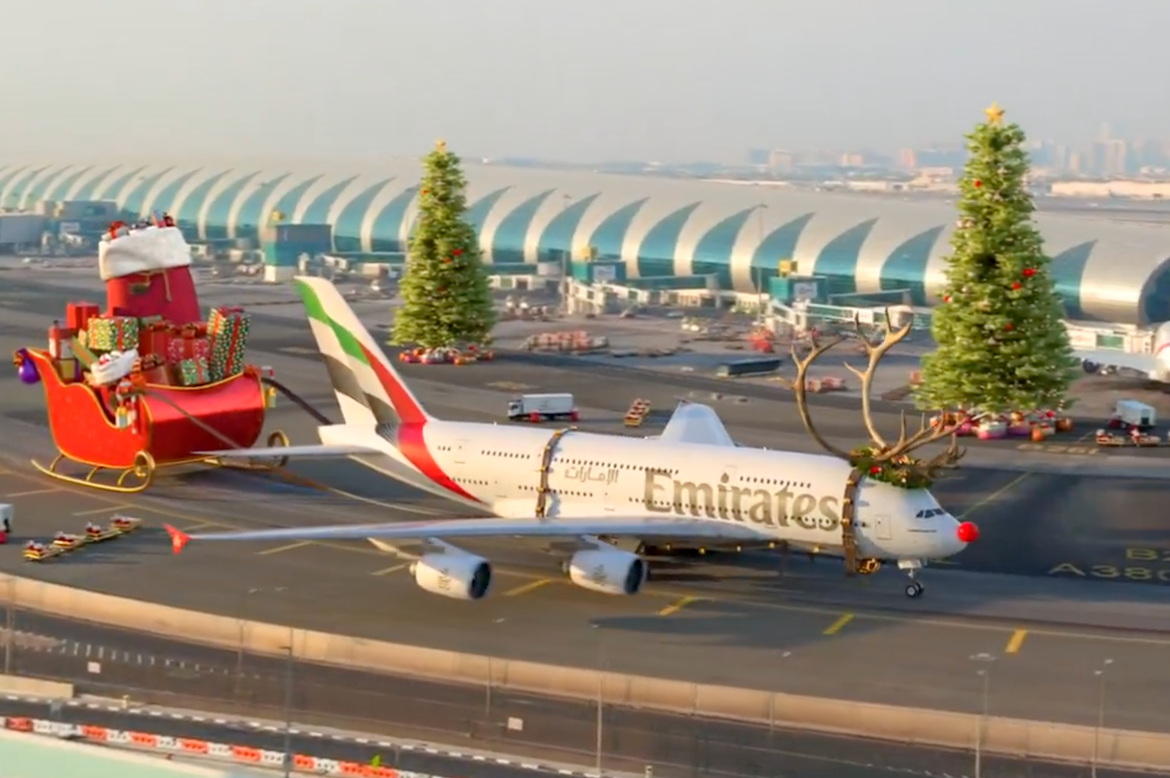
A festive holiday-themed aircraft concept inspired by seasonal celebrations at a major international airline hub. Photo: Emirates
As the holiday season reached its peak, Emirates joined the global celebrations with a creative campaign that instantly stood out in the aviation world. The airline released a festive video reimagining its flagship Airbus A380 as Santa’s sleigh, humorously renamed the “Sleigh380.”
Shared across social media just days before Christmas, the video offered a playful and visually striking holiday greeting that quickly went viral.
Introducing the Sleigh380. Santa's going long-haul this year!
The short clip shows the iconic double-decker aircraft transformed into a reindeer-inspired sleigh, complete with a glowing red nose, oversized antlers, and festive decorations. Ground crew, styled as holiday helpers, are seen loading colorful gift boxes onto a giant sleigh attached to the aircraft before it taxis down the runway and lifts off into a wintery sky. While clearly fantastical, the polished visuals and attention to detail gave the impression of a cinematic holiday moment rather than a standard airline advertisement.
The Sleigh380 concept builds on Emirates’ growing tradition of seasonal storytelling, where aviation meets imagination. Rather than focusing on routes, cabins, or schedules, the campaign leaned fully into festive emotion, positioning the brand as playful, warm, and culturally aware during one of the busiest travel periods of the year. With millions of passengers traveling through Dubai International Airport during December, the timing of the campaign added to its resonance.
Social media reactions ranged from admiration to tongue-in-cheek concern, with users joking about aviation safety and wondering whether Santa had upgraded to first class. Others praised the campaign as a reminder that marketing doesn’t always need to sell a product directly, but can instead create joy and connection. The conversation itself became part of the campaign’s success, extending its reach far beyond Emirates’ own channels.
Despite speculation online, the airline clarified that the video was not created using artificial intelligence. Instead, it was crafted using high-end CGI techniques by long-time Emirates collaborator Mostafa Eldiasty, a Dubai-based digital artist known for producing hyper-realistic aviation visuals. Each frame was designed manually, continuing a creative partnership that has previously delivered other viral A380 moments for the airline.
The Sleigh380 campaign also complemented Emirates’ broader holiday experience onboard. Throughout December, passengers were offered festive meals, themed beverages, seasonal desserts, and winter-inspired lounge touches, reinforcing the airline’s focus on atmosphere and experience during peak travel season.
By transforming one of the world’s most recognizable aircraft into a symbol of holiday magic, Emirates once again demonstrated how storytelling and creativity can elevate brand identity. The Sleigh380 may never touch a rooftop, but it succeeded in delivering something equally valuable: a moment of shared seasonal delight at 35,000 feet.
Italy’s competition authority has fined Ryanair €255 million, accusing the airline of abusing its dominant position by restricting how travel agencies sell and bundle its flights.
By Yuliya Karotkaya
Published:
Updated:
Photo: Lucas Davies / Unsplash
Italy’s competition watchdog has imposed a €255 million fine on Ryanair, accusing Europe’s largest low-cost carrier of abusing its dominant market position in dealings with travel agencies. The decision marks one of the most significant antitrust penalties ever issued against an airline in Italy and adds to growing regulatory scrutiny of how major carriers control ticket distribution and customer access.
According to the Italian Competition Authority, the airline implemented a series of practices between April 2023 and at least April 2025 that made it harder or more expensive for travel agencies to sell Ryanair flights alongside other airlines or complementary services such as hotels and insurance. Regulators argued that these measures restricted competition and limited consumer choice, particularly in a market where Ryanair holds exceptional influence.
Ryanair, which commands roughly one-third of Italy’s air travel market, strongly rejected the ruling. The airline described the decision as unfounded and said it would appeal immediately, defending its long-standing strategy of prioritizing direct sales through its own website. Company executives maintain that this approach allows Ryanair to keep fares low by avoiding commission fees traditionally paid to intermediaries.
Why Italy’s Regulator Took Action
Italian authorities said the case centered on a pattern of behavior that went beyond a single policy change. Investigators pointed to a combination of technical and commercial barriers that allegedly prevented online and traditional travel agencies from freely accessing Ryanair fares. These included limits on payment methods, the introduction of identity verification procedures, and contractual terms that restricted how Ryanair flights could be bundled with competing services.
The regulator argued that such practices effectively forced agencies to abandon Ryanair or accept conditions that undermined their ability to compete. By doing so, officials said, the airline leveraged its market strength to act independently of both competitors and consumers, a hallmark of dominant market power under European competition law.
The authority also emphasized that Ryanair’s scale in Italy magnified the impact of these measures. With a market share far ahead of its nearest rivals, any restrictions imposed by the airline were seen as having a disproportionate effect on the broader travel ecosystem, including smaller agencies and alternative carriers.
Ryanair countered that its direct distribution model has delivered lower fares across Italy and Europe by eliminating intermediary costs. Company leadership argued that savings once paid to agents have been passed directly to passengers, helping to stimulate demand and expand air travel. The airline also noted that it has faced regulatory challenges before, including a baggage fee case in 2019 that was later overturned.
The fine comes amid a broader push by Italian authorities to rein in dominant players across industries, following a separate antitrust penalty issued against a major U.S. technology firm earlier this week. For the airline industry, the case underscores increasing tension between low-cost carriers’ digital-first strategies and regulators’ efforts to preserve open competition.
As Ryanair prepares its appeal, the ruling is likely to resonate beyond Italy, potentially influencing how airlines across Europe structure relationships with travel agencies in an increasingly fragmented and tightly regulated marketplace.
Thailand has become the most booked international destination for Indian travelers during the year-end holiday season, surpassing the UAE as short-haul travel demand continues to rise.
By Yuliya Karotkaya
Published:
Updated:
A cityscape view in Thailand highlighting the destination’s appeal to international travelers. Photo: Steven Wilcox / Unsplash
Thailand has emerged as the most booked international destination for Indian travelers during the year-end and New Year holiday period, overtaking the United Arab Emirates after years of dominance.
New booking data covering travel between December 20, 2025, and January 5, 2026, shows a clear shift in outbound travel preferences, with short-haul Asian destinations gaining stronger momentum. According to industry insights, this change reflects not only evolving traveler tastes but also practical considerations such as flight duration, visa accessibility, and overall trip value.
The data highlights sustained outbound demand from India despite broader global economic uncertainties. Travelers are increasingly prioritizing destinations that allow them to maximize holiday time without long-haul travel fatigue.
Thailand’s consistent popularity, combined with competitive pricing and familiarity, has positioned it as the leading choice for festive travel. While the UAE remains firmly in second place, the narrowing gap suggests that Indian travelers are diversifying their international travel habits beyond traditional favorites.
Short-Haul Travel and Visa Ease Drive Booking Decisions
One of the strongest factors behind Thailand’s rise is its short-haul appeal. Located just a few hours from major Indian cities, Thailand offers convenient flight schedules that fit neatly into limited holiday windows. This proximity allows travelers to enjoy longer stays without using excessive leave days, a priority for year-end travel. In contrast, longer routes to Europe or North America often require more time and higher overall costs.
Visa accessibility has also played a crucial role. Destinations with simplified visa processes or visa-free access continue to outperform others in booking volumes. Thailand’s straightforward visa options, including electronic and visa-on-arrival facilities, reduce planning friction and make last-minute travel more feasible. This advantage has proven particularly important during peak holiday periods, when travelers are less inclined to deal with complex documentation.
Beyond Thailand and the UAE, Sri Lanka secured the third position, reinforcing the appeal of nearby destinations with cultural depth and competitive pricing. Vietnam recorded the biggest year-on-year gain, climbing from seventh place last year to fourth, signaling growing curiosity among Indian travelers for emerging Southeast Asian markets. Malaysia, Indonesia, and Singapore followed closely, while the United Kingdom, the United States, and Hong Kong rounded out the top ten.
Upgraded Stays and Evolving Travel Preferences
Another notable trend is higher spending on accommodation. Indian travelers are increasingly opting for upgraded hotels, resorts, and experiential stays rather than focusing solely on airfare deals. This shift reflects a growing preference for comfort, wellness, and curated experiences, even on short international trips. Many travelers are also combining leisure travel with brief international getaways, using extended weekends and festive breaks more strategically.
Thailand’s diverse tourism offerings align well with these preferences. From vibrant urban experiences and cultural landmarks to beach resorts and nature escapes, the destination caters to a wide spectrum of travelers, including families, couples, and solo tourists. This versatility has helped Thailand maintain strong repeat visitation while also attracting first-time international travelers from India.
The broader booking pattern suggests that familiarity remains important, but it is now paired with a willingness to explore newer destinations within the same region. As outbound travel from India continues to mature, ease of access, value for money, and flexible travel planning are shaping destination choices more than ever. Thailand’s rise to the top underscores how these factors, when combined effectively, can redefine travel rankings during the most competitive travel season of the year.
Southwest Airlines is expanding its Hawaii network with new nonstop flights between Hilo and Las Vegas, strengthening connections between the Big Island and the U.S. mainland starting in August 2026.
By Yuliya Karotkaya
Published:
Updated:
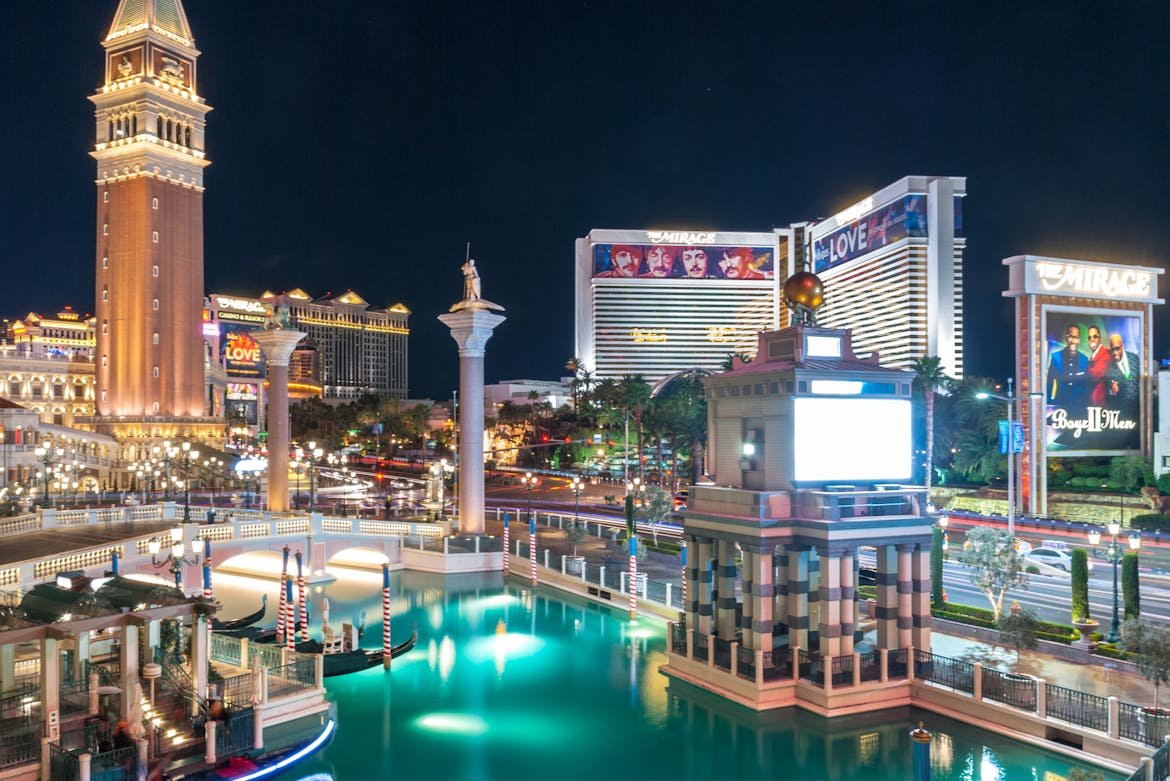
Las Vegas skyline illuminated at dusk, a major gateway for travelers connecting across the U.S. Southwest. Photo: David Vives / Pexels
Southwest Airlines has announced a new nonstop route connecting Hilo on Hawaii’s Big Island with Las Vegas, further expanding the carrier’s growing network between the Hawaiian Islands and the mainland United States.
The new service is scheduled to launch on August 6, 2026, and will operate three times a week on Mondays, Thursdays, and Fridays, offering a direct link between two destinations with strong leisure and family travel demand.
Westbound flights from Las Vegas will depart at 9:30 a.m. Pacific Time and arrive in Hilo at 12:35 p.m. local time, while eastbound flights will leave Hilo at 8:45 p.m. and land in Las Vegas at 5:10 a.m. the following morning. The schedule is designed to maximize connectivity, allowing travelers arriving in Las Vegas to easily connect onward to dozens of other destinations served by Southwest from its Nevada hub.
Las Vegas has become one of Southwest’s most important operating bases, with the airline offering nonstop service to roughly 75 destinations and operating hundreds of daily departures. By linking Hilo directly to Las Vegas, Southwest is positioning the route as both a point-to-point option for Big Island travelers and a convenient gateway to the rest of its domestic network. For residents of eastern Hawaii, the new flights eliminate the need to connect through Honolulu, saving time and simplifying mainland travel.
Ahead of the full launch, Southwest plans to operate a limited preview of the route timed around the Merrie Monarch Festival, one of the Big Island’s most significant cultural events. Special nonstop flights will operate in April, giving travelers an early opportunity to experience the new service while supporting demand during one of Hilo’s busiest periods of the year. The preview also allows the airline to test operations and gauge interest before the regular schedule begins.
Southwest has served Hilo International Airport since January 2020, gradually building a presence focused on inter-island and mainland connectivity. The addition of Las Vegas marks one of the most significant expansions at the airport since the airline’s arrival and reflects sustained demand from both local residents and visitors. Hilo has long been seen as underserved compared to other Hawaiian gateways, and the new route represents a meaningful boost in access for the eastern side of the island.
The airline also highlighted ongoing onboard enhancements across its Hawaii-based fleet, including in-seat power, improved overhead bin space, and expanded extra-legroom seating options. These upgrades align with Southwest’s broader evolution as it adapts its product for longer-haul leisure markets while maintaining its core focus on value and customer-friendly service.
For Hawaii travelers, the new nonstop flights promise faster access to the mainland, greater choice, and more flexibility. For Southwest, the Hilo–Las Vegas route underscores its continued confidence in Hawaii as a key growth market and signals further expansion opportunities still to come.
Holland America Line will mark America’s 250th anniversary with a special Fourth of July cruise in 2026, blending historic ports, onboard celebrations, and patriotic programming.
By Yuliya Karotkaya
Published:
Updated:
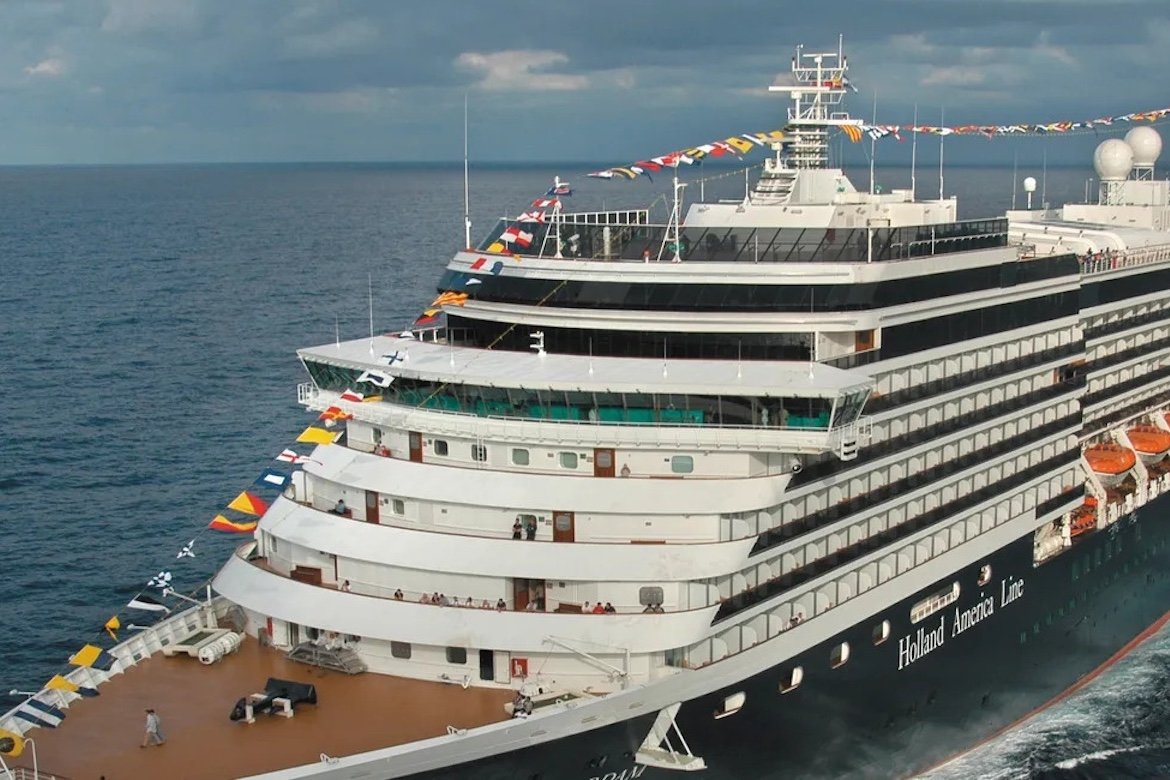
A cruise ship docked at a port during the summer travel season. Photo: Holland America Line
Holland America Line is preparing to mark a major national milestone with a themed voyage celebrating America’s 250th anniversary in 2026.
The cruise line has announced a special seven-day sailing designed to coincide with the Fourth of July, offering guests a mix of festive onboard experiences and historically significant destinations tied to the country’s founding and growth.
The initiative reflects a broader effort by the company to connect cruising with cultural heritage and meaningful travel moments.
The commemorative cruise, titled “America’s 250th Celebration: Stars and Stripes,” will depart from Boston on July 4, 2026. One of the highlights of the voyage will take place before the ship even leaves port, as guests will be able to watch Independence Day fireworks from Boston Harbor.
Onboard, the celebration continues with a Fourth of July party in the Lido area, live music performances, and a lineup of activities designed to highlight American traditions and history.
A Fourth of July at Sea with Historic Port Calls
Beyond the festivities, the itinerary has been curated to reflect key chapters of American history. The ship will call at Norfolk, Virginia, a city closely linked to U.S. naval heritage, before continuing on to New York City for an overnight stay.
The extended visit in New York allows guests additional time to explore landmarks, museums, and neighborhoods that have played an outsized role in shaping the nation’s political, cultural, and economic identity.
Onboard programming is designed to balance entertainment with engagement. Guests can take part in an American-themed scavenger hunt, attend a cooking demonstration inspired by regional cuisine, and enjoy performances that reflect different eras of U.S. music.
Together, these elements aim to create an atmosphere that feels celebratory without losing sight of the historical significance behind the anniversary.
Broader Partnerships and Long-Term Commemoration Plans
The America’s 250th anniversary cruise is part of a wider strategy by Holland America Line to align itself with major cultural moments through partnerships and limited-edition experiences.
The company has already announced a collaboration with Pan Am, reviving the legacy of the iconic airline with a 28-day “Pan Am 100th Anniversary Legendary Voyage” scheduled to sail in 2027. Additional co-branded offerings and heritage-focused collaborations are expected to be revealed in the years leading up to the 2026 celebrations.
In parallel with these initiatives, the cruise line is also highlighting its commitment to honoring service members. A Military Appreciation Offer is being extended to active-duty personnel, veterans, and retirees, allowing eligible guests to receive onboard credit as a gesture of thanks for their service.
Company executives say the goal is to commemorate America’s past, present, and future through thoughtfully designed travel experiences rather than one-off promotions.
By combining patriotic celebrations, historic destinations, and brand partnerships rooted in American heritage, Holland America Line is positioning its 2026 offering as more than just a themed cruise. Instead, it aims to provide travelers with a meaningful way to participate in a once-in-a-generation national milestone while enjoying the comforts and traditions of classic cruising.
A new global analysis reveals which airlines kept passengers waiting the longest in 2025, with delays adding up to years of lost time worldwide.
By Yuliya Karotkaya
Published:
Updated:
Passengers queue at airport check-in counters during a busy travel period. Photo: Phil Mosley / Unsplash
Airline delays continued to shape the global travel experience in 2025, with new data highlighting just how much time passengers collectively spent waiting on aircraft.
According to a report released by flight-tracking app Flighty, travelers worldwide lost an extraordinary amount of time due to late departures, congestion, and ground delays, underscoring how fragile airline schedules remain even as travel demand stays strong.
After analyzing data from more than 22 million flights globally, Flighty found that nearly one in three flights operated by some major carriers arrived late this year. Ryanair topped the list as the world’s most delayed airline, with 29 percent of its flights arriving behind schedule. EasyJet and Air France followed closely, each also recording delays on 29 percent of their services.
While the percentages were similar, Ryanair’s massive scale meant it was responsible for the greatest total volume of delayed passenger hours.
Other major carriers rounded out the top of the rankings. U.S.-based ultra-low-cost airline Frontier placed fourth, with 28 percent of flights delayed, followed by Lufthansa and Qantas at 26 percent each. The remainder of the top ten included KLM, Air Canada, JetBlue, and Southwest Airlines, all of which saw delays affecting roughly a quarter of their flights throughout the year.
How Delays Added Up to Years of Waiting
Beyond simple arrival statistics, Flighty examined what happens after planes land. The analysis looked at the gap between a flight touching down and passengers actually reaching the gate. Factors such as runway queues, taxiway congestion, crew availability, equipment issues, and weather-related restrictions contributed significantly to extended wait times.
The findings revealed that about 30 percent of all flights experienced additional delays after landing. When totaled globally, those minutes amounted to roughly 1.4 million hours of waiting time, the equivalent of 161 years spent sitting inside aircraft. Flighty described this metric as capturing the most frustrating moments of air travel, when passengers are technically at their destination but still stuck onboard.
The Financial Cost of Being Late
Delays are more than just an inconvenience; they also carry a substantial economic impact. Research cited by aviation authorities shows that air traffic control delays alone cost airlines and passengers billions each year. In Europe, delays tied specifically to air traffic management were estimated to have cost around $6.8 billion between late 2024 and October 2025, affecting everything from missed connections to crew scheduling and aircraft utilization.
For travelers, delays can lead to missed meetings, lost vacation time, and additional out-of-pocket expenses. For airlines, persistent delays strain operations, increase fuel burn, and erode customer trust. While some causes, such as weather, remain unavoidable, the data highlights ongoing challenges in managing crowded airspace and airport infrastructure.
As global travel volumes continue to rise, the 2025 rankings serve as a reminder that punctuality remains one of the airline industry’s toughest problems to solve – and one that directly shapes how passengers experience flying.
Join our list to receive latest Blockchain, Crypto & Fintech news:
WordPress database error: [Table 'u752143311_aXVuj.wp_coingecko_coins' doesn't exist]
SELECT coins.*, meta.post_id as post_id
FROM `wp_coingecko_coins` coins
INNER JOIN wp_postmeta meta ON (meta.meta_key = 'wpcf-coin-main-tag' AND meta.meta_value = coins.slug )
ORDER BY market_cap_usd
DESC LIMIT 9