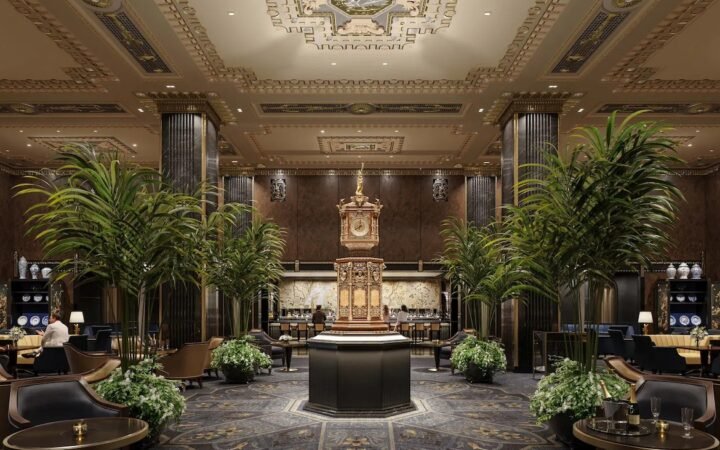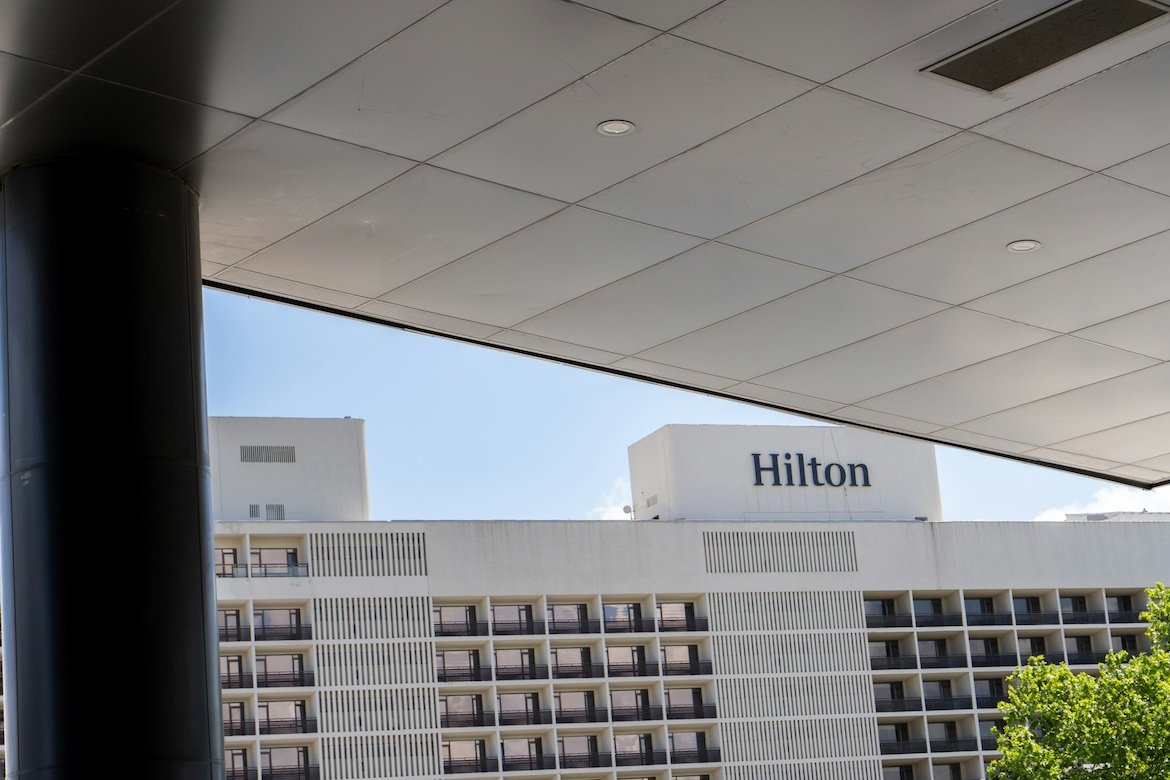

The UK Competition and Markets Authority (CMA) has launched a formal investigation into whether Hilton, InterContinental Hotels Group (IHG), and Marriott shared competitively sensitive information through a hotel benchmarking platform owned by CoStar Group.
The probe centers on the use of STR, a widely used hospitality analytics tool that provides performance data such as occupancy rates, average daily room rates, and revenue per available room.
The regulator said it will examine whether the hotel groups used STR in a way that may have reduced competition in the UK market. The investigation has been opened under the Competition Act 1998 and will also include CoStar and its UK subsidiary. The initial inquiry is expected to run for six months, with the possibility of a statement of objections if the CMA provisionally concludes that competition law has been breached.
Between them, Hilton, IHG, and Marriott operate hundreds of properties across the UK. Hilton manages more than 200 hotels under brands such as Hampton by Hilton and DoubleTree. IHG operates over 300 UK properties, including Holiday Inn and Crowne Plaza. Marriott has approximately 135 locations nationwide.
Focus on Third-Party Data Platforms
The CMA emphasized that companies routinely use data analytics tools and algorithms to inform commercial decisions. Such tools can deliver consumer benefits, including lower costs and more responsive pricing that reflects demand and supply conditions.
However, the regulator warned that when competitors share commercially sensitive information – even indirectly through a third-party platform – it may reduce uncertainty about rivals’ strategies.
According to the CMA, diminished uncertainty can make it easier for companies to anticipate competitors’ pricing moves or capacity decisions, potentially softening competitive pressure. The concern is not the existence of benchmarking data itself, but whether the way it was accessed or shared could have enabled coordination.
STR, acquired by CoStar in 2019, has long provided industry-standard metrics that hotels use to assess performance. Its datasets allow operators to compare occupancy and pricing trends across markets. While such benchmarking is common in hospitality, regulators are increasingly scrutinizing how aggregated and near-real-time data may influence pricing behavior.
Industry and Market Reaction
CoStar said it was surprised by the CMA’s interest in what it described as a longstanding platform used for decades by businesses and public entities to understand market dynamics.
The company confirmed it is cooperating fully with the investigation. IHG also stated it would cooperate with the regulator and noted that no assumptions should be made about whether competition law has been infringed. Marriott and Hilton did not immediately comment outside U.S. business hours.
The announcement weighed on investor sentiment. Shares in IHG fell in London trading, while Marriott and Hilton shares declined in U.S. pre-market activity. The broader FTSE 100 index saw comparatively smaller losses.
The case forms part of the CMA’s broader efforts to ensure emerging technologies and algorithmic tools support fair competition rather than undermine it. As pricing algorithms and data-sharing platforms become more central to travel and hospitality strategy, regulators appear increasingly focused on how digital transparency intersects with antitrust law.