
The aviation shock triggered by the escalating conflict involving Iran has entered a deeper and more disruptive phase, with major Middle Eastern airports remaining closed and thousands more flights scrapped worldwide.
What began as immediate safety suspensions has evolved into a broader breakdown of one of the world’s most critical transit corridors, sending airline stocks tumbling and stranding hundreds of thousands of passengers across continents.
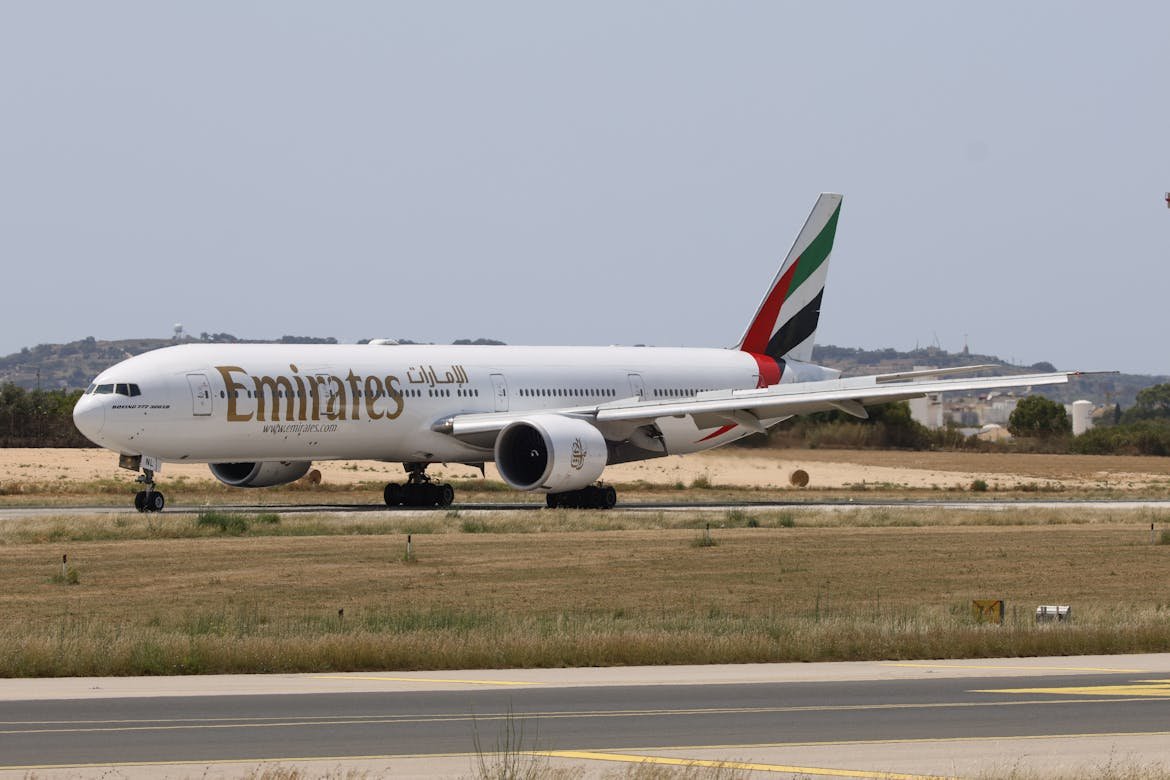
Dubai, Abu Dhabi, and Doha – three of the most important global transfer hubs – have faced repeated closures or severe operational restrictions. Emirates, Etihad Airways, and Qatar Airways collectively canceled hundreds of flights as airspace across the Persian Gulf emptied.
Tracking data showed vast stretches of normally crowded skies over Iran, Iraq, Kuwait, Bahrain, Israel, Qatar, and the United Arab Emirates largely devoid of commercial aircraft.
Gulf Super-Connector Network Comes to a Halt
The Gulf region functions as a global super-connector, enabling passengers to travel between Europe, Asia, Africa, and North America with a single stop. The suspension of operations at these hubs has severed key arteries of global air traffic. Emirates, the world’s largest international carrier, halted operations to and from Dubai for extended periods, while Etihad and Qatar Airways followed with broad cancellations tied to airspace closures.
The impact quickly spread beyond the Middle East. Cathay Pacific suspended services to the region through early March, while Indian carriers canceled hundreds of domestic and international flights. Air India halted select departures to Europe and North America, and airlines across Asia-Pacific, Europe, and North America either suspended services or rerouted aircraft around restricted airspace.
Airline shares reflected investor anxiety. Major European carriers saw double-digit intraday declines, while airlines in Asia and Australia also fell sharply. The prospect of prolonged disruption – especially as the summer travel season approaches – has heightened concern about revenue losses and operational instability.
Oil Prices, Rerouting Costs, and Operational Strain
The conflict has also sent oil prices sharply higher, increasing jet fuel costs – already airlines’ largest expense. Brent crude spiked amid fears of broader instability in the energy-rich region. At the same time, aircraft forced to avoid closed airspace must take longer routes, increasing fuel burn and crew costs while disrupting tightly coordinated scheduling systems.
Pilots and crew are now scattered across global networks due to cancellations, complicating recovery efforts. Even once airspace reopens, airlines may require days to reposition aircraft and personnel. Analysts warn that the longer closures persist, the more severe the backlog and financial impact will become.
For passengers, uncertainty remains the defining feature. Industry analysts advise travelers to prepare for extended delays and cancellations as the situation evolves.
With major Gulf transit hubs offline and conflict zones expanding, the aviation sector faces its most significant disruption since the pandemic-era shutdowns – a reminder of how swiftly geopolitical crises can fracture the architecture of global travel.