In the space of a weekend, a region built around seamless connections – hub airports, flagship ports, and tightly timed itineraries – has become a bottleneck.
Rising political and military tensions in the Persian Gulf have disrupted both shipping and aviation, leaving thousands of cruise passengers unable to disembark as planned or fly home.
With key maritime routes under severe pressure and regional airspace closures rolling through major gateways, what should have been routine turnaround days have turned into indefinite holds.
Ships Sheltering in Place as Routes Tighten
Several vessels operating Gulf itineraries have remained in port rather than risk sailing in a rapidly shifting security environment. Among the most directly affected are TUI Cruises’ Mein Schiff 4 in Abu Dhabi and Mein Schiff 5 in Doha, where passengers have faced abrupt changes to plans that once looked straightforward: dock, transfer, flight, home.
Instead, some guests have been instructed to stay onboard and take precautions, including remaining indoors and away from windows as the situation escalated. Even where onboard life continues, it does so under the logic of risk management rather than leisure.
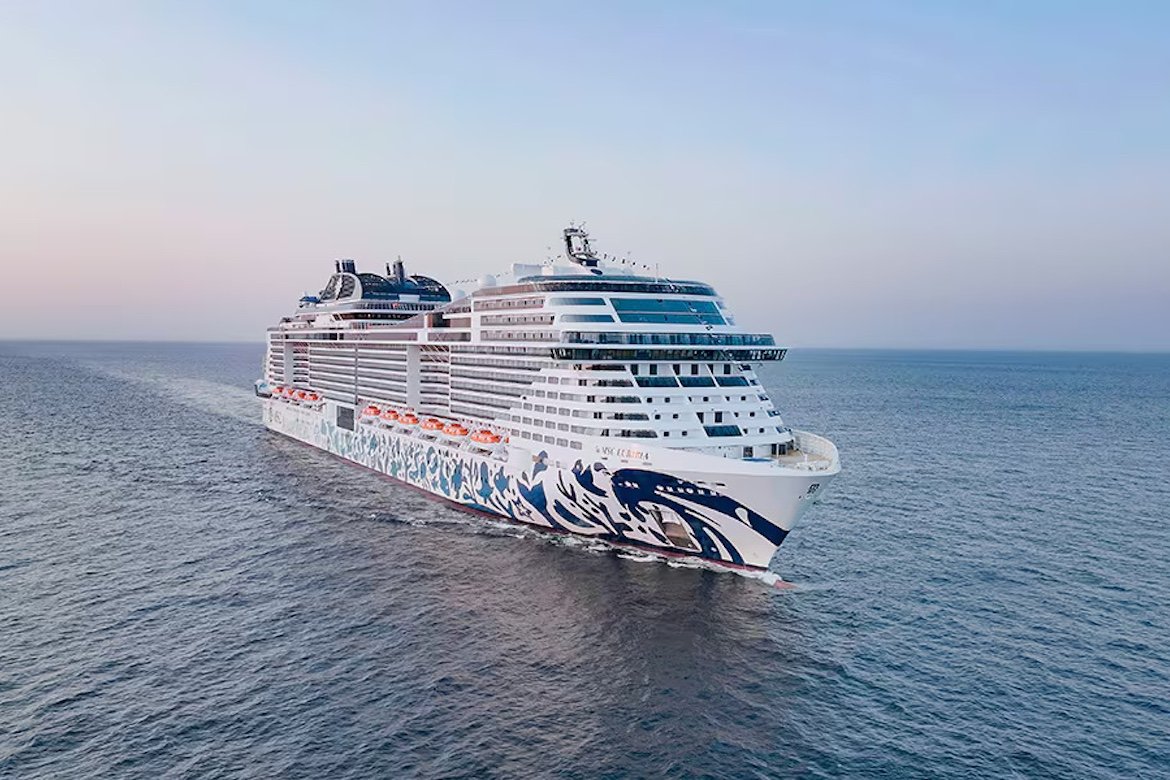
Other ships have also been impacted. MSC Euribia, for example, has remained in Dubai following itinerary changes, while Celestyal’s vessels have paused operations as decisions are reassessed alongside local authorities. The common denominator is not a single port or company, but the same missing piece: a stable and predictable corridor to move people safely out of the region.
Airports and Airlines Compound the Logjam
For many passengers, the real choke point is not the dock – it is the departure gate that never opens. With airports across the Gulf facing airspace restrictions and operational disruption, cruise guests who intended to fly home have found themselves with no reliable onward path.
In Doha, reports describe passengers being turned away at the airport after hours of waiting, forced back to the ship with little clarity on when travel would resume. Across the region, hubs that typically absorb disruption are now part of it, making rebooking and rerouting far harder than in a normal delay cycle.
The spillover hits beyond cruise travelers. Airlines operating through Gulf hubs have faced cancellations and delays, adding to crowded terminals and forcing travelers into contingency planning that often requires multiple rebookings. Even when flights operate, uncertainty has changed the math: connecting options, backup routes, and flexible timing are no longer “nice to have” but essential.
What Travelers Can Do While Plans Remain Unclear
In a fast-moving crisis, the practical priority is optionality. Travelers already in the region should keep documentation, medication, and essentials accessible, and assume plans may change with little notice.
Stay aligned with official instructions from cruise lines, port authorities, and airlines, and be ready to pivot to indirect routes if direct departures are canceled. Family communication matters too: cruise lines have used updates and hotlines to reduce uncertainty for loved ones at home, and passengers should take advantage of any official channels offered.
The broader takeaway is uncomfortable but clear. Gulf itineraries can be spectacular when the system works. When it doesn’t, the same concentration of routes and hubs that makes travel efficient can also magnify disruption – leaving travelers waiting at the waterline, watching the timetable dissolve.