As previously reported in our coverage of the EU Entry-Exit System flexibility measures, the European Union has allowed Schengen states limited room to ease implementation during peak summer months. However, Europe’s leading aviation associations now argue that current provisions may not be enough to prevent serious operational disruption.
In a joint letter to EU Commissioner Magnus Brunner, ACI Europe, Airlines for Europe, and International Air Transport Association warned that airport border queues could stretch to four hours or more this summer if immediate corrective action is not taken. The groups say that while EU institutions consider the rollout of the Entry-Exit System, or EES, to be progressing smoothly, the on-the-ground reality at airports tells a different story.
EES, introduced in phases beginning in October 2025, replaces passport stamping for non-EU travelers with biometric registration, including fingerprint and facial image capture. Currently, around 35% of third-country nationals entering the Schengen Area must be registered under the system’s progressive deployment. Even at this partial level, aviation groups report persistent waiting times of up to two hours at some airport border checkpoints.
Structural Bottlenecks at Border Control
Industry representatives identify three main sources of delay. First is chronic understaffing at border control posts, particularly during high-traffic periods. Second are unresolved technical issues, including glitches in automated border systems designed to speed up biometric processing. Third is the limited adoption of the Frontex pre-registration app by Schengen states, which was intended to allow travelers to submit certain data in advance.
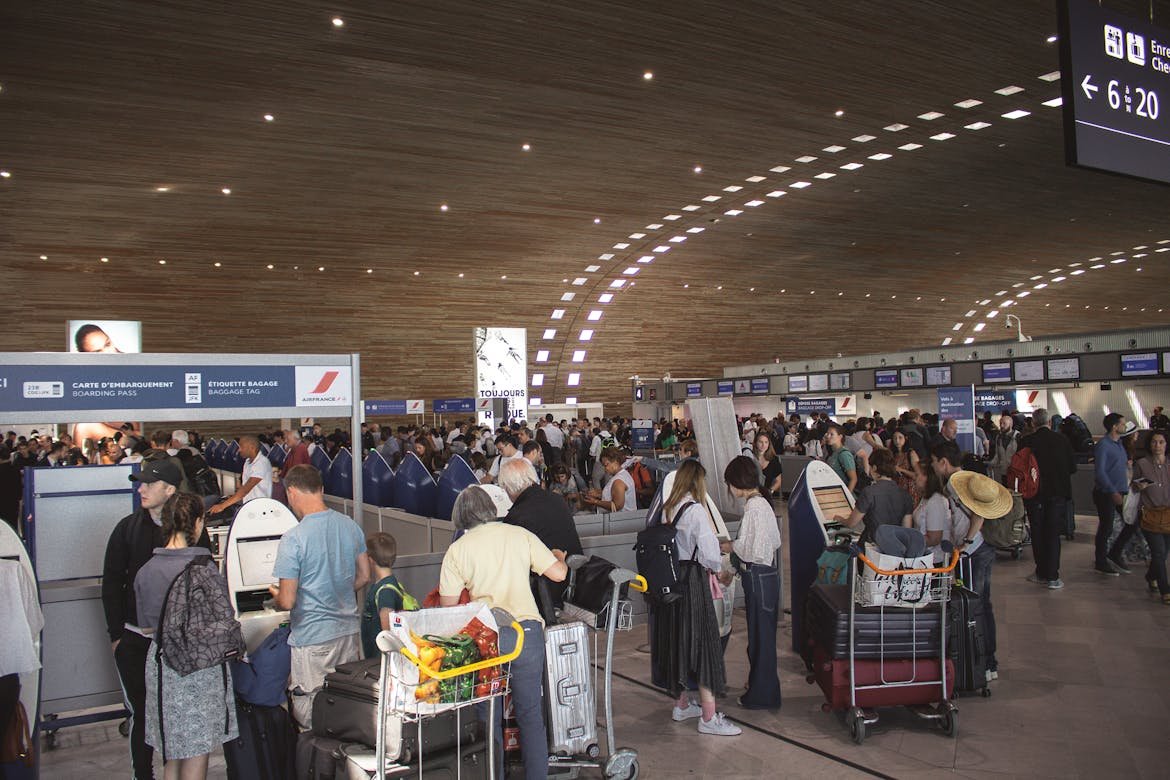
These weaknesses, they argue, risk compounding congestion when passenger volumes double during July and August. Several airports across Spain, Italy, France, Germany, the Netherlands, Portugal, Belgium, and other Schengen countries have already recorded peak-time delays of up to three hours in recent months. In some cases, travelers reportedly missed onward flights due to extended queues.
The aviation sector stresses that it supports digital border modernization but insists the rollout must reflect operational realities. Without greater flexibility, mandatory full registration of all eligible travelers at the height of summer could push processing times beyond manageable limits.
Call for Extended Flexibility Through 2026
A central demand from the industry is for the European Commission to confirm that member states can partially or fully suspend EES operations until at least October 2026 if necessary. Under Regulation 2025/1534, current suspension mechanisms may expire beyond early July, leaving uncertainty about whether countries can legally scale back checks under the Schengen Border Code during peak congestion.
The Commission has indicated that additional temporary suspensions of up to 90 days, with a potential 60-day extension, could be applied after the April implementation deadline. However, aviation leaders argue that clearer guarantees are needed before the busiest travel period begins.
For travelers, the immediate advice remains practical: expect longer processing times at passport control and proceed to border checkpoints as early as possible. For policymakers, the challenge lies in balancing long-term digital transformation with short-term operational capacity. As summer approaches, the success of EES may depend less on its technological ambition and more on its flexibility in execution.