The U.S. aviation system faces massive delays and cancellations as the government shutdown drags into its second month, leaving air traffic controllers and TSA staff unpaid.
By Yuliya Karotkaya
Published:
A passenger waits by the window at a quiet airport terminal as flight delays ripple across the U.S. Photo: Joel Mott / Unsplash
As the U.S. government shutdown stretches into its 34th day, the country’s aviation system is buckling under growing pressure. Thousands of air traffic controllers and Transportation Security Administration (TSA) officers are working without pay, leading to widespread delays, cancellations, and a mounting crisis for both airlines and passengers. Federal officials warn that conditions could deteriorate further if a funding resolution is not reached soon.
Staffing Shortages Disrupt Flights Nationwide
Transportation Secretary Sean Duffy confirmed that nearly half of all major air traffic control centers across the United States are now short-staffed, forcing the Federal Aviation Administration (FAA) to slow operations for safety reasons. “We will delay, we will cancel, any kind of flight across the national airspace to make sure people are safe,” Duffy said, adding that the situation could worsen before improving.
The ripple effects have been immediate and severe. Newark Liberty International Airport saw multiple ground stops over the weekend, with delays exceeding three hours and more than 120 flights canceled. Similar disruptions hit New York’s JFK and LaGuardia airports, while Houston’s George Bush Intercontinental reported three-hour security lines due to reduced TSA staffing. Dallas, Austin, and Washington airports are now facing growing backlogs as controller absences multiply.
According to Airlines for America, more than 3.2 million passengers have been impacted by delays or cancellations since the shutdown began on October 1. The association said that 79% of recent flight delays were directly linked to air traffic control staffing issues, up sharply from the pre-shutdown average of 5%. Even airports previously reporting normal operations, such as Los Angeles International, have now begun experiencing rolling slowdowns as shortages spread.
Duffy acknowledged that many controllers are struggling to provide for their families while continuing to work unpaid. “They’re trying to put food on the table,” he said, urging patience as the FAA and the administration explore emergency funding options.
Airlines and Industry Leaders Press for Resolution
Airline executives have expressed growing alarm over the crisis. United Airlines CEO Scott Kirby noted that the shutdown is beginning to affect flight bookings and could disrupt the upcoming holiday travel season. Industry leaders, including Airlines for America President Chris Sununu and major carrier CEOs, have called on Congress to pass a “clean continuing resolution” to reopen the government and restore pay for essential workers.
The U.S. Travel Association estimates that the country has already lost nearly $4.6 billion in travel spending since the shutdown began. With air traffic increasingly constrained and TSA wait times soaring, travelers are facing significant uncertainty across the nation’s major hubs.
For now, the FAA continues to operate at reduced capacity, prioritizing safety above all else. However, experts warn that prolonged shortages could compromise efficiency, leading to even longer delays. Duffy emphasized that if the system becomes unsafe, he would not hesitate to halt all U.S. air traffic altogether.
The growing disruption underscores how fragile the nation’s aviation infrastructure becomes when political gridlock stalls critical funding. As the shutdown drags on with no clear resolution in sight, millions of passenger – and the broader travel industry – remain grounded in uncertainty.
Ryanair reports a 42% rise in first-half profit, driven by fare increases, strong summer demand, and early Boeing 737 MAX deliveries, prompting the airline to lift its full-year passenger outlook.
By Yuliya Karotkaya
Published:
Updated:
A Ryanair plane flying across clear skies, symbolizing the airline’s strong performance and expanding network. Photo: Rafael Minguet Delgado / Pexels
Europe’s largest low-cost carrier, Ryanair, has reported a strong first half of the fiscal year, with profits climbing by around 42% to €2.54 billion. The results reflect a combination of higher airfares, early aircraft deliveries, and robust travel demand across Europe.
After a busy summer season, the airline has raised its full-year passenger forecast to 207 million, signaling continued momentum in the months ahead.
Growth Fueled by Pricing and Fleet Expansion
Chief Executive Michael O’Leary highlighted that Ryanair’s success this year stems from a balance of strategic fare increases, expanded capacity, and disciplined cost management. The airline lifted its average ticket price by 13%, bringing the average fare to about €58, as travelers continued to prioritize affordable short-haul trips across Europe despite inflation pressures.
Ryanair’s results also benefited from the early delivery of 23 new Boeing 737 MAX 8 aircraft, which allowed the company to expand its route network ahead of the peak summer period.
These new jets are more fuel-efficient, enabling Ryanair to keep operating costs low while adding capacity in key leisure markets. The carrier expects to receive more aircraft in the coming months, helping to further strengthen its position as Europe’s dominant budget airline.
The airline’s hedging strategy has also paid off. Ryanair has secured 80% of its fuel needs through 2027 at prices below $67 per barrel, protecting it from potential volatility in global energy markets. Combined with high load factors and increased yields, this has helped the company maintain one of the lowest unit costs in the aviation industry.
Across Europe, tight capacity due to delayed aircraft deliveries and higher demand has allowed Ryanair to sustain strong pricing. Many travelers have shifted from long-haul holidays to short, regional getaways, a trend that has worked in the carrier’s favor. Popular routes in Spain, Italy, and Eastern Europe experienced especially strong growth, supported by Ryanair’s aggressive capacity deployment strategy.
While the outlook remains positive, O’Leary cautioned that the 13% fare growth seen in the first half is unlikely to continue at the same pace for the remainder of the year. Economic uncertainty, fuel costs, and potential air traffic control disruptions could impact performance. Nevertheless, the airline expects continued profitability and steady traffic growth through the winter season.
Ryanair’s robust financial results stand out in a challenging operating environment for global aviation. The airline’s ability to raise fares while maintaining its low-cost advantage underscores the strength of its model and its adaptability to market changes. With new aircraft enhancing efficiency and a disciplined approach to expansion, Ryanair remains well-positioned to capitalize on Europe’s ongoing travel recovery.
After two decades of anticipation, Egypt unveils the Grand Egyptian Museum near the Pyramids of Giza – the world’s largest archaeological complex dedicated to a single civilization.
By Yuliya Karotkaya
Published:
Updated:
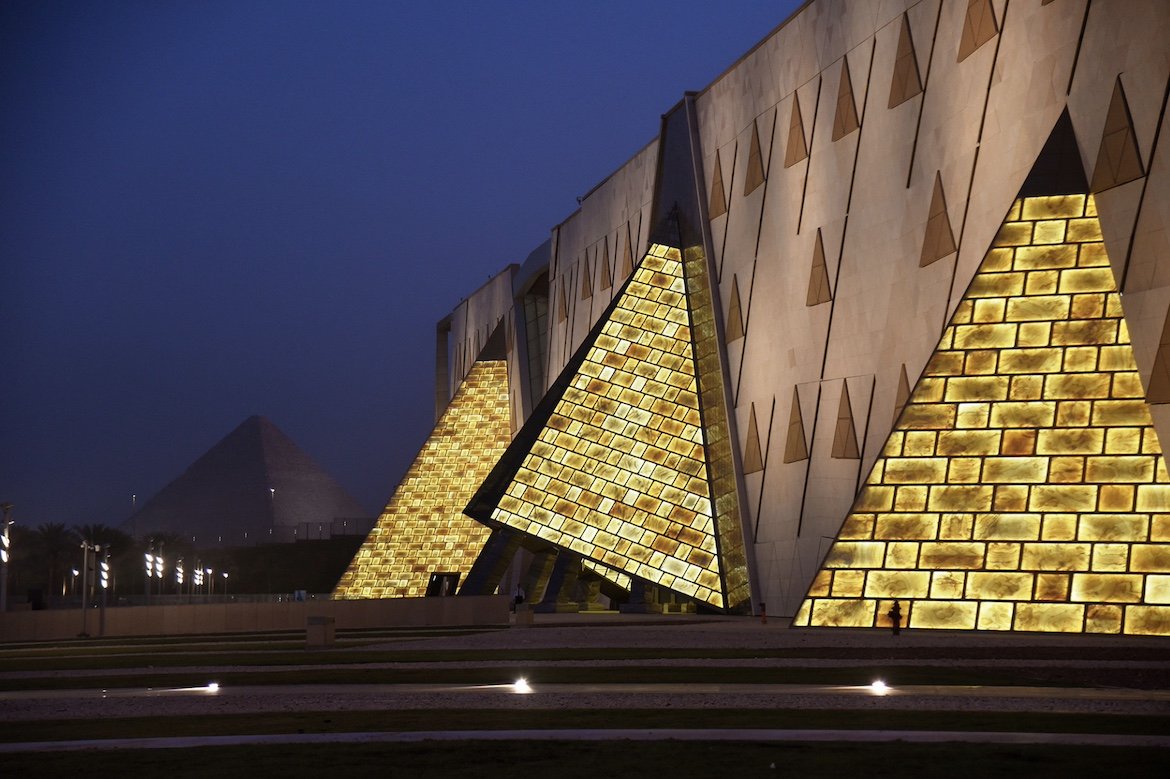
The illuminated golden facade of the Grand Egyptian Museum glows against the night sky near the Pyramids of Giza. Photo: Grand Egyptian Museum
After more than twenty years of planning, delays, and anticipation, Egypt has officially opened the Grand Egyptian Museum (GEM) – a monumental cultural complex designed to showcase over 7,000 years of history. Overlooking the Giza Pyramids, this $1 billion project represents the largest archaeological museum in the world dedicated to a single civilization, blending ancient heritage with modern innovation.
World leaders, royals, and dignitaries gathered on Saturday for a dazzling opening ceremony featuring orchestras, fireworks, laser displays, and traditional pharaonic performances. Egyptian President Abdel Fattah al-Sisi described the museum as “a new chapter in the story of this ancient nation’s present and future,” emphasizing that it symbolizes both national pride and Egypt’s renewed commitment to cultural diplomacy.
A New Home for Egypt’s Timeless Treasures
The Grand Egyptian Museum spans roughly 470,000 square meters – about the size of Vatican City – and sits just one mile from the iconic pyramids. Its sleek, pyramid-inspired design by Dublin-based firm Heneghan Peng Architects contrasts sharply with the aging neoclassical Egyptian Museum in downtown Cairo. The new complex is a world-class facility that merges the timelessness of Egypt’s heritage with 21st-century technology.
Inside, more than 100,000 artefacts tell the story of Egypt’s civilization, from prehistoric times to the Roman era. Among them is an 83-ton, 3,200-year-old statue of Ramses II, now greeting visitors in the vast entrance hall, and the complete contents of Tutankhamun’s tomb – more than 5,000 objects, including the pharaoh’s golden mask, throne, and sarcophagus – displayed together for the first time since their discovery in 1922.
The museum also features 12 grand galleries, an immersive children’s museum, research labs, and a large conservation center. According to GEM CEO Ahmed Ghoneim, the museum’s digital exhibits and mixed-reality displays aim to “speak the language of new generations,” inviting visitors to experience Egypt’s history in innovative and interactive ways.
Reviving Tourism and Cultural Confidence
The museum’s completion marks not just a cultural milestone but a strategic investment in Egypt’s tourism economy. The country, which welcomed a record 15.7 million visitors in 2024, hopes to double that number by 2032. Officials expect between 15,000 and 20,000 visitors a day, with the GEM positioned as a cornerstone of Egypt’s tourism revival alongside infrastructure upgrades such as new metro lines and airports.
For Egypt, the project is deeply symbolic. After the challenges of the Arab Spring, the pandemic, and regional conflicts, the museum’s completion stands as a statement of resilience and renewal. It also serves as a response to the world’s great cultural institutions. As one local newspaper noted, “The GEM is not a replica of the Louvre or the British Museum. It is Egypt’s response to both – born not of empire, but of authenticity.”
Beyond its cultural and political significance, the Grand Egyptian Museum reflects Egypt’s long-standing effort to preserve and reclaim its heritage. Following years of controversy over looted artefacts and foreign holdings, the GEM reasserts the nation’s role as the guardian of one of humanity’s oldest and most influential civilizations.
As fireworks lit the night sky above Giza, the museum opened its doors to the world – not just as a home for ancient treasures, but as a symbol of Egypt’s enduring identity and ambition.
The World’s 50 Best Hotels 2025 celebrates global excellence with Rosewood Hong Kong crowned No. 1. The list reflects Asia’s growing dominance and a shift toward authentic, experience-driven luxury.
By Yuliya Karotkaya
Published:
Updated:
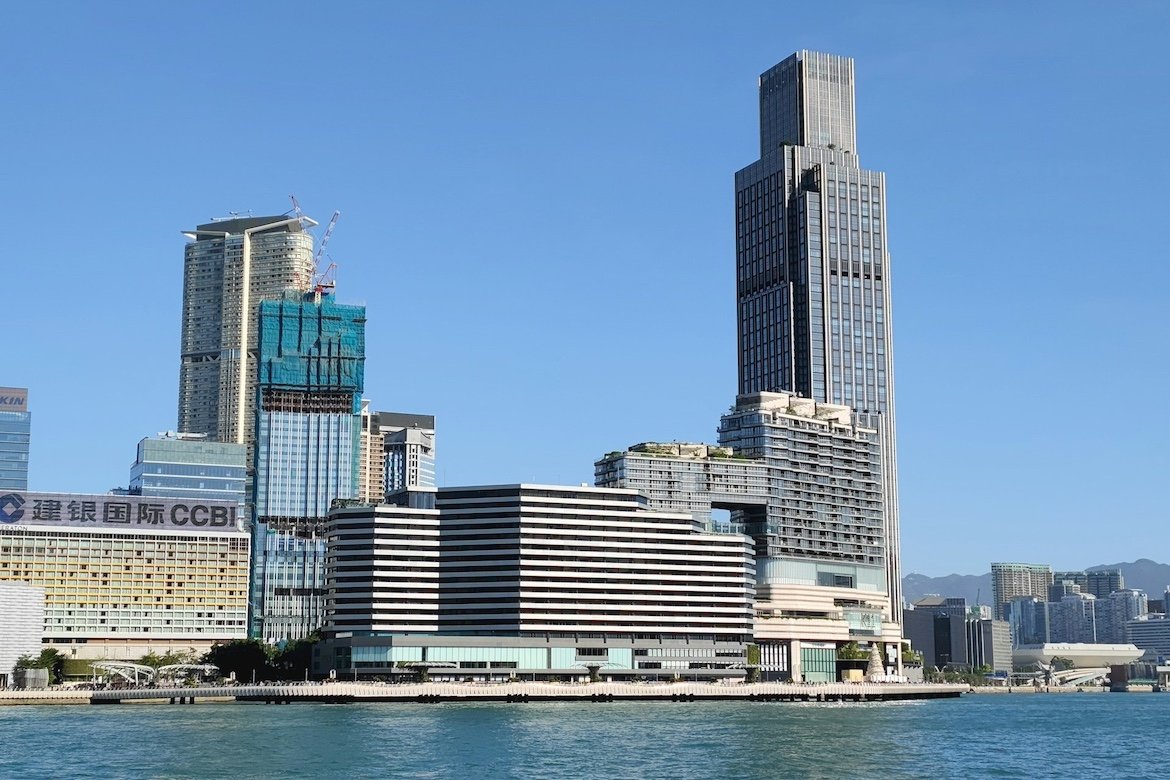
Rosewood Hong Kong on the Tsim Sha Tsui waterfront, acclaimed as the best hotel in the world for 2025. Photo: Cheung Yin / Unsplash
The World’s 50 Best Hotels 2025 ranking has crowned Rosewood Hong Kong as the best hotel in the world, solidifying Asia’s growing influence in global hospitality. Announced at a ceremony in London, the list celebrates hotels that combine innovation, authenticity, and exceptional guest experiences.
Chosen by an academy of over 580 travel experts, the results reveal a continued shift toward properties that deliver both local character and forward-thinking luxury.
A Landmark Win for Rosewood Hong Kong
Perched on the edge of Victoria Harbour in the vibrant Tsim Sha Tsui district, Rosewood Hong Kong has redefined the city’s skyline and hospitality scene since opening in 2019.
Rising 43 stories above the waterfront, the hotel is a destination in itself – featuring twelve acclaimed restaurants and bars, the holistic Asaya wellness center, and the exclusive Manor Club reserved for suite guests. Its 413 rooms and residences are filled with art, light, and panoramic views of the harbor, seamlessly merging contemporary sophistication with the spirit of Hong Kong.
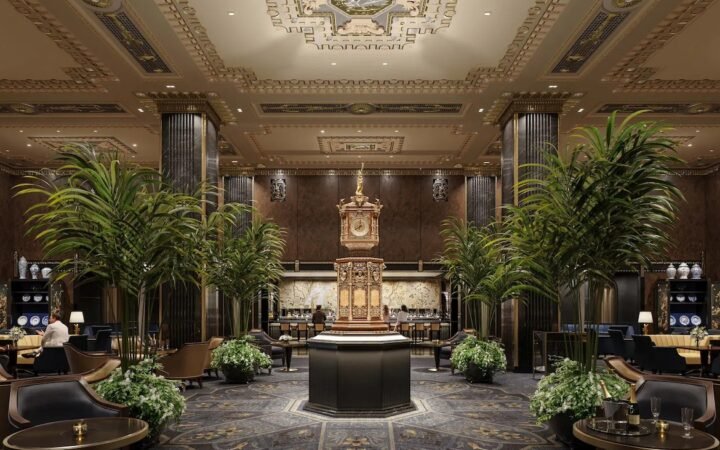
Inside, the design fuses modern refinement with a sense of cultural belonging. From curated artworks to intricate materials and calming tones, every detail reflects the city’s cosmopolitan rhythm. The property’s restaurants, including Holt’s Café and DarkSide, have become local institutions, while the Asaya spa sets new benchmarks in personalized well-being.
The recognition as No. 1 marks not only a triumph for Rosewood Hotels & Resorts but also a defining moment for Hong Kong, signaling its return as a global leader in luxury travel. CEO Sonia Cheng called the award “a tribute to Hong Kong’s creativity, resilience, and spirit.”
The Top 10 Hotels of 2025
This year’s top 10 offers a sweeping view of excellence across continents, with Asia taking a dominant role:
Asia continues to dominate, with Thailand and Hong Kong both placing multiple properties in the top tier. The results highlight how travelers now favor immersive experiences rooted in design, wellness, and culture over traditional opulence.
A Reflection of New Luxury
The 2025 ranking, expanded to include hotels ranked 51–100 for the first time, captures a hospitality landscape in transformation. Properties that blend sustainability, individuality, and emotional connection are leading the way.
For Rosewood Hong Kong, its success encapsulates the new definition of modern luxury – where every guest experience feels deeply personal yet globally inspired.
As the travel world continues to evolve, The World’s 50 Best Hotels 2025 underscores one truth: the best hotels are not just places to stay – they’re cultural landmarks that shape how we experience the world.
Join our list to receive latest Blockchain, Crypto & Fintech news:
WordPress database error: [Table 'u752143311_aXVuj.wp_coingecko_coins' doesn't exist]
SELECT coins.*, meta.post_id as post_id
FROM `wp_coingecko_coins` coins
INNER JOIN wp_postmeta meta ON (meta.meta_key = 'wpcf-coin-main-tag' AND meta.meta_value = coins.slug )
ORDER BY market_cap_usd
DESC LIMIT 9