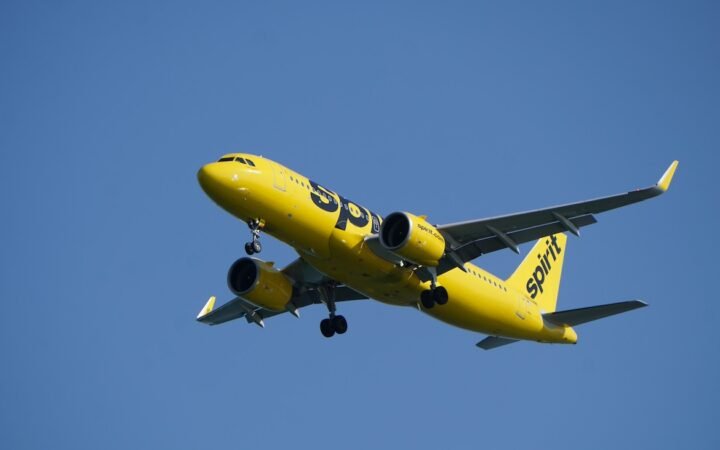
Spirit Airlines says it intends to exit Chapter 11 bankruptcy protection by late spring or early summer, outlining a restructuring plan that would sharply reduce debt, shrink its fleet and reposition the airline for profitability after months of uncertainty.
The ultra-low-cost carrier announced it has reached an agreement in principle with existing bondholders to provide the financial backing required to finalize its reorganization. The details of the agreement are expected to be filed with the U.S. Bankruptcy Court in the coming days. Spirit entered its second bankruptcy filing in nine months in August 2025, triggering sweeping cost-cutting measures across the business.
Chief executive Dave Davis said the airline will emerge from Chapter 11 as a “strong, leaner competitor,” focused on delivering value at a price point consumers expect. The restructuring is set to reduce Spirit’s debt and lease obligations from $7.4 billion before the filing to approximately $2.1 billion upon exit, a significant reset for a carrier that has struggled with sustained operating losses. In the third quarter of 2025, Spirit reported an operating loss of $317 million and a negative operating margin of 14.1 percent.
A Smaller Fleet and Tighter Network
A central element of Spirit’s recovery strategy is a downsized operation. Earlier this month, the airline sought court approval to auction off 20 additional aircraft, a move that would leave it with 94 planes, down from 214 prior to its bankruptcy filing. Since August, Spirit has furloughed flight crew members, reduced airport slots and cut destinations. According to industry data, the carrier is currently flying to 13 fewer destinations than it did a year ago, with overall capacity down nearly 24 percent.
Executives say the airline will shift toward a more disciplined approach to scheduling, aligning flights with periods of strong demand while trimming off-peak flying. Higher aircraft utilization during peak days and fewer marginal routes are intended to stabilize revenue and reduce unnecessary costs. Spirit had previously projected it could return to profitability by 2027, a target that will depend on sustained demand recovery and careful execution of its revised network strategy.
Betting on Premium Upsell
In addition to resizing its footprint, Spirit is moving beyond its bare-bones model by expanding higher-yield offerings. The airline plans to grow sales of its Premium Economy bundle, introduced last summer, as well as its Spirit First bundle featuring the Big Front Seat. These products represent a strategic pivot aimed at capturing more revenue from travelers willing to pay for added comfort while maintaining the carrier’s low base fares.
Spirit also intends to continue enhancing its loyalty program and co-branded credit card partnerships, seeking to diversify revenue streams in a competitive domestic market. Ultra-low-cost airlines were hit hard by economic headwinds in early 2025, when price-sensitive travelers delayed bookings amid broader uncertainty. U.S. carriers now report signs of renewed demand, particularly for domestic leisure routes.
For Spirit, however, the real test begins after it exits Chapter 11. The streamlined balance sheet and reduced fleet may provide breathing room, but the airline will need rapid operational improvement to ensure that this restructuring marks a lasting turnaround rather than another temporary reprieve.