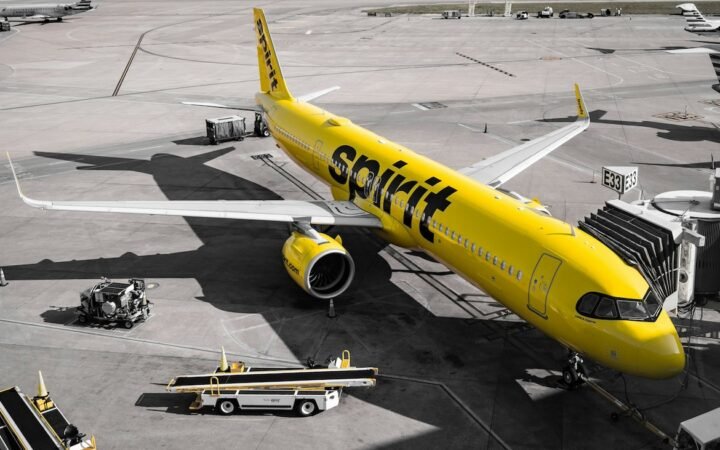


Spirit Airlines may be approaching its most serious breaking point yet, with reports suggesting the carrier could liquidate as early as this week. That marks a sharp turn for an airline that had only recently indicated it expected to emerge from bankruptcy in the coming months.
Instead, Spirit now appears to be running into the combined force of rising fuel costs, a weak financial position, and a business model that has become far harder to sustain in the current U.S. airline market.
The airline has already been through two bankruptcies in less than a year, an extraordinary level of instability even in a cyclical industry. While management had outlined a plan centered on shrinking operations and focusing on stronger demand periods and more profitable routes, that strategy was always going to be difficult. For a carrier built on ultra-low fares and high aircraft utilization, shrinking can protect cash in the short term, but it also makes it harder to maintain the cost advantages that low-cost airlines rely on.
Why Spirit’s Position Has Become So Fragile
Spirit’s problems did not begin with the latest fuel shock, but higher oil prices may have pushed an already weak company closer to the edge. Fuel is one of the biggest airline expenses after labor, and low-cost carriers like Spirit are especially exposed when costs jump quickly. They generally have fewer high-margin buffers than larger rivals, including premium cabins, large loyalty-program profits, and broad international networks.
That structural weakness has been building for years. After the pandemic, wages and operating expenses climbed, domestic airfare came under pressure from too much capacity, and customer behavior shifted toward airlines that could offer more comfort or more flexibility. Spirit tried to respond by adding bundled fares and roomier seating options to attract higher-spending travelers, but that repositioning did not erase the basic challenge: it remained an airline trying to compete in a brutally price-sensitive segment while facing rising costs and weakened finances.
The company was also hit by a series of setbacks outside its control. Pratt & Whitney engine issues grounded dozens of Airbus aircraft, reducing operational flexibility and putting additional strain on the schedule. On top of that, the proposed JetBlue acquisition was blocked, removing what might have been the clearest path to survival.
What Liquidation Would Mean
If Spirit does liquidate, it would be one of the most significant U.S. airline failures in years. It would mean the disappearance of a carrier that, for all its polarizing reputation, played a major role in keeping fares low in many domestic leisure markets. It would also have immediate consequences for employees, travelers, and competitors.
For passengers, Spirit’s exit would likely reduce low-fare competition on overlapping routes and could eventually put upward pressure on prices in some markets. For rivals, especially airlines competing for similar leisure traffic, the disappearance of Spirit could create room to absorb demand. For the broader industry, it would be another sign that the low-cost model in the United States is under intense strain when it lacks either scale or premium revenue support.
Spirit once stood out for steady profitability and a clear niche. Now it is a case study in how quickly the economics of airline competition can change. If liquidation does happen, it will not be because of one single event. It will be the result of several years of pressure finally converging at once.