A global poll of 208,000 travelers reveals the top 10 most desirable countries to visit in 2025, with Japan returning to first place after more than a decade.
By Yuliya Karotkaya
Published:
Updated:
A serene view of Minoo, Osaka - capturing the spirit of Japan, the world’s most desirable country to visit in 2025. Photo: Satoshi Hirayama Satoshi Hirayama / Pexels
Every year, millions of travelers share their opinions on the world’s most inspiring destinations, shaping a picture of where global wanderlust is headed next. The latest Wanderlust Reader Travel Awards – backed by over 4.8 million votes from 208,000 adventure seekers – reveal a clear shift toward places that combine nature, heritage, innovation, and meaningful cultural encounters.
The top 10 list for 2025 celebrates destinations that not only deliver unforgettable experiences but also reward those who explore beyond the obvious highlights. Below are the world’s most desirable countries for 2025 – the places travelers say stand out for beauty, hospitality, culture, and authenticity.
Top 10 Most Desirable Countries in the World
1. Japan
Japan returns to the top spot for the first time in more than ten years, reaffirming its reputation as one of the world’s most diverse and enriching destinations. Travelers continue to fall in love with its contrasts: the calm of ancient temples, the futuristic energy of neon-lit megacities, and the refined craftsmanship found in towns such as Kanazawa. Many also highlighted the wild coastlines of Shikoku and the remote islands of Okinawa, where Japan’s traditions feel especially pure. Its blend of innovation, precision, and deep-rooted culture makes every visit feel layered and memorable.
2. Costa Rica
Costa Rica ranks highly thanks to its unmatched biodiversity and long-standing commitment to sustainability. Travelers are drawn to its rainforest lodges, volcano hikes, and wildlife encounters – from colourful birds to sloths and sea turtles. The country’s pura vida philosophy continues to resonate strongly with visitors seeking a more mindful, eco-focused escape.
3. Canada
Canada’s vast wilderness, glacier-carved landscapes, and multicultural cities make it a universal favorite. From the Rockies to the coastal rainforests, the country offers endless opportunities for outdoor exploration. Many travelers also pointed to Indigenous-led experiences that add deeper cultural understanding to their journeys.
4. Australia
Australia remains a magnet for adventure, featuring rugged coastlines, cosmopolitan cities, and iconic natural wonders. Whether exploring rainforests, diving the Great Barrier Reef, or experiencing its evolving food scene, travelers value Australia’s vibrant mix of nature and culture.
5. Peru
Peru’s appeal goes far beyond Machu Picchu. From the Sacred Valley’s traditions to the Amazon’s biodiversity and Lima’s rising culinary influence, the country offers a profound connection to both ancient heritage and modern creativity.
6. South Africa
South Africa shines for its wildlife, dramatic coastlines, and cultural richness. Travelers highlighted the contrast between safari adventures, dynamic urban areas like Cape Town, and the warmth of the country’s hospitality.
7. United States
The U.S. remains a top choice for its enormous diversity – national parks, road-trip routes, iconic cities, and cultural landmarks. Visitors appreciate how dramatically different each region can be.
8. New Zealand
Known for cinematic landscapes and world-class outdoor activities, New Zealand continues to captivate travelers seeking pristine nature and adventure-friendly terrain.
9. Brazil
Brazil draws visitors with its infectious energy, rainforest ecosystems, and colourful coastal cities. Its mix of nature, music, and cultural vibrancy keeps it firmly on global travel wishlists.
10. Ecuador
Ecuador’s compact size hides astonishing variety – Andean peaks, cloud forests, Indigenous markets, and wildlife-rich Amazon regions. Its crown jewel, the Galápagos Islands, remains one of the world’s most meaningful and conservation-focused travel experiences.
The 2025 Wanderlust Awards reveal a clear trend: travelers are increasingly seeking destinations that offer depth, authenticity, and a strong sense of place.
Whether it’s Japan’s blend of innovation and centuries-old tradition, Costa Rica’s unmatched biodiversity, or Canada’s vast wilderness, the world’s most desirable countries stand out not just for their beauty, but for the experiences that stay with visitors long after they return home.
These top-ranked nations continue to inspire, surprise, and reward curiosity – proving once again that the joy of travel lies in exploration, connection, and discovering the stories that shape each corner of our planet.
Universal Kids Resort is set to open in Frisco, Texas in 2026, introducing the brand’s first theme park designed entirely for families with young children.
By Yuliya Karotkaya
Published:
Updated:
Promotional poster for the upcoming Universal Kids Resort opening in Frisco, Texas in 2026. Photo: Universal Kids Resort
Universal Destinations & Experiences is preparing to launch something entirely new in 2026: Universal Kids Resort, an immersive theme park in Frisco, Texas created specifically for families with younger children.
While Universal is known for cinematic rides and high-intensity thrills, this project takes a different direction, focusing on interactive play, sensory-friendly areas, character encounters, gentle attractions, and imaginative environments that welcome even the youngest theme park guests.
The resort will open with seven themed lands, all built around beloved characters from DreamWorks, Illumination, Nickelodeon, and Universal’s own family franchises. Instead of towering roller coasters, the focus is on family coasters, water play, exploratory zones, and musical, dance-filled shows.
Universal designed every area to encourage hands-on discovery, allowing kids to step directly inside stories they know and love. From Shrek’s swamp to a bright Trolls-inspired festival, each land blends creativity with carefully curated moments of calm, offering families a full-day experience without sensory overload.
Beyond the parks, Universal Kids Resort will include an on-site hotel steps away from the entrance. The hotel is tailored for families, featuring themed bunk beds, large suites, kid-focused dining, and an outdoor pool area. With rooms designed to sleep up to six, the property aims to simplify family travel and reduce the stress of navigating a massive theme park complex.
Seven Imaginative Lands Built for Family Fun
At the heart of the resort is the Isle of Curiosity, the park’s central entry land. Guests will find character meet-and-greets, dance parties, playful treats, and interactive spaces that set the tone for exploration. From here, families can branch into the park’s six additional themed worlds.
DreamWorks’ Shrek’s Swamp invites families into a whimsical water-filled environment, complete with interactive play zones and “Happily Ogre After,” an attraction retelling Shrek and Fiona’s love story. Nearby, Jurassic World Adventure Camp offers the park’s headliner family coaster, a search for the mischievous baby dinosaur Bumpy. Guests can also encounter newly hatched dinos, climb lookout towers, and enjoy restaurants designed around jungle expeditions.
Younger fans of Nickelodeon will step into SpongeBob SquarePants’ Bikini Bottom, filled with bouncing jellyfish attractions, boat rides, water cannons, and meet-and-greets with SpongeBob, Patrick, and Sandy. Illumination’s Minions vs. Minions: Bello Bay Club brings splash-filled chaos, from a wild water battle to a golf cart derby, creating the most energetic corner of the park.
DreamWorks’ TrollsFest delivers nonstop music and color, with dance shows, balloon rides, and playful festival foods. Finally, DreamWorks’ Puss in Boots Del Mar blends coastal charm with meet-and-greets, aerial attractions, puppet shows, and candy-filled shops celebrating the beloved feline hero.
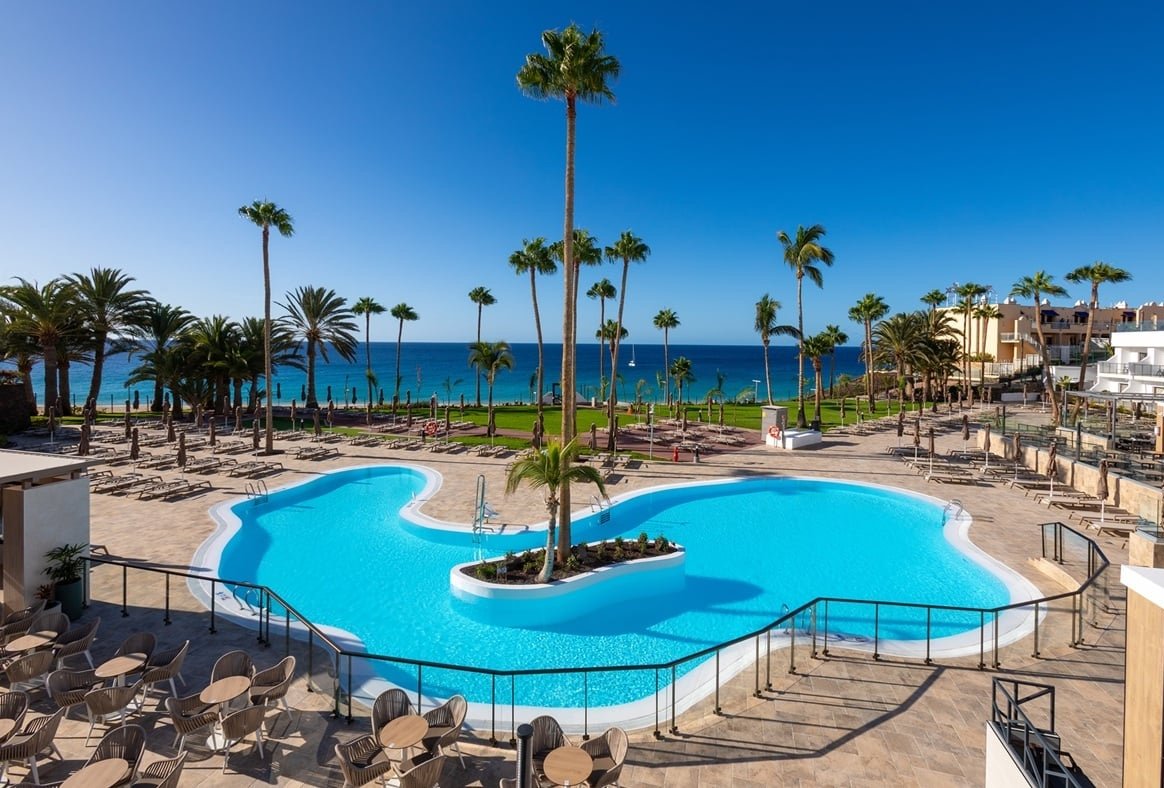
The newly renovated Riu Palace Calypso has reopened on Jandía Beach in Fuerteventura as an adults-only resort with refreshed rooms, expanded dining and major sustainability improvements.
By Yuliya Karotkaya
Published:
Updated:
A serene poolside view overlooking Jandía’s golden beach. Photo: RIU Hotels & Resorts
The Riu Palace Calypso on Fuerteventura’s golden Jandía Beach has reopened after a full renovation that elevates the property into RIU’s premium Palace category and transitions it into an adults-only experience.
With redesigned rooms, expanded dining options, improved accessibility and panoramic sea views woven into every corner of the resort, the relaunch marks one of the brand’s most notable upgrades in the Canary Islands, Spain.
All 248 rooms have been completely refurbished with a contemporary and timeless aesthetic that prioritizes natural light and a neutral color palette. Terraces have been redesigned to provide even more impressive views of the Atlantic Ocean, creating a relaxing, airy atmosphere that reinforces the quiet, adults-only setting.
The updated interiors achieve a sense of calm and space, reflecting the coastal environment while offering modern comfort.
A Revitalized Adults-Only Oasis on Jandía Beach
The hotel’s communal areas have undergone some of the most transformative changes. The lobby has been extended and redesigned to maximize ocean views from the moment guests step inside.
Bright, open spaces now define the guest experience, with materials chosen to enhance natural light and create a fresh, modern feel. Additional lounges have been added both indoors and outdoors, along with a stylish solarium featuring Balinese beds – ideal for guests seeking peaceful downtime.
Dining has also received a major upgrade. The property now offers three enhanced dining venues, including the addition of Krystal, a gourmet à-la-carte restaurant built around refined, contemporary cuisine.
The main restaurant and snack bar have been fully refreshed, incorporating simple, elegant design with a strong emphasis on natural light. Together, the new culinary lineup pushes the hotel further toward a luxury experience while retaining the relaxed spirit of the island.
Sustainability is one of the central pillars of the renovation. As part of RIU’s Proudly Committed strategy, the Calypso now features energy-efficient facilities, solar panel installations and water-saving measures such as filtered low-flow systems and replacing all bathtubs with showers.
The pool now operates on a saltwater chlorination system, reducing chemical use. Accessibility has also been expanded, with eight fully adapted rooms and improvements across all communal spaces to ensure a more inclusive guest experience.
The reopening reinforces RIU’s deep commitment to the Canary Islands, where the chain now operates sixteen properties across Gran Canaria, Tenerife, Lanzarote and Fuerteventura.
The Calypso’s revitalization not only elevates the region’s hospitality offering, but also signals RIU’s long-term strategy of combining design, comfort and responsible tourism in its key destinations.
Google is rolling out powerful new AI tools – from global Flight Deals to Canvas trip planning and agentic booking – designed to simplify everything from itinerary building to reservations.
By Yuliya Karotkaya
Published:
Updated:
Interface of an AI-powered travel planning tool. Photo: Google
Google is rolling out a major wave of AI-powered upgrades designed to reshape how people plan and book their trips. The new features arrive just as holiday travel ramps up, offering travelers smarter tools, more intuitive workflows, and faster ways to turn travel ideas into real itineraries.
With AI now handling more of the planning process, Google says travelers can expect less stress and more personalization across every stage of trip preparation.
Canvas Becomes a Central Hub for Travel Planning
One of the most significant updates is the expansion of Canvas in AI Mode, a workspace that lets travelers build, refine, and revisit their trip plans. Originally designed for studying and organizing multi-step projects, Canvas now brings travel-specific capabilities directly into Search.
Users can describe the type of trip they want – a weekend beach getaway, a multi-city Europe tour, or a family road trip – and then select the “Create Canvas” option. Within seconds, Canvas generates a draft itinerary that merges real-time data from Google Flights and hotels, details from Google Maps such as photos and reviews, and information pulled from trusted travel sources across the web.
Canvas also organizes suggestions based on the user’s criteria, highlighting options like hotels with the best balance of price and amenities, activities grouped by travel time, and restaurant picks near planned stops. Travelers can refine their itineraries by asking follow-up questions or exploring tradeoffs, such as choosing between a cheaper hotel farther from downtown or a boutique stay closer to nightlife. Plans update instantly and remain accessible later via the user’s AI Mode history.
Global Rollout of Flight Deals and New Booking Capabilities
Google is also expanding its Flight Deals tool globally after early tests in the United States, Canada, and India. Built for travelers with flexible dates and open-ended destinations, Flight Deals understands natural-language search inputs such as “a warm place in March” or “a cheap long weekend in Europe.” It then surfaces the most affordable itinerary options available.
The tool is now launching in more than 200 countries and territories, including major markets like the U.K., France, Germany, Mexico, Japan, and Brazil. Support for over 60 languages ensures a broad and inclusive rollout.
Meanwhile, Google is bringing agentic AI booking capabilities to more users in the U.S. Travelers can describe their needs – such as dinner reservations for a group, event tickets, or spa appointments – and AI Mode will scan multiple reservation platforms to find real-time availability. Users can then select from a curated list and finalize bookings through partners like OpenTable, Resy, Ticketmaster, and Booksy.
Google plans to extend agentic booking to flights and hotels as well. In the near future, travelers will be able to describe their ideal flight or accommodation, compare options instantly, and complete the booking without leaving AI Mode. Google is working with major travel brands including Booking.com, Expedia, IHG Hotels & Resorts, Marriott, and Wyndham to support this capability.
A New Chapter in AI-Driven Travel
With these updates, Google is positioning AI as a full-service travel assistant – one that can research, compare, organize, and help book complex itineraries. The company emphasizes that the goal is not to replace human decision-making but to remove the tedious parts of planning so travelers can focus on discovering new destinations and enjoying their trips.
As more travelers adopt AI tools in their everyday planning, Google expects these features to become core components of how future trips are organized – blending real-time data, automation, and personalization into a seamless travel experience.
The United States has introduced the FIFA Pass, a new system offering priority visa appointments to millions of international fans planning to attend the 2026 World Cup.
By Yuliya Karotkaya
Published:
Updated:
President Donald Trump and First Lady Melania Trump attend the FIFA Club World Cup Final soccer match. Photo: The White House
The United States has announced a major new travel initiative designed to manage the extraordinary wave of visitors expected for the 2026 World Cup. The program, called the FIFA Pass, will allow match ticket holders to secure priority visa interview appointments ahead of the tournament, which is expected to draw between five and ten million international visitors.
President Donald Trump introduced the initiative during a meeting of the White House task force on FIFA, emphasizing that the government is committed to ensuring smooth entry for soccer fans from around the world.
Standing alongside FIFA President Gianni Infantino, Trump described the program as part of a broader effort to make the 2026 World Cup “an unprecedented success.”
He highlighted ongoing work by the State Department and the Department of Homeland Security to prepare for the enormous demand expected next summer. Infantino echoed this optimism, noting that fans from more than 200 countries have already purchased tickets, with millions more expected to follow.
How the FIFA Pass Works
The FIFA Pass provides faster access to visa interview appointments for travelers who have already purchased official World Cup tickets. This means international fans can move ahead of standard applicants when scheduling interviews, reducing wait times that have historically stretched for months in some countries. The system will be managed in coordination with FIFA, which will help authenticate ticket holders and guide them through the fast-track process.
However, officials stressed that the FIFA Pass does not guarantee entry into the United States. Secretary of State Marco Rubio made clear that “your ticket is not a visa,” noting that the program accelerates the appointment – not the approval. All applicants must still pass the regular security checks. With more than a million international tickets already sold, some applicants could still be denied entry despite holding valid match tickets.
To handle the expected surge, the State Department has deployed over 400 additional consular officers to embassies worldwide. Many countries have already seen their visa wait times drop dramatically. In places like Brazil and Argentina, where wait times exceeded one year, fans can now secure appointments in under two months – a significant improvement ahead of the tournament.
Host City Concerns and Event Preparations
While outlining the new visa measures, Trump also addressed concerns about safety and logistics in certain World Cup host cities. He singled out Seattle and Los Angeles, raising questions about public safety and signaling that matches could be relocated if issues arise. Trump said he would authorize federal support – including the National Guard – if necessary to ensure a secure tournament environment.
Despite these warnings, officials remain confident that the event will be both safe and historic. Infantino noted that the tournament is expected to attract billions of viewers worldwide, with the World Cup draw alone projected to reach one billion people.
For millions of fans planning their trips, the new FIFA Pass is likely to become a key part of navigating what promises to be one of the most widely attended sporting events in history.
Dar Global and The Trump Organization are launching the first Trump hotel in the Maldives and the world’s first tokenized hotel development project, marking a major shift in luxury travel investment.
By Yuliya Karotkaya
Published:
Updated:
Illustration of the future Trump International Hotel Maldives. Photo: Dar Global
A groundbreaking partnership between Dar Global and The Trump Organization is reshaping both the luxury travel landscape and the future of real estate investment. The two companies have announced the creation of Trump International Hotel Maldives, the first Trump-branded resort in the island nation, alongside the world’s first tokenized hotel development project.
“We are delighted to bring the Trump brand to the Maldives in collaboration with Dar Global,” says Eric Trump, EVP of The Trump Organization. “This development will not only redefine luxury in the region but also set a new benchmark for innovation in real estate investment through tokenization.”
This dual milestone marks a new chapter where high-end hospitality meets cutting-edge financial technology, further elevating the Maldives as one of the world’s most desirable destinations.
A New Luxury Landmark in the Maldives
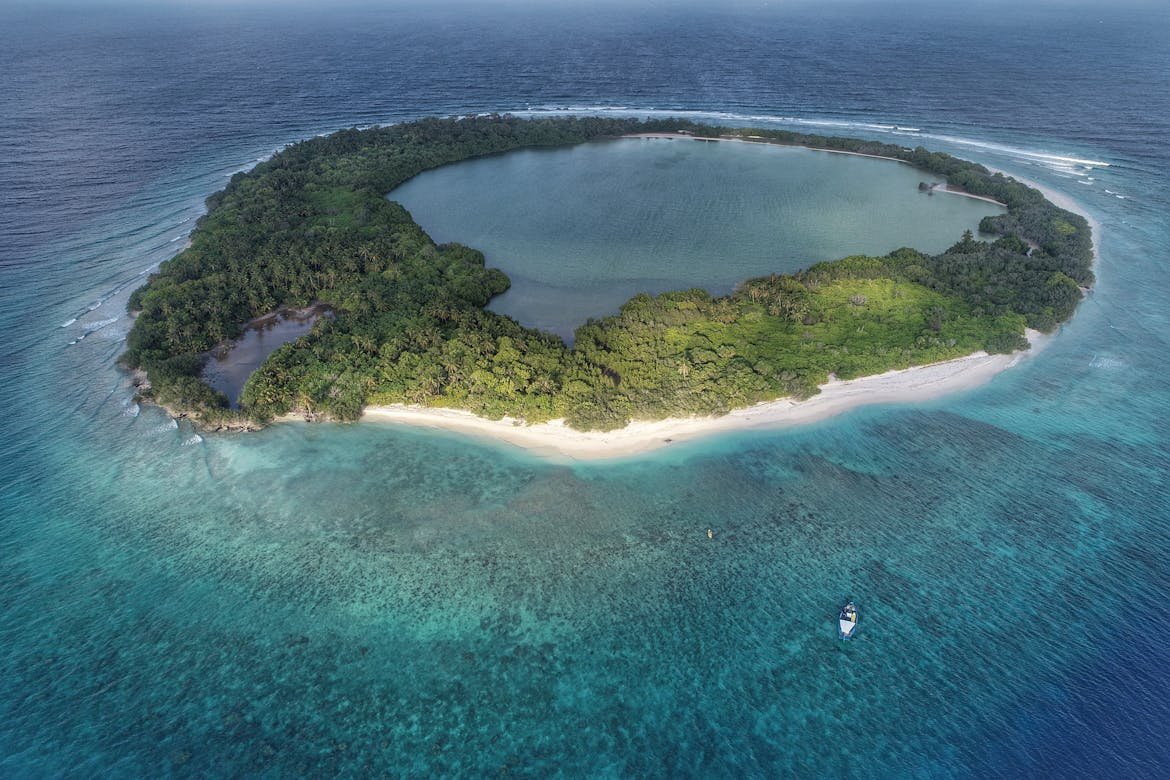
Located just 25 minutes by speedboat from Malé, the new Trump International Hotel Maldives is positioned to become a standout addition to the Indian Ocean’s luxury resort scene. The property is planned to feature around 80 ultra-luxury beach and overwater villas, offering the seclusion, privacy, and elevated design that attract travelers seeking exceptional experiences.
Set for completion by the end of 2028, the resort is expected to appeal to global luxury travelers, from honeymooners seeking exclusivity to high-net-worth guests accustomed to private-island-level comfort.
The resort’s design and amenities aim to match the Maldives’ reputation for tranquility while delivering the Trump brand’s signature aesthetic and service standards. With stunning natural surroundings and easy access from the capital, the development underscores the growing demand for premium travel experiences across the region.
Executives from both organizations highlighted the significance of the project, noting that the expansion into the Maldives aligns with rising appetite for ultra-luxury travel and further strengthens the brand’s global presence. For Dar Global, the development reinforces its commitment to world-class destinations and visionary real estate concepts.
A Global First: Tokenizing a Hotel Development
Beyond the resort itself, the most groundbreaking aspect of this announcement may be the creation of the world’s first tokenized hotel development project. While tokenization has previously been applied to completed real estate assets, this initiative stands out by tokenizing the development phase of a hospitality project – an unprecedented move in the global market.
Through this model, investors can participate from the earliest stage of the project’s lifecycle, offering a new level of accessibility to high-value real estate investments. This approach blends traditional luxury development with modern financial technology, signaling a shift in how premium hospitality projects may be funded in the future.
The initiative also reflects broader regional trends, particularly as Gulf-based developers and partners continue to explore innovative investment structures. As the Maldives deepens its appeal among affluent travelers, the combination of iconic luxury branding and cutting-edge investment tools could reshape how future resorts come to life worldwide.
Together, Dar Global and The Trump Organization are not only introducing a new luxury destination but also ushering in a new era where hospitality, technology, and global investment meet.
A record-breaking 81.8 million Americans are expected to travel this Thanksgiving, even as the country recovers from a prolonged shutdown that disrupted flights and fueled last-minute itinerary changes.
By Yuliya Karotkaya
Published:
Updated:
Road trips remain the most popular way to travel across the U.S. during Thanksgiving. Photo: Tom Fisk / Pexels
The Thanksgiving rush is shaping up to be historic, arriving just days after the U.S. government shutdown finally ended and the aviation system began its slow return to normal.
While the shutdown caused widespread flight cancellations and uncertainty for millions of travelers, early forecasts show that Americans are still overwhelmingly determined to travel for the holiday – even if it means adjusting plans or switching travel modes at the last minute.
According to the latest AAA forecast, nearly 81.8 million people are expected to travel at least 50 miles from home between November 25 and December 1 – about 1.6 million more travelers than last year.
A Historic Surge in Road and Air Travel
Road travel continues to dominate Thanksgiving plans, with AAA estimating 73 million travelers hitting the highways – nearly 90% of all holiday travelers. Lower car rental prices and stable gas costs compared to last year are contributing to the increase, as is uncertainty around air travel following recent waves of flight cancellations.
Safety remains a major concern during this high-volume period. AAA and MADD are urging travelers to plan ahead and avoid impaired driving, noting that more than a third of Thanksgiving roadway fatalities in recent years have been linked to alcohol-related crashes.
Last year alone, AAA responded to nearly 600,000 emergency roadside calls, most involving flat tires, battery issues, and empty fuel tanks.
At airports, six million travelers are expected to fly domestically – a modest 2% increase from 2024. However, that number could shift as some air travelers decide to drive instead after the disruptions caused during the shutdown.
Roundtrip domestic flights are averaging around $700, and many travelers are choosing to fly on Thanksgiving Day itself to avoid higher fares tied to peak return dates like Sunday and Monday.
Cruises, Trains, and Top Destinations
Beyond driving and flying, nearly 2.5 million Americans will travel by bus, train, or cruise this Thanksgiving – an 8.5% increase. Cruise travel, in particular, continues to grow at record pace, with 20.7 million Americans expected to sail this year and even more projected for 2026. Caribbean itineraries remain especially attractive for families seeking warm weather, ease of planning, and entertainment for all ages.
AAA’s top domestic destinations are dominated by warm-weather favorites and theme park hubs, including Orlando, Miami, Fort Lauderdale, Los Angeles, Honolulu, New York, San Francisco, and Las Vegas. Internationally, travelers are heading to cities like Paris, Amsterdam, Vienna, Cancun, Punta Cana, Sydney, Barcelona, and Aruba, reflecting a blend of European charm and tropical escapes.
Traffic analysts at INRIX warn of severe congestion on many major highways, particularly on Tuesday and Wednesday before Thanksgiving and on Sunday for the return trip. In cities such as New York, Los Angeles, Washington, D.C., and Boston, delays could more than double typical travel times.
Despite the challenges, one thing is certain: Thanksgiving travel in 2025 is not slowing down. From packed highways to bustling airports and full cruise terminals, Americans remain determined to reunite with family and friends – even if it means navigating the busiest holiday travel landscape in history.
Portugal’s aviation authority has formally warned Ryanair that it must accept printed paper boarding passes, despite the airline’s push toward its all-digital boarding pass policy.
By Yuliya Karotkaya
Published:
Updated:
Passengers queue at a boarding gate in Portugal as regulatory scrutiny increases over digital boarding pass policies. Photo: Markus Winkler / Pexels
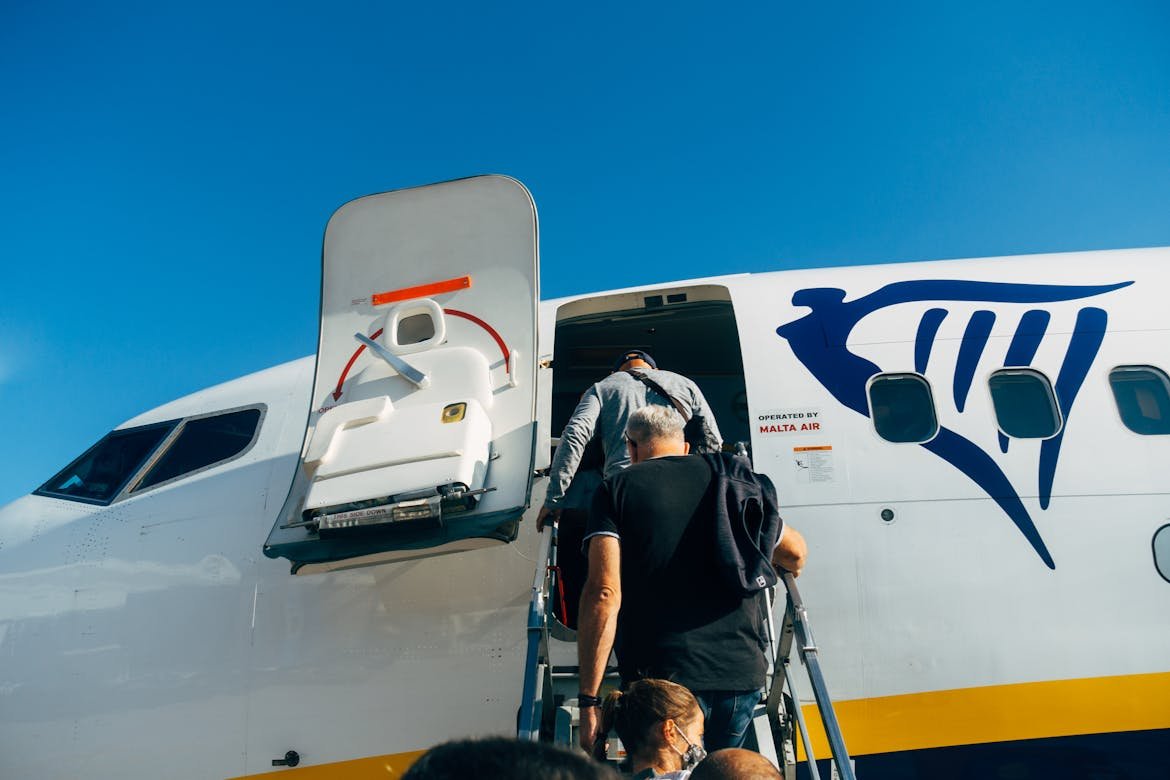
Portugal’s aviation regulator has issued a clear warning to European budget airline Ryanair: passengers with printed paper boarding passes cannot be refused boarding. The move comes as Ryanair steps up its digital-only boarding pass policy and phases out traditional printed passes.
The Portuguese aviation authority emphasized that under national regulations, rejecting passengers who arrive with legitimate paper passes constitutes unfair treatment and could prompt sanctions. The announcement is the latest in a growing trend of regulatory pushback as airlines transition toward digital boarding and travelers learn to adapt.
Ryanair’s Digital Shift and Regulatory Pushback
Ryanair began preparing for a fully paperless boarding process, citing efficiency gains and cost-savings. The airline’s app already allows travelers to check-in online and access mobile boarding passes via smartphone.
Ryanair argues that in the modern age of smartphones this step helps reduce waste, streamline boarding, and lower airport processing costs. However, the airline’s policy has triggered concerns among passenger rights advocates and regulators. Portugal’s regulatory body pointed out that while the airline is free to promote app-based boarding, it cannot force passengers to use digital passes or penalize those who prefer or need to use a printed version.
The authority noted that especially for some passengers – those with no access to or familiarity with smartphone apps – paper passes remain a valid and protected form of boarding document.
Impacts for Travelers and Airlines
For air travelers flying into or departing from Portugal, the regulator’s decision provides reassurance. Whether they have checked in online and printed their boarding pass, or later changed devices, they can expect fair treatment and boarding access as long as all other ticketing requirements are met.
That means less uncertainty for passengers who prefer a printed copy or may face smartphone issues such as battery drainage or lack of internet. From the airline side, Ryanair now faces a mix of digital ambition and legal obligation. While its global strategy emphasizes smartphone-based boarding, the carrier must adjust operations and customer service in Portugal – and potentially other regions if similar rulings arise – to maintain compliance.
Industry observers suggest the broader challenge goes beyond Portugal. As airlines push forward with digital solutions across Europe and beyond, regulations and passenger protections may slow their rollout. Some national authorities are likely to clarify rules to protect passengers who cannot or prefer not to use mobile‐only boarding. For Ryanair and other carriers, the balance between cost-efficiency and inclusive access is becoming a critical operational axis.
In the short term, Portugal’s warning may slow Ryanair’s transition to paperless boarding in that market and serve as a signal to other regulators. For air travelers, the message is clear: arriving at the gate with a legitimate paper pass remains a safe option – at least in Portugal. As airlines continue to evolve boarding procedures, passengers and regulators alike will be watching how fairness, accessibility, and innovation are balanced in the skies.
The FAA is easing flight restrictions after the record US shutdown, reducing mandatory cuts and signaling the first steps toward stabilizing the nation’s strained aviation system.
By Yuliya Karotkaya
Published:
Updated:
An aircraft waiting at a US airport as operations gradually stabilize following the shutdown. Photo: Sean Foster / Unsplash
The Federal Aviation Administration (FAA) has begun scaling back the dramatic flight restrictions imposed during the record-long US government shutdown, marking a crucial step toward stabilizing the country’s strained aviation network.
After weeks of cancellations, delays, and staff shortages, airlines are starting to see the first signs of recovery. As absences among air traffic controllers ease, the FAA announced that required flight cuts at 40 major airports will be reduced from 6 percent to 3 percent.
While this is still short of a full return to normal operations, it represents a meaningful shift after a turbulent period that saw nearly 3,000 cancellations in a single day.
Initial Rollback Signals Improvement
The reduced cancellation requirement reflects a modest but important improvement in staffing levels following the shutdown’s end. Air traffic controllers, who had been working unpaid for 43 days, began returning to duty as confidence grew that Congress would reach a resolution.
The FAA noted that safety remains the top priority and that operations will only fully normalize when key performance indicators show consistent improvement. Transportation Secretary Sean Duffy highlighted that the shutdown created elevated risks, including reports of aircraft coming too close in the air and increased runway incursions, underscoring why the agency initially mandated steep cuts.
During the shutdown, airlines struggled to maintain stable schedules as reductions began at 4 percent before escalating to 6 percent. The FAA at one point considered pushing the requirement to 10 percent. Ultimately, more than 11,800 flights were canceled between November 7 and the shutdown’s resolution.
Severe weather further complicated operations, pushing cancellations on the worst day to nearly 10 percent of the entire US schedule. Even as the aviation system begins to recover, many aircraft remain out of position, a logistical challenge that could take days to sort out.
Airlines Look to Thanksgiving With Cautious Optimism
Despite the lingering disruption, airlines have expressed growing optimism that normal operations could resume sooner than expected. By Friday evening, early indicators showed far fewer cancellations for the weekend.
Several airlines, including United, had already removed preemptive cancellations from their schedules in anticipation of eased FAA restrictions. Industry leaders believe that with staffing levels improving, the system could return to stability ahead of the busy Thanksgiving travel rush.
Executives also acknowledged that the shutdown underscored long-standing challenges in the aviation workforce. Controller shortages existed long before this year’s political impasse, but the shutdown accelerated retirements, with an estimated 15 to 20 controllers leaving the profession each day by its end.
Some younger personnel also departed, raising concerns about long-term operational resilience. Still, airline CEOs remain upbeat, insisting that the system will rebound faster than many expect. They emphasize that travelers can look forward to a safer, more predictable experience as the holiday season approaches.
While significant work remains, the FAA’s rollback represents the clearest sign yet that the national aviation system is moving toward recovery. With millions preparing to fly in the coming weeks, the industry is hopeful that the most severe disruptions are now behind them.
Dubai’s ambitious World Islands project, once left abandoned after the 2008 financial crash, is finally welcoming tourists with new luxury resorts and revived developments.
By Yuliya Karotkaya
Published:
Updated:
Illustration photo of a tropical island landscape. Photo: Ahmed Shan / Pexels
Dubai’s World Islands have long been one of the city’s most intriguing and mysterious mega-projects – a sprawling archipelago of 300 man-made islands in the Persian Gulf shaped to resemble a map of the world.
For more than two decades, travelers flying into Dubai could spot the faint outline of these sandy silhouettes from the airplane window, often wondering whether the project would ever come to life.
Now, after years of delays, financial setbacks, and slow-moving redevelopment, the World Islands are finally opening up to tourists and re-emerging as one of Dubai’s most ambitious tourism destinations.
Construction began back in 2003 under the vision of Sheikh Mohammed bin Rashid Al Maktoum, who hoped to reimagine Dubai’s coastline and multiply its beachfront. Some 320 million cubic meters of sand were dredged to form the islands, but when the 2008 financial crisis hit, the project collapsed almost overnight.
Developers went bankrupt, investors disappeared, and for years the islands remained little more than an abandoned dream. By 2011, even officials admitted the project was essentially “in a coma.”
Despite its troubled past, scattered progress continued over the years. Lebanon Island became the first to welcome visitors for private events, and a few resorts slowly took shape. But the most transformational development has been the Heart of Europe project led by Austrian developer Josef Kleindienst.
After purchasing the “Austria” island in 2007, he expanded his vision to include Sweden, Switzerland, Germany, Monaco, and St. Petersburg, creating a cluster of themed, temperature-controlled islands. Visitors can stroll along sandy beaches, wander through boutique-lined promenades, and experience attractions like a “raining street” designed to cool guests with timed artificial rainfall.
The Heart of Europe is entirely car-free, offers luxury hotels and villas, and even uses Euros as its only accepted currency. With artificial snow and rain, green mountain landscapes, and striking European-style architecture, it’s one of Dubai’s boldest tourism ventures yet. Meanwhile, the Anantara World Islands resort offers a more traditional luxury escape with beachfront villas, private pools, and serene views – an oasis that feels much closer to the Maldives than the Middle East.
Other islands are also stirring back to life. Some host exclusive parties, others are being redeveloped into high-end residential zones, and new hospitality projects are in the pipeline as Dubai leans heavily into its global reputation for visionary, attention-grabbing tourism experiences. Even previously “dead” islands like Chile have been revived with events and entertainment, signaling a new chapter for the archipelago.
What once seemed like a spectacular failure is transforming into an unexpected comeback story. While many islands remain under construction, the growing number of accessible resorts shows clear momentum.
For travelers, this means a new reason to explore Dubai – a chance to step into a miniature world, experience themed luxury islands, and witness one of the most unique tourism projects ever attempted finally come alive.
Storm Claudia, named in Spain, is heading for parts of England and Wales with heavy rain, flooding risk and travel disruptions just ahead of holiday journeys. Travelers advised to check plans and allow extra time.
By Yuliya Karotkaya
Published:
Updated:
A passerby walks under an umbrella as rain intensifies during Storm Claudia. Photo: Refat Ul Islam / Unsplash
The UK is bracing for a major weather event as Storm Claudia approaches, bringing torrential rain and potential flooding across parts of England and Wales that are already soaked from previous rainfall.
The national weather service has issued amber warnings for “heavy and persistent rain” covering regions including the Midlands, the south-east, south-west and Wales. In some high ground areas, rainfall totals could reach between 100 and 150 mm in a short span of time, equating to almost a month’s typical rainfall compressed into 24 hours.
Travelers planning trips this week are advised to remain alert, allow extra journey time and consider the possibility of altered or cancelled transport services.
Flooding Risk on Saturated Ground and Transport Disruption
With much of the UK ground already saturated, the risk of surface water flooding, river overflow and infrastructure impacts is heightened. The weather service warns that areas with vulnerable drainage and fast-flowing water could see rapid rises in flood levels, presenting danger to life and property.
Travel impacts are expected to be significant: roads may flood, rail lines become impassable, and power cuts or fallen trees may add further disruption. Several flood alerts are already in place, and central and northern England could face the worst of the downpours. With train companies reducing speed and closing lines in vulnerable sections, flights may face knock-on effects from airport delays.
Travel Impacts and What Holiday-goers Should Do
For travelers heading out this weekend or early next week – especially ahead of peak holiday travel periods—the storm presents a checklist of concerns. Airport transfer times can increase substantially, roads around airports may be slower or closed, and public transportation reliability is less certain.
It’s wise to check live travel updates, review accommodation contingency plans and ensure travel insurance covers weather-related delays. Tourists staying outside major hubs should consider booking in extra buffer time and verifying that local services remain operational. Hotels and resorts in flood-risk zones may see access issues or guest movement constraints.
From a travel planning perspective, Storm Claudia underscores the importance of flexibility. Stay-in concierge services may need to assist guests unable to travel out as scheduled, while travel agencies should alert clients to possible disruptions and alternative routing options.
Even if your destination sits outside the highest-risk zones, inbound journeys through affected regions can still cause knock-on delays.
In summary, Storm Claudia may not carry the storm-surge drama of some weather events, but its slow-moving, heavy rainfall and flood risk on saturated ground make it a serious threat for travelers in the UK.
With major parts of the country under amber warnings and travel networks under strain, now is the time to monitor conditions, adjust plans if needed and travel with caution.
YouTube mega-star MrBeast has launched his first theme park, “Beast Land,” in Riyadh, Saudi Arabia – transforming his viral challenges into immersive live experiences and adding a bold new travel destination to the Middle East.
By Yuliya Karotkaya
Published:
Updated:
MrBeast stands in front of a Beast Land promotional display during the park’s launch in Riyadh. Photo: Riyadh Season
YouTube sensation Jimmy “MrBeast” Donaldson has brought his experience-based entertainment empire off screen and into the real world by launching “Beast Land” in Riyadh, Saudi Arabia.
The attraction, which opened on November 13, 2025, as part of Riyadh Season, gives fans a chance to step into the video-creator’s universe. With custom-built game zones, large-scale challenges and immersive rides inspired by the creator’s high-stakes content, Beast Land adds a brand-new travel destination for fans and thrill-seekers alike.
It also reinforces Saudi Arabia’s broader ambition to become a global entertainment hub under its Vision 2030 strategy.
Beast Land fuses elements of classic amusement parks with the distinctive DNA of MrBeast’s videos. Attractions include obstacle-style courses, timed challenge zones and what the creator has called “the world’s largest prize wall.”
The park’s structure mirrors his YouTube formula – competition, spectacle and social media energy – so that visitors aren’t just spectators but participants. With more than 450 million followers worldwide and approximately 70 percent of that audience based outside the United States, Saudi Arabia’s capital was chosen specifically to engage a global community.
The park is scheduled to remain open from November 13 through December 27, making it a limited-time but high-visibility event that aligns with the city’s festive tourism calendar.
From a travel perspective, Beast Land has major implications. Riyadh is positioning itself as a destination for international visitors, particularly younger, experience-driven tourists.
For fans of MrBeast, a trip to Riyadh now offers both content-creator immersion and cultural discovery in a region undergoing rapid transformation. While previous days of Riyadh Season featured concerts or pop-ups, this permanent-style attraction raises the city’s entertainment credentials and gives travelers a fresh reason to visit the Middle East.
Safety, scale and authenticity are key for guests planning trips to Beast Land. The park touts large numbers of attendants, real-world games adapted from viral formats and an on-site food-and-merchandise zone.
From travel planning, a visit to Beast Land will likely involve coordination with flights into Riyadh, accommodations during the festival period, and reservations ahead of time. Given its short duration and expected hype, early planning is advisable – especially for international visitors arriving in the region.
In sum, MrBeast’s leap into amusement-park territory marks a convergence of influencer culture, themed entertainment and global tourism. The development gives young travelers a culturally relevant destination rooted in one of the world’s largest online communities.
For those looking for something different in their next trip, Beast Land in Riyadh offers an unusually modern reason to visit Saudi Arabia – a chance at adventure, fandom and immersive spectacle.
The GCC has approved the first phase of a one-stop travel system, beginning with a UAE–Bahrain airport trial designed to simplify travel procedures for Gulf citizens.
By Yuliya Karotkaya
Published:
Updated:
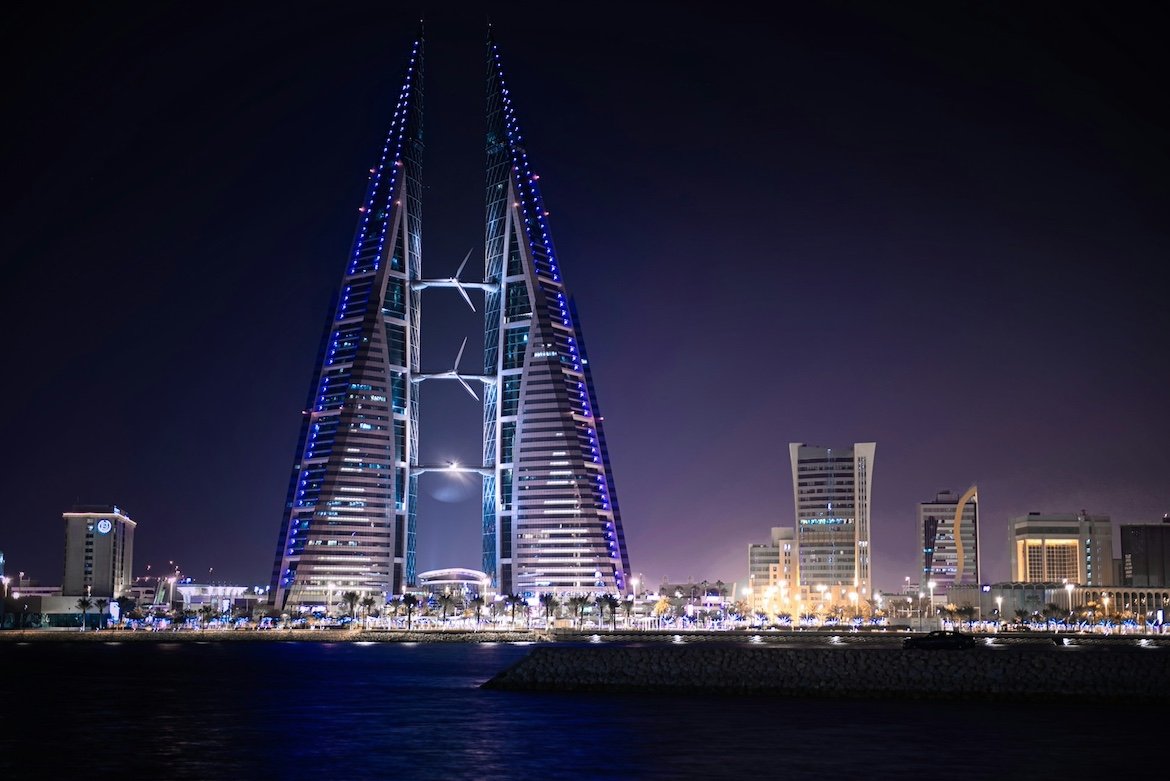
Bahrain World Trade Center, Manama, Bahrain. Photo: Todd Gardner / Unsplash
The Gulf Cooperation Council (GCC) is moving toward a new era of seamless regional mobility with the approval of the first phase of its long-planned “one-stop” travel system. The initiative, endorsed by interior ministers from all six member states, is designed to let Gulf Arab nationals complete all necessary travel procedures at a single point.
It marks one of the most significant steps yet in the GCC’s broader push to integrate travel, security, and mobility frameworks across the region. The timing aligns with growing regional travel demand and long-term ambitions to strengthen intra-GCC connectivity.
The first phase of the program will take the form of a pilot trial at airports in the United Arab Emirates and Bahrain, where select travelers will be able to move through a unified process for checks and clearances. If the trial proves successful, the system will be expanded to all GCC member states, offering citizens a simplified, faster journey.
This approach is expected to eliminate redundant checks, reduce wait times, and create a more efficient travel experience across the bloc. For a region where millions of citizens frequently move between neighboring states for business, tourism, and family visits, the potential impact is significant.
Toward a More Integrated Travel Experience
Beyond the immediate convenience of streamlined airport procedures, the one-stop system is being framed as a foundation for deeper regional integration. The project comes alongside broader discussions around the possibility of a unified GCC visa, a concept that has gained traction as member states explore ways to enhance economic cooperation and attract more international tourism.
A unified visa could eventually allow foreign visitors to move across the GCC much like travelers in the Schengen Area, though officials emphasize that such plans remain under study and would require several more stages of coordination.
The new travel system will also be supported by a unified electronic platform that connects travel-related violations and security data across GCC countries. This digital infrastructure should help the region manage cross-border movement more efficiently while maintaining strong security standards.
The system forms part of a wider “GCC security strategy” that includes enhanced cooperation on combating money laundering and other transnational threats. The initiative is also expected to feature prominently ahead of the first GCC security conference scheduled for Abu Dhabi in 2027.
What the Pilot Means for Travelers
For travelers, especially Gulf nationals who routinely cross borders for short-haul flights, the UAE–Bahrain trial is an early glimpse of what regional travel could look like in the near future. Faster queues, fewer checkpoints, and unified processes have the potential to reshape the experience of flying within the Gulf. Airports in both countries already handle heavy passenger flows, making them ideal testing grounds for a system designed to ease friction during peak travel periods.
If successful, the pilot could accelerate the rollout of a regionwide adoption and, in the long term, move the GCC closer to its vision of smoother mobility and greater economic integration. While the immediate effects will be limited to the two participating countries, the broader implications may eventually benefit millions of travelers each year and position the Gulf as one of the world’s most efficiently connected regions.
Hyatt has opened the new Hyatt Place Cancun Airport, offering travelers seamless access to Cancun International Airport, downtown attractions, and the Tren Maya station.
By Yuliya Karotkaya
Published:
Updated:
Exterior rendering of the new Hyatt Place Cancun Airport, showcasing its modern design near Cancun International Airport. Photo: Hyatt Hotels
Air travel to Mexico’s most-visited region just became even more convenient with the debut of Hyatt Place Cancun Airport, the first Hyatt Place-branded property in Quintana Roo.
Hyatt Hotels Corporation, together with Parks Hospitality Holdings, has officially opened the 156-room hotel adjacent to Cancun International Airport, giving both leisure and business travelers a modern and stress-free place to stay within minutes of their arrival.
The opening supports the region’s continued tourism growth and strengthens Hyatt’s presence in Mexico, where the company will soon add new properties in Mérida and Piedras Negras.
The new Hyatt Place Cancun Airport is designed for travelers who want comfort, efficiency, and connectivity. Guests can take advantage of the hotel’s complimentary 24/7 airport shuttle, on-site parking, and quick access to the Cancun Airport Tren Maya station.
Downtown Cancun – with its dining, beaches, and entertainment – is just 15 minutes away. The hotel also sits near popular attractions such as the Go Grand Outlet Riviera Maya, Xoximilco Cancun cultural park, and the El Tinto Golf Course.
Inside, guests will find an airy lobby with high ceilings, flexible workspaces, and communal seating areas ideal for both productivity and relaxation. The nearly 50-foot outdoor pool and spacious pool deck offer a welcome retreat for travelers eager to unwind in Cancun’s tropical climate. For those who prefer to maintain their wellness routines, the 24-hour fitness center offers free weights, treadmills, and elliptical machines.
Rooms and suites are designed with Hyatt Place’s signature functionality, featuring dedicated work areas, free Wi-Fi, and the Cozy Corner sofa for relaxing between activities. The design incorporates tropical-inspired materials from the Yucatán region, grounding the hotel’s style in local culture while maintaining the clean, modern aesthetic the brand is known for.
When it comes to dining, guests can enjoy free breakfast each morning at the Breakfast Bar. Additional options include The Market for 24/7 grab-and-go snacks and The Placery, the on-site restaurant serving salads, burgers, sandwiches, and a traditional Yucatecan dish, Sopa de Lima.
For meetings and celebrations, the hotel offers nearly 1,500 square feet of flexible event space with natural lighting, plus an adjacent outdoor deck for more memorable gatherings. The property will celebrate its opening with a ribbon-cutting ceremony on November 26, 2025.
World of Hyatt loyalty members can earn 500 Bonus Points for qualifying stays at the hotel between November 12, 2025, and February 28, 2026 – an added incentive for winter travelers heading to Cancun.
The arrival of Hyatt Place Cancun Airport marks the beginning of a multi-property expansion with Parks Hospitality Holdings, which includes upcoming Park Hyatt and Grand Hyatt developments across Mexico.
With its strategic location and modern amenities, the new hotel enhances Cancun’s hospitality landscape and provides travelers with a seamless entry point to one of Mexico’s most important tourism hubs.
The longest government shutdown in US history has officially ended, yet travelers continue to face flight disruptions and planning challenges as the holiday travel season kicks into gear.
By Yuliya Karotkaya
Published:
Updated:
A view of the United States Capitol building under a clear sky following the end of the government shutdown. Photo: Thomas Lin / Pexels
The US government shutdown has officially come to a close after an unprecedented 43 days, but the ripple effects on travel continue to impact millions of passengers, particularly as the Thanksgiving holiday approaches.
Federal employees who worked without pay will receive backpay, yet airlines, regulators and airports continue navigating the fallout. During the impasse, staffing shortages and capacity restrictions at major airports disrupted flights at a scale rarely seen in modern US aviation history.
The reopening signals relief for many stakeholders, but for travelers, the message remains: chaos has eased only slightly – not yet returned to normal.
Flight disruptions were among the most visible consequences of the shutdown. As the duration extended, the FAA imposed capacity limitations, initially reducing flights by 4 percent at key airports and warning that cuts could reach up to 10 or even 20 percent if the shutdown dragged on.
Over multiple days, more than 1,500 flights were cancelled and over 10,000 delayed in a single 24-hour stretch, marking some of the worst disruption in recent memory. Airlines described the situation as “simply unacceptable,” while travelers scrambled to adjust plans or delay journeys altogether.
The backlog and uncertainty have made many holiday travelers consider rail, bus or alternate routes during what is typically one of the busiest travel periods of the year.
Despite the end of the funding impasse, full recovery will take time. The Senate and House passed the spending bill and the President signed it into law, restoring government functions and enabling payouts to furloughed workers.
However, the aviation system still faces the consequences of weakened staffing, unbalanced schedules and heightened customer anxiety. The impact on travel is two-fold: on one hand, there is relief that the shutdown is over; on the other, there remains a caution that operations may not rebound overnight.
Airport delays and airline cancellations may persist even as the calendar inches toward crucial holiday travel weeks.
For travelers planning trips in the coming weeks, the restart of government services offers a reason to breathe easier – but only a little. Booking flexibility, early arrival at airports, alternate travel modes, and patience remain top priorities.
With many airlines and airports still recovering, holiday travel this year may be marked by more planning than usual. While the shutdown is history, its imprint on travel is not yet gone.
Join our list to receive latest Blockchain, Crypto & Fintech news:
WordPress database error: [Table 'u752143311_aXVuj.wp_coingecko_coins' doesn't exist]
            SELECT coins.*, meta.post_id as post_id
            FROM `wp_coingecko_coins` coins
            INNER JOIN wp_postmeta meta ON (meta.meta_key = 'wpcf-coin-main-tag' AND meta.meta_value = coins.slug )
            ORDER BY market_cap_usd
            DESC LIMIT 9