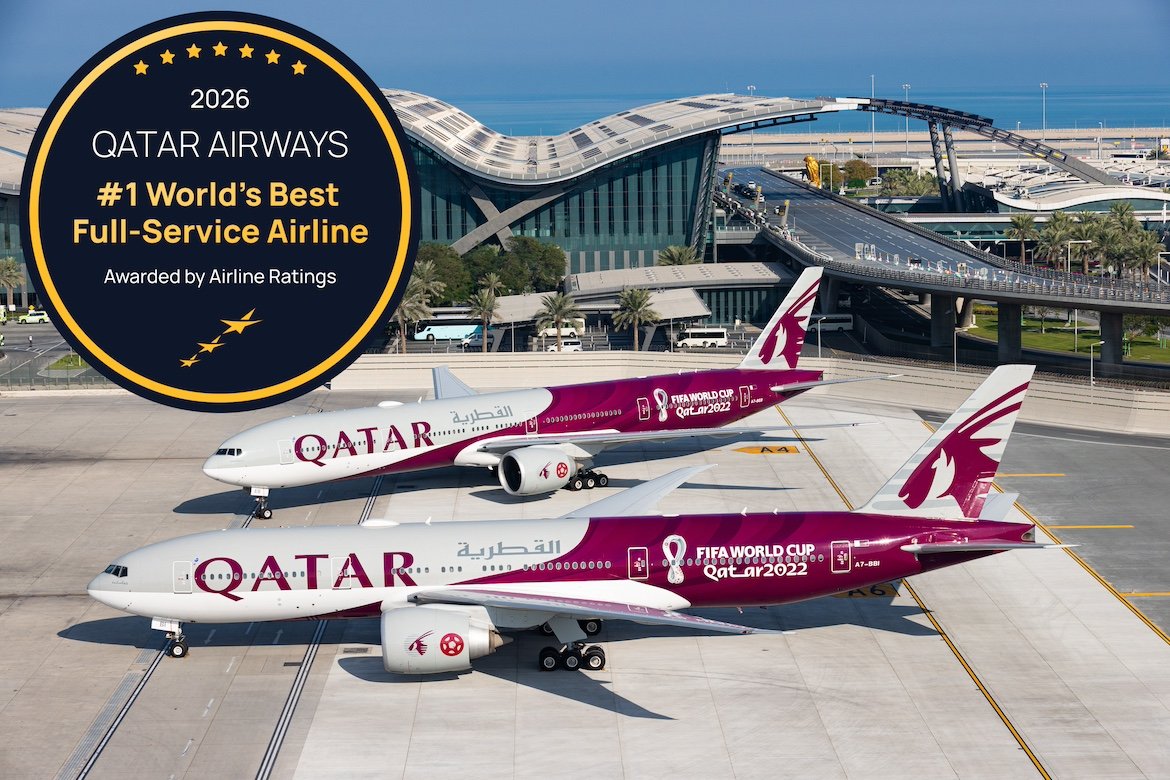
Qatar Airways has been named the world’s best airline for 2026, reclaiming the top position in AirlineRatings.com’s annual global rankings. The awards, which focus exclusively on onboard experience rather than brand perception or public voting, highlight a competitive landscape where airlines are increasingly judged on comfort, service consistency and overall value.
The ranking places Qatar Airways ahead of Cathay Pacific and Singapore Airlines, reinforcing the continued dominance of Asia-Pacific and Middle Eastern carriers in the premium travel segment. Korean Air and Taiwan-based STARLUX Airlines complete the top five, with the latter emerging as one of the fastest-rising competitors thanks to its modern fleet, refined service and growing international ambitions.
Unlike safety rankings or passenger surveys, the AirlineRatings awards are based on measurable criteria, including seat comfort, catering, inflight entertainment and value for money. This approach offers a more standardized comparison across airlines, particularly as the industry continues to evolve with new service models and cabin innovations.
Full-Service Airlines Set The Standard
In the full-service category, Qatar Airways stood out for its ability to deliver a consistently high-quality experience across all cabins. The airline’s economy class offering, often overlooked in premium rankings, was cited as a key differentiator, with generous meals, extensive entertainment options and attention to detail setting it apart from competitors.
Business class also remains a defining strength, particularly with products like Qsuite, which continues to be regarded as one of the most advanced premium offerings in commercial aviation. The combination of strong service delivery and a global route network has helped Qatar Airways maintain its position as a benchmark carrier.
Other airlines in the top tier, including Japan Airlines, Emirates, Air New Zealand and Etihad Airways, reflect a broader trend toward elevating the passenger experience across long-haul travel. Meanwhile, carriers such as JetBlue and LOT Polish Airlines have transitioned into the full-service category, signaling a shift in how airlines position their products to remain competitive.
Hybrid Airlines Redefine Flexibility
The hybrid airline segment, led by Lufthansa, continues to grow as carriers adapt to changing passenger expectations. These airlines blend elements of low-cost and full-service models, offering simplified service on short-haul routes while maintaining a more traditional experience on longer flights.
Airlines such as Delta Air Lines, United Airlines and British Airways feature prominently in this category, reflecting a global shift toward flexibility in pricing and service levels. The model allows airlines to compete with low-cost carriers while still offering premium options for long-haul travelers.
Low-Cost Carriers Continue To Evolve
In the low-cost category, HK Express secured the top position, highlighting how budget airlines are redefining the passenger experience. While traditionally focused on price, leading low-cost carriers are now investing in onboard service, food quality and optional add-ons to differentiate themselves in a crowded market.
Jetstar and AirAsia followed closely behind, with both airlines recognized for expanding connectivity and enhancing onboard offerings. The rise of long-haul low-cost travel, supported by more efficient aircraft and evolving business models, continues to reshape the competitive landscape.
Across all categories, the 2026 rankings reflect an industry in transition. Airlines are no longer competing solely on price or network size, but on the quality and consistency of the onboard experience. As travelers become more discerning, the ability to deliver comfort, innovation and value at every stage of the journey is increasingly defining success in global aviation.