A powerful winter storm sweeping across the United States has caused one of the most severe disruptions to air travel since the early days of the COVID-19 pandemic.
Airlines canceled more than 13,000 flights over a single weekend as snow, ice, and extreme cold moved from the southern Plains into the Midwest, Mid-Atlantic, and Northeast. According to flight-tracking data, Saturday saw more than 4,000 cancellations, while Sunday surged past 9,000, marking the highest single-day total in nearly six years.
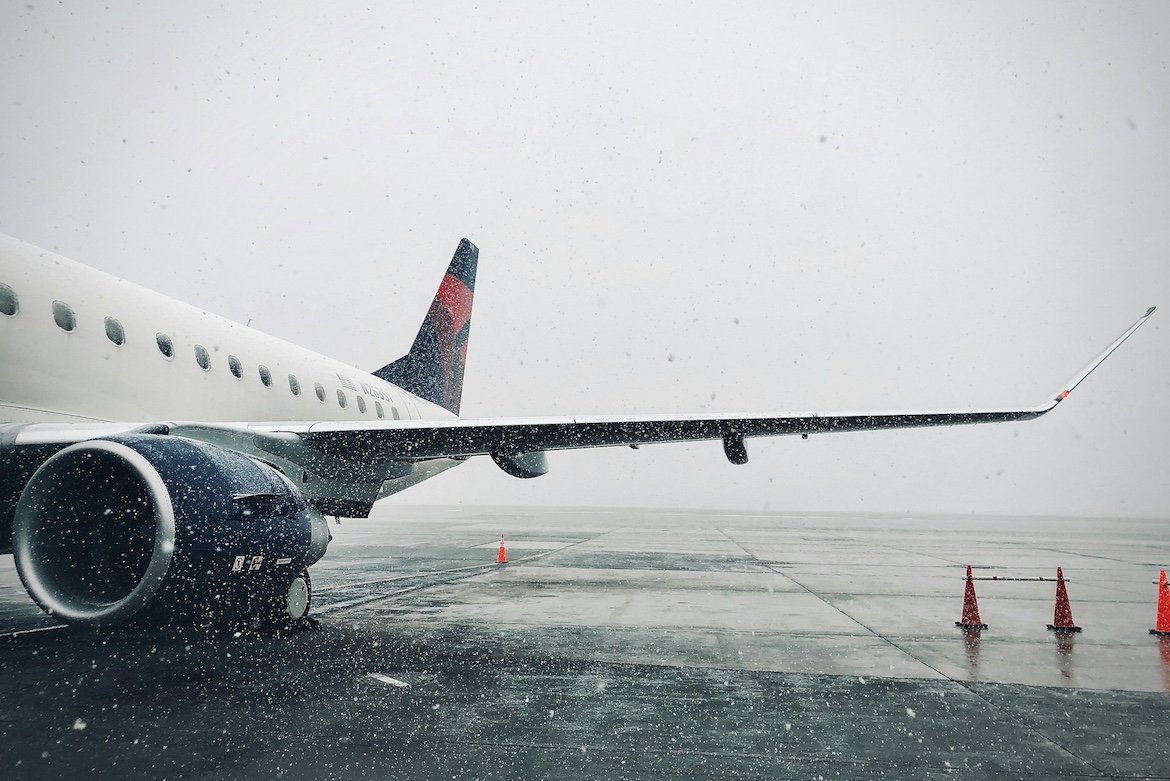
The storm’s wide reach and slow movement left airlines with few options but to ground aircraft preemptively. Freezing rain in the South, heavy snow in the Northeast, and dangerously low temperatures across large parts of the country created conditions that made flying unsafe and recovery difficult.
Airport operations were further complicated by crew shortages, displaced aircraft, and frozen ground infrastructure, setting off a ripple effect expected to last well into the following week.
Major Hubs Grind to a Halt
Some of the country’s busiest airports were among the hardest hit. Nearly all departing flights were canceled at Ronald Reagan Washington National Airport, while Newark, LaGuardia, Philadelphia, Baltimore, and Washington Dulles reported cancellation rates exceeding 80 percent at various points. Snowfall rates of up to two inches per hour in cities like New York and Philadelphia quickly overwhelmed runways and de-icing operations.
In the South and Midwest, Dallas-Fort Worth, Charlotte, Nashville, Atlanta, and Oklahoma City experienced widespread shutdowns as rain transitioned into ice and snow. Oklahoma City canceled all scheduled flights for Saturday, and many Sunday morning departures were also scrapped. Atlanta, the nation’s busiest airport by passenger volume, saw hundreds of cancellations as icy conditions made ground operations hazardous.
Airlines including American, Delta, United, Southwest, and JetBlue each reported hundreds to more than a thousand canceled flights in a single day. While some carriers attempted to add limited extra capacity once conditions improved, the scale of the disruption made quick recovery impossible.
Waivers, Rail Shutdowns, and the Road Ahead
To manage the fallout, airlines issued broad travel waivers allowing passengers to rebook without change fees. These waivers covered dozens of airports across Texas, the Southeast, the Mid-Atlantic, the Northeast, and parts of the Midwest, with flexible rebooking windows extending into the following week. Still, many travelers faced limited seat availability as airlines worked to reposition crews and aircraft.
The storm’s impact extended beyond aviation. Public transportation systems in the Northeast were partially or fully suspended, including bus and light rail services in New Jersey and New York City. Icy highways and road closures further limited alternatives for stranded travelers.
Although weather conditions are expected to gradually improve, airlines are already reporting additional cancellations for Monday as recovery efforts continue. Industry experts warn that delays and disruptions could persist for several days, underscoring how extreme winter weather can still bring the modern travel system to a standstill.