Dubai’s World Islands have long been one of the city’s most intriguing and mysterious mega-projects – a sprawling archipelago of 300 man-made islands in the Persian Gulf shaped to resemble a map of the world.
For more than two decades, travelers flying into Dubai could spot the faint outline of these sandy silhouettes from the airplane window, often wondering whether the project would ever come to life.
Now, after years of delays, financial setbacks, and slow-moving redevelopment, the World Islands are finally opening up to tourists and re-emerging as one of Dubai’s most ambitious tourism destinations.
Construction began back in 2003 under the vision of Sheikh Mohammed bin Rashid Al Maktoum, who hoped to reimagine Dubai’s coastline and multiply its beachfront. Some 320 million cubic meters of sand were dredged to form the islands, but when the 2008 financial crisis hit, the project collapsed almost overnight.
Developers went bankrupt, investors disappeared, and for years the islands remained little more than an abandoned dream. By 2011, even officials admitted the project was essentially “in a coma.”
Despite its troubled past, scattered progress continued over the years. Lebanon Island became the first to welcome visitors for private events, and a few resorts slowly took shape. But the most transformational development has been the Heart of Europe project led by Austrian developer Josef Kleindienst.
After purchasing the “Austria” island in 2007, he expanded his vision to include Sweden, Switzerland, Germany, Monaco, and St. Petersburg, creating a cluster of themed, temperature-controlled islands. Visitors can stroll along sandy beaches, wander through boutique-lined promenades, and experience attractions like a “raining street” designed to cool guests with timed artificial rainfall.
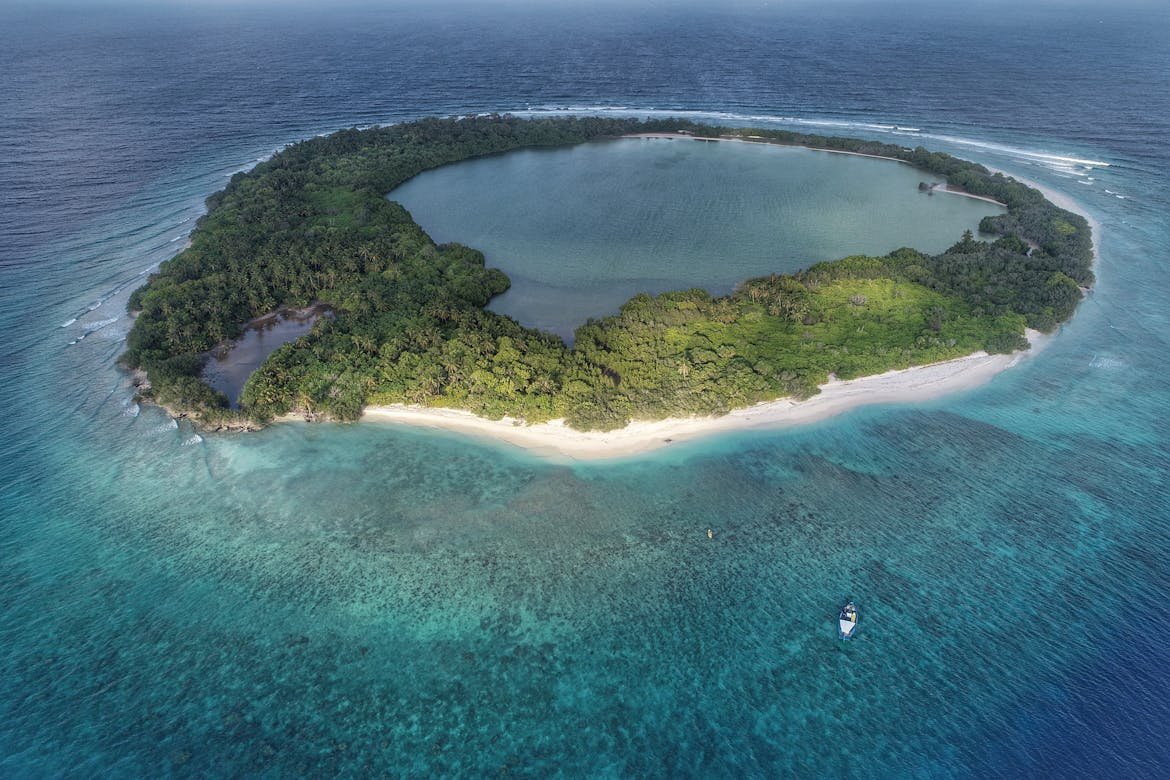
The Heart of Europe is entirely car-free, offers luxury hotels and villas, and even uses Euros as its only accepted currency. With artificial snow and rain, green mountain landscapes, and striking European-style architecture, it’s one of Dubai’s boldest tourism ventures yet. Meanwhile, the Anantara World Islands resort offers a more traditional luxury escape with beachfront villas, private pools, and serene views – an oasis that feels much closer to the Maldives than the Middle East.
Other islands are also stirring back to life. Some host exclusive parties, others are being redeveloped into high-end residential zones, and new hospitality projects are in the pipeline as Dubai leans heavily into its global reputation for visionary, attention-grabbing tourism experiences. Even previously “dead” islands like Chile have been revived with events and entertainment, signaling a new chapter for the archipelago.
What once seemed like a spectacular failure is transforming into an unexpected comeback story. While many islands remain under construction, the growing number of accessible resorts shows clear momentum.
For travelers, this means a new reason to explore Dubai – a chance to step into a miniature world, experience themed luxury islands, and witness one of the most unique tourism projects ever attempted finally come alive.