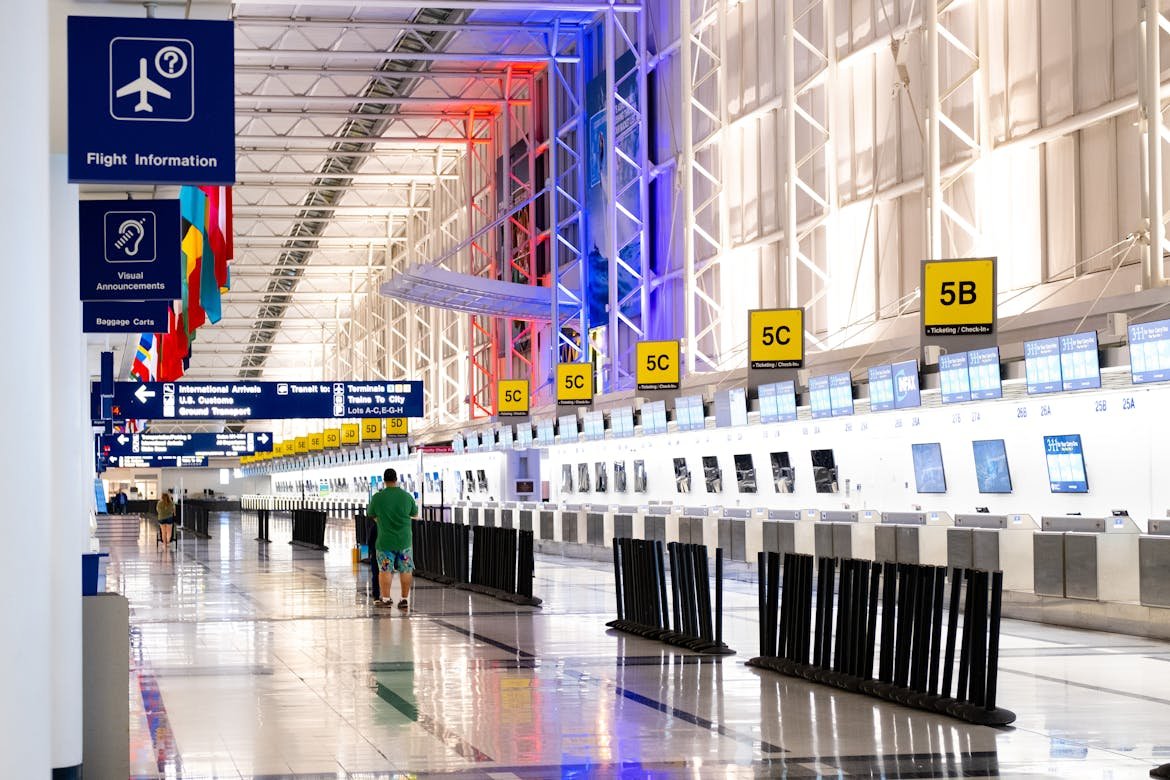
Chicago O’Hare International Airport has officially reclaimed its position as the busiest airport in the United States, according to preliminary data released by the Federal Aviation Administration (FAA).
In 2025, nearly 857,400 aircraft took off or landed at O’Hare, pushing the Chicago hub ahead of Atlanta’s Hartsfield-Jackson International Airport, which recorded just over 807,600 aircraft movements during the same period. The shift marks the first time since 2019 that O’Hare has held the top spot, signaling a renewed surge in air traffic through the Windy City.
The milestone reflects a sharp rebound in flight activity at O’Hare, which saw more than a 10 percent increase in takeoffs and landings compared with 2024. As a major hub for both American Airlines and United Airlines, O’Hare plays a central role in domestic and international connectivity, linking travelers across North America and beyond. City officials have framed the achievement as evidence of Chicago’s growing momentum as a global center for business, tourism, and transportation.
The impact is even more striking when viewed alongside activity at Chicago Midway International Airport. Located about 30 miles southeast of O’Hare, Midway ranked 38th nationally with more than 210,900 aircraft movements in 2025. Combined, the two airports handled so much traffic that, on average, a plane was taking off or landing somewhere in Chicago roughly every 30 seconds throughout the year. This level of activity underscores the city’s unique role in the U.S. aviation network.
While O’Hare took the top position, several other major airports also posted significant traffic numbers. Dallas-Fort Worth International Airport ranked third nationally, followed by Denver International Airport and Las Vegas’s Harry Reid International Airport. Together, these hubs highlight the continued strength of air travel demand across the country, particularly in cities that serve as key transfer points for both leisure and business travelers.
Looking ahead, O’Hare’s dominance may only grow. A major expansion project is already underway, including a $1.3 billion new concourse expected to open in late 2028. The addition will increase gate capacity and is designed to support future growth as airlines add routes and frequencies. With more than 200 gates and a vast network of retail and dining options, the airport is positioning itself to handle rising passenger volumes more efficiently.
Despite its scale and intensity, O’Hare has not been ranked as the most stressful airport in the country, a title that has gone elsewhere. Still, its return to the top of the traffic rankings highlights a broader trend: U.S. air travel is not only recovering but reshaping itself, with Chicago once again standing at the center of the nation’s aviation map.