

The disruption caused by the Iran war is now being felt across airline networks far beyond the Middle East itself. Carriers are not only suspending flights to cities such as Tel Aviv, Dubai, Beirut, Riyadh, and Doha, but also adjusting wider route plans, delaying launches, grounding aircraft, and raising fares or ancillary fees to offset rising fuel bills.
For travelers, that means the summer schedule is becoming more fragmented: some routes are disappearing for weeks or months, while other markets are seeing more capacity as airlines redirect aircraft to stronger or safer demand corridors.
What stands out is how uneven the response has become. Some airlines are still operating reduced but meaningful schedules through the Gulf, trying to preserve global connectivity. Others have taken a far more defensive approach, extending suspensions deep into the summer or even into autumn. At the same time, carriers in Europe, Asia, and North America are using extra flights to cities such as London, Paris, Rome, and Zurich to capture redirected demand as travelers avoid disrupted hubs.
Europe’s Airlines Pull Back Hardest
Among European carriers, Aegean has made one of the broadest cuts, suspending flights not only to Riyadh, Amman, Tel Aviv, and Beirut, but also to Erbil, Baghdad, and Dubai, with some routes paused into late June and early July. airBaltic has canceled Tel Aviv services through the end of May and pushed Dubai cancellations all the way to late October, showing how cautious some airlines remain about restoring Gulf flying.
Air France and KLM are also retreating, though on different timelines. Air France has suspended Tel Aviv, Beirut, Dubai, and Riyadh until early May, while KLM has paused Riyadh, Dammam, and Dubai on longer schedules. KLM is also canceling 160 flights within Europe in the coming month, linking the decision directly to the economics of high kerosene costs.
British Airways is taking a more strategic approach: it is not exiting the region entirely, but when services resume it will cut Dubai, Doha, and Tel Aviv to one daily flight, reduce Riyadh, and permanently drop Jeddah. Iberia Express is also out of Tel Aviv through the end of May.
LOT has suspended Tel Aviv, Riyadh, and Beirut on different timelines, with Dubai now pushed back to its winter schedule. Finnair has canceled Doha until early July and is keeping well clear of Iraqi, Iranian, Syrian, and Israeli airspace, while also delaying Dubai until October. Lufthansa Group has made some of the strongest cuts in the market.
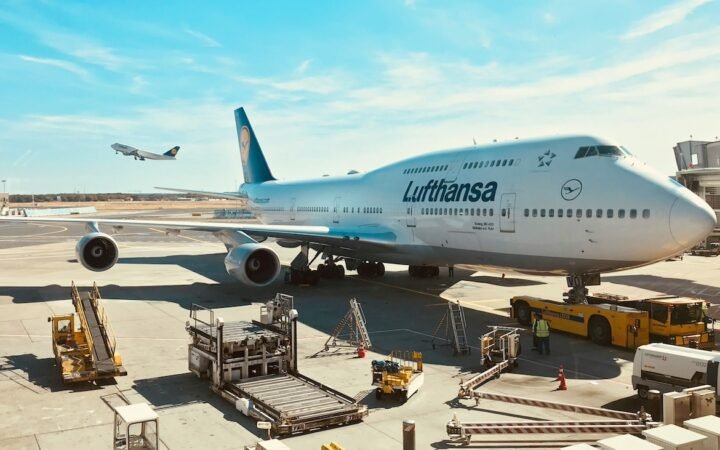
Lufthansa, Swiss, Austrian, Brussels Airlines, and Edelweiss have all suspended Dubai and Tel Aviv through May 31, while Abu Dhabi, Amman, Beirut, Dammam, Riyadh, Erbil, Muscat, and Tehran are paused until October 24. Eurowings has also prolonged multiple suspensions, and Lufthansa itself is grounding aircraft earlier than planned as fuel prices reshape its cost base.
Gulf and Asian Carriers Keep Flying While Others Reposition
The Gulf carriers remain crucial to holding the global network together. Emirates says it is still operating a reduced schedule to more than 100 destinations, while Etihad is maintaining commercial service to around 80 destinations from Abu Dhabi.
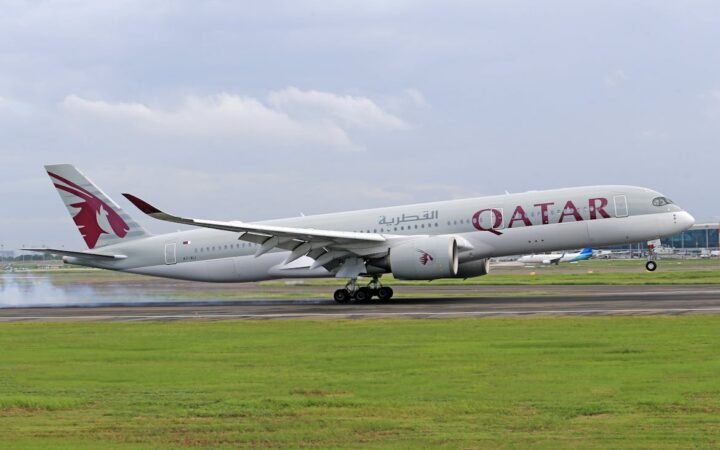
Qatar Airways has taken the strongest recovery stance of the three, saying it will expand its network to more than 150 destinations from June 16. These airlines are not untouched by the crisis, but they are clearly trying to preserve their role as long-haul connectors while foreign competitors stay cautious.
Asian airlines are showing a split picture. Cathay Pacific has suspended Dubai and Riyadh until June 30, including cargo freighter service until the end of May, but it is also adding extra passenger flights to London, Paris, and Zurich to serve stronger Europe demand. Japan Airlines has temporarily suspended Tokyo-Doha services while also adding a Tokyo-London frequency.
Malaysia Airlines has suspended Doha until mid-June, while Singapore Airlines has extended its Dubai suspension until the end of May and added flights on the Singapore-London Gatwick and Singapore-Melbourne routes. Qantas is not focused on Middle East suspensions in the same way, but it is clearly responding to the same market shift by increasing service to Rome and Paris and adding more Perth-Singapore flying.
North American carriers are mostly choosing caution. Delta has canceled New York-Tel Aviv and delayed the return of Atlanta-Tel Aviv until September, while the planned Boston-Tel Aviv launch is now postponed indefinitely. Air Canada has canceled both Tel Aviv and Dubai until September 7.
Across the market, the message is the same: this is no longer just a regional scheduling issue. It is a global network reset, and airlines are using suspensions, capacity cuts, and route redeployments to manage a much more volatile travel environment.