Indian hospitality group Pride Hotels is planning an IPO by March 2026 to finance large-scale renovations, reduce debt, and support its expanding national footprint.
By Yuliya Karotkaya
Published:
Updated:
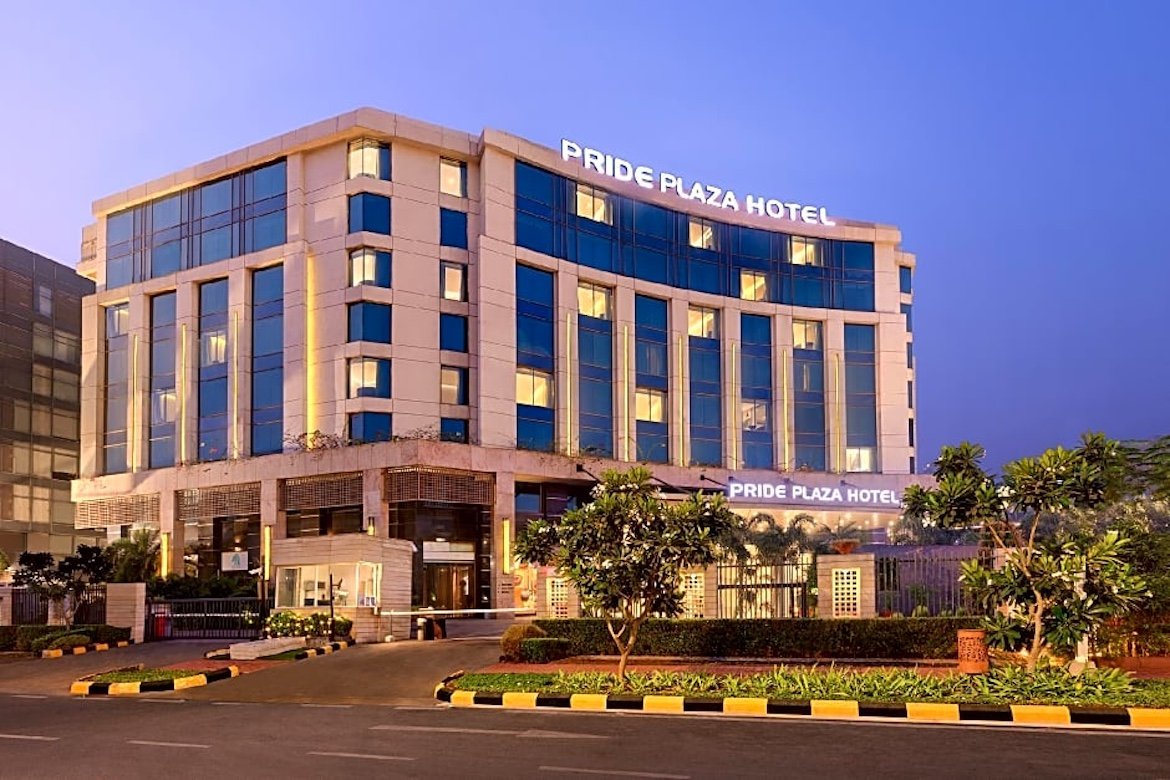
A mid-scale hotel property reflecting ongoing upgrades in India’s hospitality sector. Photo: Pride Plaza Hotel
Pride Hotels, a long-established Indian hospitality chain, is preparing to enter public markets as it targets an initial public offering by March 2026. The Pune-based company has already filed its preliminary documents with regulators and is awaiting approval to proceed, positioning the IPO as a key step in its next phase of growth.
The planned listing is intended to support the modernization of existing properties, reduce debt, and strengthen the company’s balance sheet amid an increasingly competitive hotel landscape.
The proposed IPO structure includes a fresh issue of equity shares worth ₹260 crore, along with an offer for sale of 3.92 crore shares by existing shareholders. According to company leadership, the fresh capital raised will play a central role in upgrading Pride Hotels’ owned portfolio, while also providing financial flexibility to support ongoing expansion. As of March 2025, the company’s total borrowings stood at ₹65 crore, and a portion of the IPO proceeds has been earmarked specifically for debt repayment.
Renovation Plans and Asset Strategy
A significant share of the fresh issue proceeds, nearly ₹160 crore, will be directed toward renovation, refurbishment, and modernization of Pride Hotels’ owned properties. These upgrades are planned across six of the company’s seven owned hotels, located in major urban centers including New Delhi, Ahmedabad, Kolkata, Bengaluru, Pune, and Chennai.
The renovation program is expected to be executed over a period of 12 to 27 months, with the goal of enhancing guest experience, improving operational efficiency, and maintaining competitiveness in key business markets.
Founded almost four decades ago, Pride Hotels operates under the “Pride Hotels and Resorts” brand and currently manages a portfolio of 34 hotels. This includes seven owned properties and 27 managed hotels, reflecting a growing emphasis on an asset-light operating model. Management has highlighted that while the company remains open to selectively acquiring owned assets with turnaround potential, future growth will largely be driven by management contracts with third-party owners.
Expansion remains a core pillar of Pride Hotels’ strategy. The company has expanded from 19 hotels in 2019 to 34 today and has a pipeline of 32 additional properties expected to open over the next two to three years. Of these, 21 hotels are currently under development, representing approximately 1,500 rooms across 19 locations. The pipeline includes a mix of business hubs, leisure destinations, and pilgrimage centers such as Aurangabad, Nainital, Amritsar, Alwar, Ayodhya, and Palitana.
Financial performance has also strengthened, supporting the timing of a potential IPO. Pride Hotels reported a profit after tax of ₹83.5 crore in FY25, up from ₹66 crore the previous year, while revenues rose to ₹305.62 crore from ₹270 crore. These gains reflect both higher occupancy levels and improved operating leverage across the portfolio.
The broader industry outlook remains favorable, with India’s hospitality sector projected to add substantial new supply over the next decade, particularly in Tier 2 and Tier 3 cities. While this expansion is expected to intensify competition, Pride Hotels appears to be positioning itself to benefit from rising domestic travel demand, a diversified geographic presence, and a more modernized hotel offering as it moves toward a public listing.
Spain has imposed a €65 million fine on Airbnb for advertising tens of thousands of unlicensed tourist rentals, signaling a tougher stance on short-term rentals amid a growing housing crisis.
By Yuliya Karotkaya
Published:
Updated:
Residential apartment building in Barcelona, Spain. Photo: Adrian Dorobantu / Pexels
Spain has taken one of its strongest actions yet against short-term rental platforms, fining Airbnb €65 million for advertising thousands of properties that lacked proper licenses or violated local housing rules.
The penalty reflects growing political and public pressure to rein in tourist accommodation as housing shortages worsen across the country, particularly in major cities and popular coastal regions.
According to Spain’s consumer affairs ministry, more than 65,000 Airbnb listings breached consumer protection regulations. Many properties were advertised without valid license numbers, while others displayed registration details that did not match official records.
Authorities said Airbnb continued to host the listings even after being formally warned, prompting the government to impose a fine equal to six times the profits earned while the illegal ads remained live.
Officials argue that platforms operating in Spain have a responsibility to verify that listings comply with national, regional, and municipal rules. When unlicensed rentals stay on the market, they reduce the availability of long-term housing for residents and contribute to rising rents.
Consumer rights minister Pablo Bustinduy framed the issue as a social one, saying that thousands of families are struggling to secure stable housing while commercial platforms profit from practices that push locals out of their neighborhoods.
Housing Pressure, Overtourism, and a Shift in Policy
The fine against Airbnb is part of a broader shift in Spain’s approach to tourism management. With record visitor numbers – 94 million foreign tourists in 2024 and even higher figures expected – the government is seeking to balance economic benefits with quality of life for residents. Short-term rentals have become a central target in that effort, particularly in cities already strained by overtourism.
Barcelona has emerged as the most prominent example. City officials have announced plans to eliminate all private tourist apartments by 2028, effectively removing platforms like Airbnb from residential buildings. The goal is to protect housing stock, stabilize rents, and preserve neighborhood life. Similar measures are gaining momentum elsewhere, with authorities nationwide recently removing more than 53,000 illegal tourist flats from official registers, most of them in Andalusia, the Canary Islands, Catalonia, and Valencia.
Public frustration has also become more visible. Protests against mass tourism and rising living costs have spread in several cities, underscoring how deeply the issue resonates beyond politics. For many residents, short-term rentals symbolize a model that prioritizes visitors over communities.
Airbnb has said it plans to challenge the fine in court and maintains that it is cooperating with Spanish authorities, pointing to tens of thousands of listings that have since added registration numbers. However, Spain’s government appears determined to set a precedent, signaling that compliance is no longer optional and that penalties will be significant for violations.
As Spain tightens oversight of short-term rentals, the message to platforms and hosts is clear: tourism growth must operate within stricter boundaries. The crackdown reflects a broader European trend toward regulating vacation rentals more aggressively, suggesting that Spain’s approach could influence policy debates well beyond its borders.
December travel across Europe is facing renewed disruption as airport workers in Italy, the UK, and Spain plan strikes during the busiest holiday period of the year.
By Yuliya Karotkaya
Published:
Updated:
Travelers near a Christmas decoration inside an airport. Photo: Darcy Lawrey / Pexels
Christmas is traditionally one of the busiest travel periods in Europe, but December 2025 is shaping up to be another challenging season for passengers. Across several major travel markets, airport and airline staff have announced strike action timed around the festive rush, raising the risk of flight delays, cancellations, and long queues at check-in and baggage reclaim. For travelers heading home for the holidays or escaping for a winter break, careful planning and flexibility will be essential.
Strikes have increasingly become a familiar feature of European holiday travel, as workers use peak demand periods to push for better pay, working conditions, and job security. Some of this December’s walkouts were announced months in advance, while others have emerged closer to travel dates, leaving little time for passengers to adjust plans. While compensation rules may apply in some cases, the immediate impact for travelers is often missed connections, extended waiting times, and last-minute itinerary changes.
Italy and the UK Brace for Coordinated Walkouts
Italy is expected to see widespread disruption on December 17, when multiple groups of aviation workers plan a coordinated four-hour strike. Ground handling staff, airline crew, and air traffic control personnel are all set to take part, potentially affecting flights across the country. Major hubs including Rome, Milan, Venice, Naples, and Catania are among the airports likely to experience delays, with knock-on effects possible throughout the day even outside the official strike window.
Although the walkout is limited in duration, travelers should expect congestion at security, check-in counters, and baggage handling areas. Italy’s aviation authorities typically publish lists of protected flights during strike days, but even those services can be impacted by operational bottlenecks and staff shortages earlier or later in the day.
In the United Kingdom, London airports are also facing festive season pressure. EasyJet ground staff at Luton Airport have announced strike action spanning several days in late December, including the critical days just before and after Christmas. The focus of the action is baggage handling and ground services, meaning flights may operate but passengers could encounter significant delays on arrival or departure.
Heathrow Airport is also preparing for disruption, with cabin crew linked to Scandinavian Airlines planning walkouts during key travel dates. Routes connecting London with Nordic hubs are particularly vulnerable, adding complexity for passengers traveling onward to Scandinavia or beyond during the holiday period.
Spain’s Prolonged Baggage Disputes Continue
Spain presents a different challenge for December travelers, as ongoing industrial action by baggage handling staff continues through the end of the year. The strikes, linked to disputes over working conditions and job stability, are scheduled multiple times a week and affect peak hours in the early morning, midday, and late evening.
Airports across Spain’s most popular destinations are involved, including Barcelona, Madrid, Malaga, Palma de Mallorca, Alicante, and several island airports. Passengers flying with low-cost carriers are particularly exposed, with longer waits for check-in, delayed luggage delivery, and potential missed connections becoming increasingly common.
For travelers, the key takeaway this Christmas is preparation. Monitoring flight status, allowing extra time at airports, and packing essentials in carry-on luggage can help reduce stress. While strikes are part of a broader labor debate, their timing during December ensures they will once again play a central role in shaping Europe’s holiday travel experience.
Lifestyle-focused Only YOU Hotels is set to make its U.S. debut with a new 138-room hotel in the heart of Manhattan, scheduled to open in late 2026.
By Yuliya Karotkaya
Published:
Updated:
Hotel lobby and bar area designed as a social space for guests and visitors. Photo: Palladium Hotel Group
Palladium Hotel Group has confirmed plans to introduce its lifestyle brand Only YOU Hotels to the United States, with the launch of Only YOU Hotel New York scheduled for the final quarter of 2026.
The new property will be located on West 45th Street, placing it just steps from Times Square and a short walk from Broadway, firmly positioning the hotel in one of Manhattan’s most active cultural and tourism corridors. The opening marks a significant milestone for the Spanish hospitality group as it expands the brand beyond Europe and strengthens its international footprint.
The 138-room hotel has been designed to reflect the brand’s established identity, blending contemporary aesthetics with an urban sensibility and a strong sense of place. Interiors are being developed by Spanish designer Lázaro Rosa-Violán, whose work emphasizes warmth, functionality, and refined sophistication.
Guestrooms will feature modern services and premium amenities, catering to both leisure travelers and business guests seeking comfort, design, and a central location. Flexible room service and breakfast options are planned to align with the lifestyle-driven expectations of modern travelers.
Beyond accommodation, the hotel aims to serve as a social and cultural meeting point. A restaurant and cocktail bar will be open not only to hotel guests but also to New York residents and visitors, reinforcing the brand’s philosophy of integrating into the local urban fabric.
The food and beverage offering is expected to combine signature mixology with globally inspired cuisine, drawing on the diversity and energy of the city. Common areas will be designed as versatile spaces that can adapt throughout the day, from informal gatherings to private dining experiences.
Meeting and event facilities will include multi-purpose spaces suited for small-scale business or social functions. Among them is a private room on the mezzanine level with capacity for eight to ten people, reflecting a growing demand for intimate, flexible meeting environments rather than large conference facilities. The hotel’s layout is intended to balance privacy with openness, encouraging interaction without sacrificing comfort.
Location plays a central role in the project’s appeal. With convenient access to major transportation hubs such as Penn Station and Grand Central, as well as direct connections to John F. Kennedy and LaGuardia airports, the hotel is positioned to attract international visitors and domestic travelers alike. Its proximity to theaters, offices, and iconic landmarks supports a dual focus on leisure and business travel.
According to Palladium Hotel Group, the New York opening represents a strategic step in positioning Only YOU Hotels as a global lifestyle brand centered on authentic, destination-driven experiences. With additional openings planned in cities such as Venice and Ibiza, the brand’s U.S. debut signals a broader ambition to compete in key international markets while maintaining a strong connection to local culture.
Royal Air Maroc will launch the first-ever nonstop flight between Los Angeles and Casablanca in 2026, reshaping transatlantic travel as U.S. airport procedures undergo major changes.
By Yuliya Karotkaya
Published:
Updated:
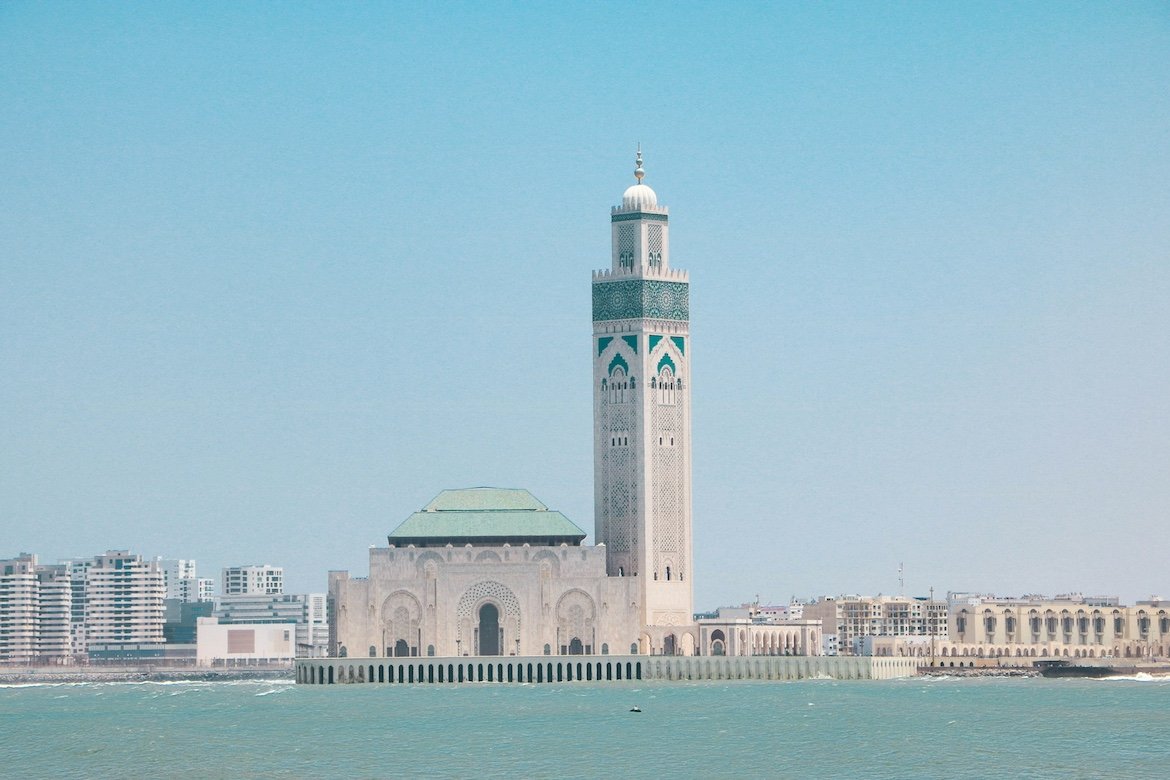
Casablanca’s skyline highlights the Moroccan gateway that will soon be directly connected to Los Angeles. Photo: Eka Maitri Viryani / Unsplash
Royal Air Maroc is set to make aviation history with the launch of the first nonstop flight connecting the U.S. West Coast with Africa. Beginning June 7, 2026, the Moroccan flag carrier will introduce direct service between Los Angeles and Casablanca, opening a new long-haul corridor that links Southern California with North Africa in approximately 11 hours. The route represents a significant milestone for global travel, expanding options for leisure travelers, diaspora communities, and businesses seeking more efficient connections across continents.
The new service will operate three times per week and be flown using Boeing 787 Dreamliner aircraft, a choice that reflects both efficiency and passenger comfort on long-distance routes. For travelers departing from Los Angeles, the flight offers a streamlined gateway to Morocco and onward connections across Africa, Europe, and the Middle East via Casablanca. For Morocco, the route further strengthens Casablanca’s position as a strategic hub connecting three continents while tapping into growing demand from the U.S. West Coast.
This expansion is also closely tied to rising global travel flows ahead of major international events. With Morocco set to co-host the 2030 FIFA World Cup alongside Spain and Portugal, the airline is positioning itself early to capture long-term demand rather than reacting at the last minute. The Los Angeles route complements Royal Air Maroc’s existing North American network, which already includes cities such as New York, Washington, D.C., Miami, Montreal, and Toronto, while reinforcing its broader ambition to grow intercontinental connectivity.
A New Route Launches as U.S. Air Travel Rules Shift
The timing of Royal Air Maroc’s West Coast expansion coincides with a period of major transformation for U.S. air travel. In 2026, travelers flying internationally from the United States will face a noticeably different airport experience as new security and documentation requirements come into force. Mandatory REAL ID enforcement, expanded biometric screening, and AI-supported security lanes are expected to reshape how passengers move through airports, particularly at large international hubs like Los Angeles International Airport.
For travelers heading to Casablanca, these changes may initially add a layer of adjustment but are designed to streamline the journey over time. Digital identity verification, reduced reliance on boarding passes, and upgraded screening technology aim to shorten queues and improve flow, especially for long-haul international travelers. While transitional periods often come with confusion, airlines launching new global routes are betting that improved infrastructure will ultimately enhance passenger confidence and airport efficiency.
The convergence of a historic new intercontinental route and evolving airport procedures underscores a broader shift in how long-haul travel is developing. Airlines are increasingly targeting underserved city pairs, while governments modernize security frameworks to handle rising passenger volumes more effectively. For travelers, the Los Angeles–Casablanca route represents not just a new destination pairing, but a signal that global air travel is entering a new phase – one defined by direct connectivity, modern aircraft, and a reimagined airport experience.
As 2026 approaches, Royal Air Maroc’s latest move positions both Los Angeles and Casablanca at the center of this transition, offering travelers a new way to cross the Atlantic while navigating a rapidly changing aviation landscape.
Aer Lingus will expand its transatlantic network in 2026 with a new nonstop route between Dublin and Pittsburgh, strengthening travel, business, and cultural ties between Ireland and the U.S.
By Yuliya Karotkaya
Published:
Updated:
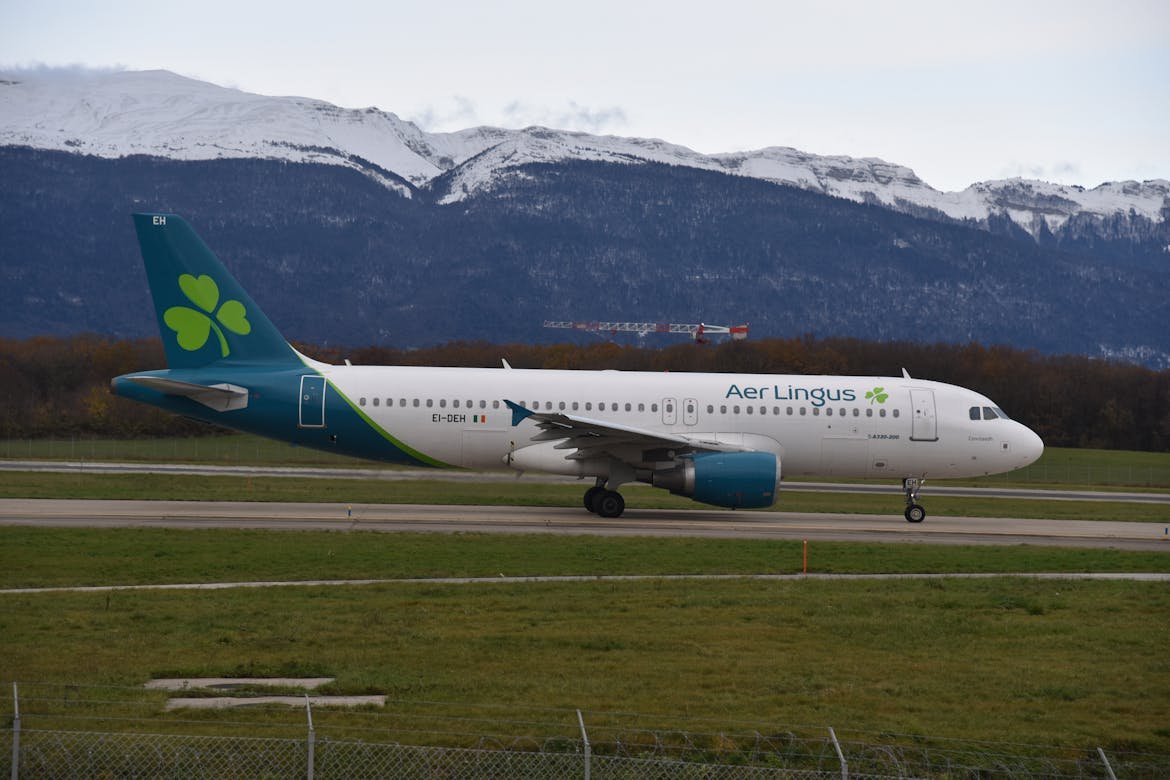
An Aer Lingus aircraft on the runway ahead of a new transatlantic route launch. Photo: Planespotter Geneva / Pexels
Aer Lingus is set to expand its transatlantic network with the launch of a new nonstop service between Dublin and Pittsburgh, scheduled to begin on May 25, 2026. The route will operate four times per week and represents a strategic move by the Irish carrier to strengthen connectivity between Ireland and key regional markets in the United States. With this addition, Aer Lingus continues to focus on point-to-point routes that serve both business and leisure travelers without relying solely on major hub airports.
The Dublin–Pittsburgh flights will be operated using the Airbus A321 XLR, a next-generation single-aisle aircraft designed for long-haul routes. The aircraft will feature 16 lie-flat business class seats and 168 economy seats, offering a premium onboard experience while maintaining fuel efficiency. The use of the A321 XLR reflects a broader airline trend toward deploying smaller, long-range aircraft to open new transatlantic routes that were previously not viable with widebody jets.
A key benefit for passengers on the new route is Dublin Airport’s U.S. preclearance facility. Travelers flying to Pittsburgh will complete U.S. customs and immigration procedures before departure, allowing them to arrive in the United States as domestic passengers. This significantly reduces wait times on arrival and improves the overall travel experience, particularly for business travelers and those connecting onward within the U.S.
The new service is expected to strengthen economic, cultural, and tourism links between Ireland and western Pennsylvania. Pittsburgh has deep historical connections to Ireland, alongside a growing business ecosystem that includes technology, healthcare, education, and advanced manufacturing. The nonstop flight provides a direct link for corporate travel, academic exchanges, and leisure trips, while also making the region more accessible to European visitors.
For travelers departing from the U.S., the route offers seamless access to Ireland and onward connections across Europe via Dublin. Aer Lingus’ growing European network allows passengers to easily continue to destinations throughout the continent, positioning Dublin as a convenient gateway for transatlantic travel.
The Pittsburgh launch follows Aer Lingus’ earlier announcement of a new Dublin–Raleigh-Durham route beginning in April 2026. Together, these additions highlight the airline’s confidence in secondary U.S. markets and its commitment to expanding direct transatlantic connectivity. By summer 2026, Aer Lingus plans to serve 27 destinations in North America, reinforcing its role as a major player in transatlantic aviation.
As airlines continue to adapt to evolving travel demand, routes like Dublin–Pittsburgh illustrate how long-haul travel is shifting toward more direct, efficient connections. For travelers, the new service promises greater convenience, reduced travel time, and a more streamlined journey between Ireland and the United States.
flydubai has expanded its European network with new nonstop routes to Vilnius and Riga, strengthening connectivity between Dubai and the Baltic States during the peak winter travel season.
By Yuliya Karotkaya
Published:
Updated:
A view of Vilnius, highlighting the Lithuanian capital as flydubai’s newest destination in the Baltic region. Photo: Reza Bina / Unsplash
flydubai has continued its steady expansion across Europe with the launch of new nonstop flights to Vilnius, Lithuania, and Riga, Latvia, adding two Baltic capitals to its growing route network.
Timed to coincide with the busy winter and Christmas travel season, the new services offer travelers greater choice while strengthening links between Dubai and Northern Europe. The additions reflect flydubai’s strategy of connecting underserved markets to Dubai’s global aviation hub while catering to both leisure and business demand.
Flights to Vilnius began on December 12, 2025, followed by the inaugural service to Riga on December 13. Both routes operate three times per week, providing reliable and consistent access throughout the winter season and beyond. With these launches, flydubai becomes the first UAE carrier to offer nonstop flights between Dubai and Lithuania, while also opening a new direct air bridge to Latvia. The airline expects the routes to stimulate tourism flows, deepen commercial ties, and support cultural exchange between the Gulf region and the Baltic States.
Vilnius and Riga are increasingly appealing to travelers seeking authentic European destinations without the congestion of major capitals. Their historic old towns, medieval architecture, and strong cultural identities offer a slower, more immersive travel experience, particularly attractive during winter.
Seasonal festivities, snow-covered streets, and traditional markets give both cities a distinctive atmosphere that aligns well with holiday travel trends. For travelers departing Dubai, the routes provide access to a different side of Europe, while Baltic travelers gain a direct connection to one of the world’s most important global transit hubs.
Expanding Connectivity Between Dubai and the Baltics
Onboard, flydubai continues to position itself as a hybrid carrier with a focus on comfort and value. Business Class passengers benefit from lie-flat seating, enhanced privacy, and an internationally inspired dining concept designed for long-haul comfort. Economy Class travelers are offered complimentary in-flight entertainment and meals, reinforcing the airline’s efforts to deliver a consistent experience across cabins. This approach allows flydubai to appeal to a wide range of travelers, from holidaymakers to corporate passengers.
The new routes are fully integrated into the flydubai–Emirates partnership, offering seamless connections through Dubai. Travelers can benefit from single-ticket itineraries, checked-through baggage, and access to an extensive combined network spanning more than 240 destinations worldwide. This connectivity positions Vilnius and Riga as convenient gateways not only for point-to-point travel, but also for onward journeys across Asia, Africa, and Australasia.
The Baltic expansion builds on flydubai’s broader European growth strategy. In recent years, the airline has launched new services to destinations across Central and Eastern Europe, steadily increasing its footprint beyond traditional Western European markets. By 2025, flydubai serves 35 destinations across 20 European countries, underscoring its focus on strategic, long-term network development.
As travelers continue to seek new destinations and alternative city experiences, flydubai’s entry into the Baltic States highlights a shift toward diversified, culturally rich markets. The new Vilnius and Riga services mark another step in the airline’s ambition to connect Dubai with emerging European gateways while supporting sustainable growth on both sides of the route.
Dubai’s proposed 93km “The Loop” would create a climate-controlled corridor for walking, running, and cycling, aiming to connect millions of residents to daily services without relying on cars.
Dubai is known for building big, fast, and future-forward – and a proposed project called The Loop may become one of its most ambitious quality-of-life upgrades yet. Designed by sustainable city developer URB, The Loop is envisioned as a 93-kilometer climate-controlled corridor dedicated to walking, running, and cycling.
The goal is simple but bold: make active travel feel comfortable, safe, and convenient in a city historically designed around cars, while supporting Dubai’s wider “20-minute city” vision.
If built as planned, The Loop would connect more than three million residents to key districts, services, and everyday destinations within minutes by foot or bike. In practical travel terms, that could mean a very different Dubai experience for both locals and visitors: fewer short car rides, easier “last-mile” movement between neighborhoods, and a more intuitive way to explore beyond malls and major landmarks.
The project also positions itself as a lifestyle destination, not just a transport link, by integrating pocket parks, sports courts, fitness stations, and social spaces along the route.
What The Loop Could Change for Getting Around Dubai
For travelers, The Loop’s biggest promise is year-round usability. Dubai’s heat is often the dealbreaker for walking or cycling outside a few cooler months, and a climate-controlled route would remove that barrier for sightseeing, commuting, and casual exploration. The planned route concept has been described as stitching together many high-density areas, tracing key corridors and linking major communities and hubs.
That’s the difference between a city where you “visit attractions” and a city where you can genuinely move through neighborhoods at street level – slowly, comfortably, and on your own schedule.
This also connects to a bigger trend: destinations trying to reduce car dependency without making travel harder. The Loop is framed as a paradigm shift toward people-first infrastructure, and it’s designed to integrate better with public transport so riders can combine cycling with the Metro or other modes.
If the system succeeds, it could make Dubai feel less fragmented, especially for visitors who want to hop between districts without constantly booking taxis.
A Sustainability Pitch Powered by Movement
URB positions The Loop as a zero-emissions transport system, with renewable energy generated in part through kinetic technology – essentially capturing energy from movement. The concept also includes recycled water for irrigation and vertical farming elements tied to food security goals.
Those features are as much about storytelling as engineering: The Loop isn’t being sold as a tunnel or a road, but as a visible, walkable symbol of Dubai’s sustainability shift.
It’s also worth noting Dubai is exploring multiple “loop” concepts at once, from underground transit ideas to above-ground walking networks like the newer “Future Loop” proposal near major landmarks. Taken together, these projects signal a clear direction: making movement easier in extreme climate conditions while building infrastructure that doubles as an experience.
For travelers, that could translate into a Dubai where the journey between places becomes part of the trip – not just the ride in between.
JetBlue is entering the airport lounge space with BlueHouse, a new customer-focused concept debuting at New York’s JFK Airport, with controlled access and a distinctly JetBlue feel.
By Yuliya Karotkaya
Published:
Updated:
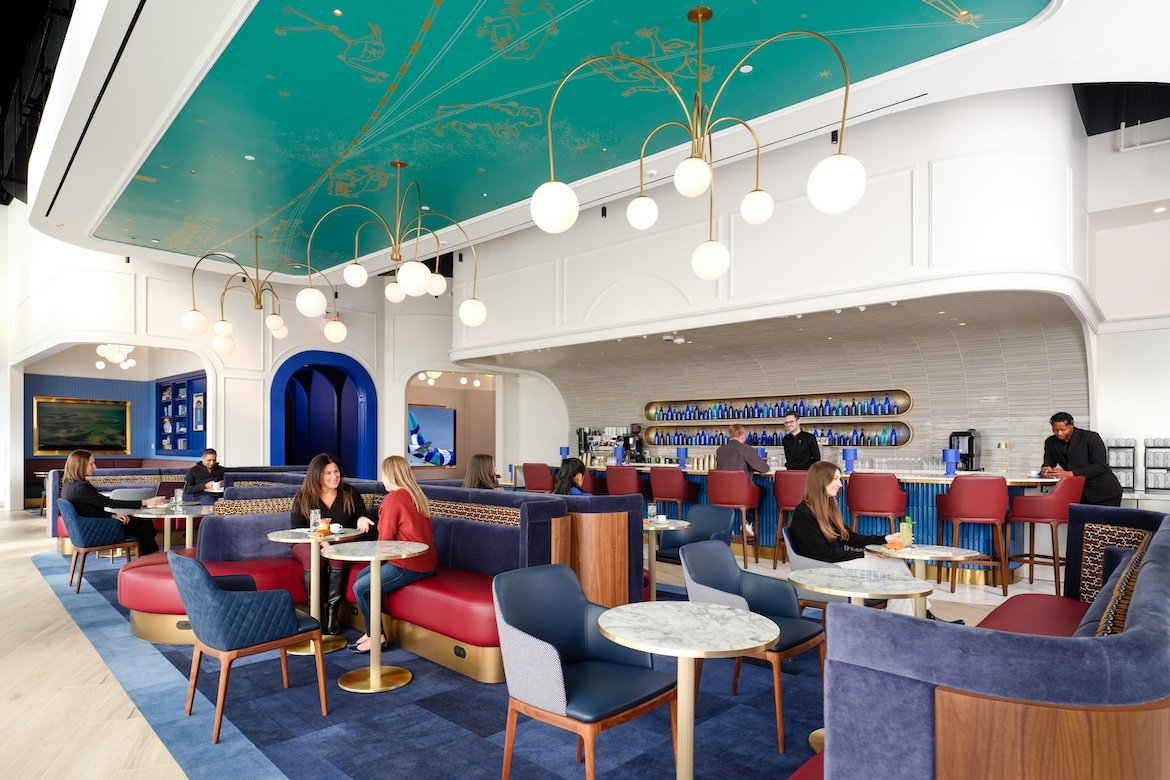
Renderings of JetBlue’s upcoming BlueHouse lounge at JFK Terminal 5, the airline’s first branded airport lounge concept. Photo: JetBlue
JetBlue is officially stepping into the airport lounge arena with the launch of BlueHouse, its first-ever branded lounge concept, set to open on December 18 in Terminal 5 at New York’s John F. Kennedy International Airport.
The two-story space marks a significant evolution for the airline, which has long positioned itself as a customer-first carrier but until now has avoided the traditional lounge model embraced by many competitors. With BlueHouse, JetBlue is aiming for a carefully controlled, experience-driven offering rather than a high-volume amenity.
The inaugural BlueHouse lounge has been designed to accommodate up to 140 guests and will initially be accessible to a select group of travelers. These include Mosaic 4 loyalty members, JetBlue Premier credit cardholders, and customers flying in Mint on transatlantic routes.
Travelers in the first two categories will be able to bring one complimentary guest, while additional companions will be charged a $39 entry fee. JetBlue has emphasized that this limited-access approach is intentional, with the goal of preventing overcrowding and ensuring a calm, premium atmosphere from day one.
A customer-driven lounge concept with room to grow
According to JetBlue leadership, BlueHouse is not being positioned as a tool to aggressively chase corporate contracts or upsell premium cabins, but rather as a direct response to long-standing customer demand. The airline has described the lounge as a product built around its most loyal flyers, prioritizing comfort, usability, and consistency over scale. Access rules may evolve over time, but occupancy will remain the deciding factor behind any expansion.
Starting in February, JetBlue plans to widen eligibility through limited-access passes. These will be available to Mosaic members at levels one through three, JetBlue Plus and Business cardholders, non-transatlantic Mint customers, and travelers who purchase an annual BlueHouse membership. This phased rollout reflects JetBlue’s cautious approach, allowing the airline to monitor usage patterns before opening the doors more broadly.
Inside, BlueHouse offers a mix of social and quiet zones designed to suit different travel moods. Guests will find high-speed Wi-Fi, plentiful power outlets, open seating areas, and designated quiet spaces, along with a game room for those looking to pass the time between flights. Food service will initially focus on high-quality grab-and-go items curated by Union Square Events, with plans to introduce a full kitchen in a later phase, potentially in the second half of 2026.
The beverage program leans heavily into local partnerships, reinforcing JetBlue’s brand identity and New York roots. The downstairs full bar seats ten guests, while the upstairs bar offers beer and wine. Coffee, tea, cocktails, and specialty drinks are sourced from well-known local names, adding a sense of place to the experience rather than a generic lounge feel.
Looking ahead, JetBlue has already confirmed that a second BlueHouse lounge will open at Boston Logan International Airport’s Terminal C in 2026. Fort Lauderdale is also under consideration as a potential future location. Together, these developments suggest that while JetBlue is entering the lounge space cautiously, BlueHouse could become a defining part of its premium ground experience if the concept proves successful.
B2B booking platform RateHawk is preparing a major push into the U.S. market in 2026, building on rapid growth among American travel advisors and rising transaction volumes.
By Yuliya Karotkaya
Published:
Updated:
RateHawk branding displayed on a digital travel booking interface used by travel professionals. Photo: RateHawk
B2B booking platform RateHawk is preparing for a significant expansion in the United States in 2026, signaling growing competition in the technology-driven travel advisor space.
The platform, which allows travel professionals to book accommodations, flights, rail tickets, transfers, and rental cars in one system, has already gained notable traction in the U.S. market over the past year. Company data shows that momentum is accelerating, with U.S. net transaction value in the third quarter rising sharply compared with the same period last year and the number of American users continuing to climb.
RateHawk’s appeal lies in its focus on efficiency and revenue flexibility for travel advisors. The platform allows advisors to customize commissions by incorporating their own service fees while presenting clients with a single, final price.
This structure is designed to simplify pricing conversations with travelers while giving advisors greater control over their margins. As advisors increasingly look for ways to streamline workflows and protect profitability, platforms that combine transparency with flexibility are gaining attention.
The company reports that its U.S. user base has grown to more than 15,000 travel professionals, representing a substantial increase year over year. This growth comes alongside a broader global footprint, with more than 110,000 users worldwide. RateHawk has traditionally been especially strong in Europe, the Middle East, and Latin America, but recent performance suggests the U.S. is becoming a key strategic market rather than a secondary expansion territory.
To support its ambitions, RateHawk has been steadily investing in its North American operations. Over the past three years, the company has expanded its regional team, which now includes around 25 staff members focused on sales, partnerships, and market development. This on-the-ground presence is expected to play a critical role as the platform ramps up outreach to U.S.-based agencies and independent advisors in 2026.
From a product perspective, RateHawk emphasizes breadth and convenience. The platform offers access to approximately 2.9 million accommodation options worldwide, ranging from traditional hotels to alternative lodging such as cottages, ryokans, and glamping properties.
In addition, it provides flight options from hundreds of airlines, along with car rentals and ground transfers across more than 160 countries. Advisors can manage bookings through both desktop and mobile applications, allowing them to work remotely and respond quickly to client needs.
RateHawk is part of Emerging Travel Group, which also operates other travel brands, giving it access to a broader ecosystem of travel inventory and technology resources. This backing has helped the platform scale rapidly while continuing to add features aimed at professional users rather than consumers.
As competition among B2B booking platforms intensifies, RateHawk’s planned U.S. push reflects a wider trend toward consolidation, automation, and data-driven decision-making in the travel advisor sector.
With strong growth metrics already in place and a clear focus on advisor-centric tools, the company appears positioned to make the U.S. market a central pillar of its global strategy in the coming years.
Madeira has once again been crowned the world’s leading island destination, securing the prestigious title for the eleventh year in a row and reinforcing its global tourism appeal.
By Yuliya Karotkaya
Published:
Updated:
A panoramic view of Madeira’s coastline, showcasing the island’s dramatic landscapes and year-round appeal. Photo: Colin Watts / Unsplash
Madeira has once again claimed the title of the World’s Leading Island Destination, earning the prestigious honor for the eleventh consecutive year at the 2025 World Travel Awards.
The ceremony, held in Bahrain in early December, reaffirmed the Portuguese archipelago’s position at the top of global island tourism, placing it ahead of world-famous destinations such as Bali, Hawaii, Mauritius, the Seychelles, and Zanzibar.
The repeated recognition highlights Madeira’s rare ability to combine natural beauty, high-quality infrastructure, and a long-term tourism strategy that continues to resonate with travelers worldwide.
This latest award also capped a strong year for Portugal overall, which collected multiple accolades across various categories. For Madeira, however, the distinction carries particular weight. Winning the same global title for more than a decade signals not only consistency, but also a clear vision for sustainable growth, destination management, and visitor satisfaction.
It reflects years of coordinated work between local authorities, tourism operators, and communities committed to preserving the islands’ character while welcoming the world.
A Decade of Global Leadership
Madeira’s journey to becoming a global tourism benchmark did not happen overnight. Since first receiving the title in 2013, the archipelago has accumulated more than two dozen World Travel Awards at both European and global levels. This sustained recognition has helped position Madeira as a destination known for reliability, quality, and innovation rather than short-lived trends.
The competition for the 2025 title was particularly strong, with more than a dozen island destinations from across the Caribbean, Pacific, Indian Ocean, and Southeast Asia vying for the same honor. Madeira’s continued success underscores its ability to stand out in an increasingly competitive global tourism landscape.
Judges and industry professionals consistently point to the islands’ balance between accessibility, environmental stewardship, and diverse visitor experiences as key differentiators.
Sustainability, Experience, and Record Tourism Growth
A major factor behind Madeira’s enduring appeal is its focus on sustainable, year-round tourism. The islands have successfully diversified beyond seasonal travel, offering experiences that cater to different interests throughout the year.
Volcanic scenery, coastal cliffs, and historic levada trails attract hikers and outdoor enthusiasts, while Porto Santo’s beaches appeal to families and leisure travelers. Cultural events, from Carnival celebrations to the Atlantic Festival and internationally acclaimed New Year’s Eve fireworks, further strengthen Madeira’s global profile.
The 2025 World Travel Awards also recognized Madeira as a finalist in categories including adventure tourism, festivals and events, and beach destinations, reflecting the archipelago’s broad appeal. Porto Santo continued to receive praise for its coastline, while emerging spots such as Prainha do Caniçal gained international attention.
Tourism data supports the accolades. In 2024, Madeira welcomed more than 2.2 million visitors and recorded nearly 11.7 million overnight stays, the highest figures in its history. Tourism revenue exceeded 750 million euros, marking significant year-on-year growth.
Early indicators from 2025 suggest this momentum is continuing, reinforcing Madeira’s status not just as an award-winning destination, but as one travelers actively choose again and again.
ASTA has announced the finalists for its 2025 Travel Advisor Awards, honoring excellence and innovation across the advisor community ahead of the inaugural ASTA Globes in Chicago.
By Yuliya Karotkaya
Published:
Updated:
A moment from an ASTA event honoring the community of dedicated travel advisors. Photo: ASTA
The American Society of Travel Advisors (ASTA) has officially revealed the finalists for its 2025 Travel Advisor Awards, celebrating outstanding professionalism, creativity and leadership across the travel advisor community.
Winners will be announced at the inaugural ASTA Globes ceremony, taking place January 22, 2026, at Chicago’s historic Palmer House. The new event aims to spotlight the advisors and agencies shaping the future of modern travel during a time of evolving traveler expectations and rapid industry transformation.
ASTA President and CEO Zane Kerby emphasized that travel advisors continue to represent the heart of the industry, providing human connection, expertise and thoughtful planning that inspire travelers to explore the world. This year’s finalists reflect a wide range of skills and specialties, demonstrating how diverse and dynamic the advisor profession has become.
2025 ASTA Advisor Award Finalists include:
ASTA Adventure Travel Specialist Award
– James Cory, TravelStore, Los Angeles, CA
– Global Travel Collection, New York, NY
– David Johnson, Dream Vacations, Castle Pines, CO
– Jamie Jones, WhirlAway Travel, Chesterbrook, PA
– Jennifer Kellum, Neverland and Main Travel, Jacksonville, NC
ASTA Agency Leadership Award
– Jennifer Doncsecz, VIP Vacations / Travel A.L.L.I.E.S., Bethlehem, PA
– Betsy Geiser, Uniglobe Travel Center, Newport Beach, CA
– Eric Maryanov, All-Travel, Los Angeles, CA
– Barry Noskeau, Lee Thomas & Lisa Wheeler, NousTravel, Santa Monica, CA
– Lee Smolinski, Oasis Travel Network, Boca Raton, FL
ASTA Cultural Connection Award
– Alicia Heath, Exploraholic Travel, Beaufort, SC
– Sara Kelderman-Keough, Travel Leaders Discovery, Sheboygan, WI
– McKenzie Paquin, 417 Travel, Springfield, MO
– April Schmitt, Divine Travel Company, Lincoln, CA
– Lexi Smith, The Travel Smiths, Point Pleasant Beach, NJ
ASTA Digital Marketing Achievement Award
– Donna Blaser, Guiding Star Travel, Portland, OR
– Cruise Planners, Coral Springs, FL
– Sarah Green, Accent on Travel, Rehoboth Beach, DE
– Lauren Quirk, Travel With Character, Calabasas, CA
– Chris Weatherhead, Montecito Village Travel, Santa Barbara, CA
ASTA Family & Multi-Generational Leadership Award
– Denise Ambrusko-Maida, Travel Brilliant, Buffalo, NY
– Hannah Cote, Legacy Travel, Plano, TX
– LaNise Frison, Budafly Travel, Columbus, MS
– Deb Gorman, TravelMation, Newburgh, IN
– Krissy Yoder, Be Our Guest Travel Company, Pinehurst, NC
ASTA Group Travel Innovator Award
– Stacey Camilleri, Travel Smiths, Point Pleasant, NJ
– John Gossen, Bursch Travel, Monticello, MN
– Sean Harmon, Harmon Travel, Boise, ID
– Kimberly Johnson, Keep It Moving Travels, Columbia, SC
– Asia Lantz, Travel With Asia, Buckeye, AZ
ASTA Luxury Travel Excellence Award
– Colleen Campanella, Acendas Travel, St. Louis, MO
– Niya Harris, Fly Escapes, Lithonia, GA
– Leonore Hoak, All-Travel, Los Angeles, CA
– Nathan Parr, Travel & Cruise Desk, Lake Oswego, OR
– Carol Rosenhagen, Direct Travel, San Jose, CA
ASTA Mentorship Excellence Award
– Geneva Ray Haden, Montecito Village Travel, Ocala, FL
– Nadia “Sparkle” Henry, Travel With Sparkle, West Orange, NJ
– Laticia Jacobs, Travel Concierge Partners, Fernandina Beach, FL
– Yahaira Morales, Finisterre Travel, West Palm Beach, FL
ASTA Michelle Mueller Educational Leadership Award
– Amanda Klimak, Largay Travel, Waterbury, CT
– Crystal Seaton, Road to Relaxation Travel, Wilmington, NC
– Gina Weyer, Signature Travel Network, El Segundo, CA
ASTA Niche Market Mastery Award
– Jim Aguerinos, Perfect Honeymoons, Mount Pleasant, SC
– Dave Natale, DNA Tours / River Cruise King, Boca Raton, FL
– Laura Poe, Curated by Laura Poe, Winter Park, FL
– Alex Trettin, Travel Center Inc., Tacoma, WA
– Nicole Zillman, Association of Bridal Consultants, Parker, CO
ASTA Organizational Culture Award
– Lara Deppisch, Bursch Travel, Waite Park, MN
– Jackie Friedman, Nexion, Irving, TX
– Shannon Kittner, The Wander Network, Davenport, FL
– Jani Miller & John Miller, Central Travel, Toledo, OH
– Wayne Spector, NEST, Oyster Bay, NY
ASTA Talent Development Award
– Avoya, Fort Lauderdale, FL
– Cathi & Phillip Banks, Legacy Travel, Plano, TX
– Marcie Muensterman, The Travel Advisor Marcie, Wesley Chapel, FL
– Gayle Smith, Prescription Travel, Pelham, GA
– Kameish Stanley, Oasis Travel Network, Boca Raton, FL
ASTA Travel Technology Pioneer Award
– Scott Caddow, Legendary World, Las Vegas, NV
– James Ferrara, InteleTravel, Delray Beach, FL
– Amanda Klimak, Largay Travel, Waterbury, CT
– Diania Pimenta, Abora Travel / Dream Vacations, Tampa, FL
– Travelmation, Fort Lauderdale, FL
As anticipation builds for the first ASTA Globes celebration, this year’s roster of finalists highlights the remarkable talent shaping the future of travel advising across the United States.
Norwegian Cruise Line Holdings and the Alaska Department of Fish & Game have launched a new public art contest inviting U.S. artists to celebrate Southeast Alaska’s wildlife through original designs.
By Yuliya Karotkaya
Published:
Updated:
A Norwegian Cruise Line ship sailing in Alaska, where the new wildlife-focused public art initiative is set to make its debut. Photo: Abdel Achkouk / Pexels
Norwegian Cruise Line Holdings, in partnership with the Alaska Department of Fish & Game, has announced a new public art contest designed to spotlight Southeast Alaska’s iconic wildlife while encouraging conservation-minded community engagement.
The initiative, titled “Keep Bears Wild: Juneau Call for Artists,” invites creatives across the United States to submit original designs that celebrate the region’s bears and natural habitat. As shared in the company’s recent social media announcement, the contest aims to use art as an engaging tool for stewardship and education.
The winning artwork will be wrapped around a newly constructed bear-resistant garbage enclosure in Juneau’s Warners Wharf area, transforming essential infrastructure into a visual reminder of the importance of protecting Alaska’s wildlife.
Additional selected designs will appear as mini-murals on new bear-resistant trash cans being installed throughout downtown.
These installations are intended not only to beautify public spaces but to increase awareness about proper waste management in bear country, where human-wildlife interaction requires careful attention.
Artists are encouraged to submit high-resolution digital artwork that fits the provided dimensions and reflects the spirit of Alaska’s wilderness. Each participant must also include a brief artist statement outlining the inspiration behind their piece. Eligibility is open to legal U.S. residents aged 18 and older, broadening the call to both emerging and established creatives interested in contributing to a meaningful conservation effort.
A review panel will evaluate all submissions and select three finalists. From there, the wider Alaska community will play a role in choosing the winner through a public vote conducted on social media. This community-driven selection process mirrors the collaborative intent behind the project: to bring locals and visitors together around shared appreciation for Southeast Alaska’s wildlife.
The artist behind the winning design will receive a $7,000 cash prize, along with an additional $3,000 donated to a local charity of their choice. With this approach, the contest supports both artistic expression and community organizations working to preserve Alaska’s natural heritage. Submissions remain open until February 13, giving artists ample time to develop thoughtful, nature-inspired concepts.
As Juneau continues balancing tourism, urban infrastructure, and thriving wildlife populations, initiatives like this highlight how creative partnerships can strengthen conservation efforts. By blending public art with environmental education, Norwegian Cruise Line and Alaska Fish & Game are helping ensure that visitors and residents alike understand what it means to keep bears wild – and communities safe.
Travelers planning US trips may soon face stricter ESTA rules, including mandatory social media disclosure, expanded personal details, and new biometric checks.
By Yuliya Karotkaya
Published:
Updated:
A U.S. flag waving outside a building on a city street. Photo: Abhishek Navlakha / Pexels
A new proposal from US Customs and Border Protection (CBP) could significantly change how millions of international travelers apply for entry into the United States.
Citizens of 41 visa-waiver countries currently use the Electronic System for Travel Authorization (ESTA) for short visits, but forthcoming rules may require applicants to share much more personal and digital information than ever before. Under the draft plan, providing a five-year history of social media accounts – previously optional – would become mandatory for all applicants.
The new proposal arrives as the US prepares for major travel surges linked to global events, including the 2026 FIFA World Cup.
It also follows similar tightening of entry systems in other countries, including the UK’s digital travel permit requirement set to launch in 2026, referenced in our guide to the UK ETA system, and the United States’ own new visa bond requirement introduced for 2025.
Together, these shifts signal an era of more robust digital vetting across major travel destinations.
Expanded Data Requirements Raise Privacy Concerns
Beyond social media disclosures, CBP’s draft rule outlines a much broader set of information that ESTA applicants would need to provide. Travelers may soon be required to list every phone number and email address they have used within the past five years, as well as the names and birth dates of close family members.
In an unexpected addition, the agency may also require applicants to submit a mandatory selfie. Officials are exploring whether to expand biometric screening to include DNA and iris scans in the future.
These changes come at a moment when several travelers have reported being denied US entry based on their online activity. Some were turned away after border officers examined social media posts deemed critical of US political leaders. The proposed mandatory transparency could formalize this digital review process, raising questions among travelers about what online content might be scrutinized.
The tightened rules echo recent policy updates for foreign workers and students. Beginning December 15, all applicants for H-1B visas and their dependents will undergo a review of their online presence – similar to checks already imposed on student visa holders. Authorities have reminded travelers that a visa is considered “a privilege, not a right,” underscoring a firmer national stance on pre-entry screening.
Higher Barriers for Travelers Amid Rising Costs
Stricter digital vetting is just one of the new challenges international visitors may face. Recent increases in US national park entry fees – specifically higher prices for foreign tourists – have drawn criticism from businesses that rely heavily on international travel. Combined with potential new ESTA requirements, these changes could add both financial and procedural hurdles at a time when global tourism is still recovering.
The ESTA proposal is currently open for public comment for 60 days. Once the review period ends, CBP will determine whether to finalize the rules, adjust them, or incorporate additional biometric elements.
For now, travelers planning trips to the US should stay informed, carefully review their digital presence, and prepare for the possibility of more comprehensive screening.
Intrepid Travel has acquired Wild Bush Luxury, adding iconic guided walks and premium lodges across Australia as the company accelerates its growth in low-impact, nature-based tourism.
By Yuliya Karotkaya
Published:
Updated:
Hikers exploring a remote trail in Australia’s wilderness, reflecting the immersive nature-based experiences Intrepid is expanding. Photo: Intrepid Travel
Intrepid Travel is strengthening its position as a leader in sustainable, nature-focused tourism with the acquisition of Wild Bush Luxury, one of Australia’s most respected guided walking and premium lodge operators.
The purchase brings several renowned experiences into Intrepid’s portfolio, including Arkaba Walk and Homestead in South Australia, Bamurra Plains in the Northern Territory, and additional premium guided walks such as the Maria Island Walk in Tasmania.
Together, these additions allow Intrepid to significantly expand its offering of immersive, low-impact adventures across some of Australia’s most remote and spectacular landscapes.
Wild Bush Luxury has long been known for its conservation-driven approach and intimate wilderness encounters. Its guided walking tours give travelers a deeper connection to the land, wildlife and Indigenous history of the regions they explore. By integrating these acclaimed lodges and walks into its offerings, Intrepid aims to meet the growing demand for meaningful, nature-grounded travel experiences.
According to Brett Mitchell, Intrepid’s Managing Director for Australia and New Zealand, travelers are increasingly looking for ways to reconnect with the natural world, and the company’s expanded portfolio is designed to support that shift. The acquisition aligns closely with Intrepid’s sustainability commitments and its long-term Climate Action Plan, which includes reducing emissions and supporting conservation-oriented tourism.
The transfer of Wild Bush Luxury from Experience Co. comes after a strategic portfolio review by the previous owner. Experience Co. chose to refocus its business on scalable adventure segments such as marine tourism at the Great Barrier Reef, Treetops Adventure parks and its growing skydive and aviation operations. The company emphasized its confidence that Intrepid is the right steward for the conservation-focused lodges and walking experiences, pointing to Intrepid’s global reputation for responsible travel.
The timing of the acquisition dovetails with Intrepid’s largest product expansion ever. The operator recently unveiled more than 100 new itineraries launching in 2026 across 50-plus countries. These include new Short Breaks designed with American travelers in mind, as well as a growing range of Premium Walking and Trekking trips fueled by rising demand for active travel. Intrepid has also seen a notable increase in family bookings, prompting the launch of 10 new family itineraries and the introduction of a 20% discount for travelers 17 and under.
Among the standout offerings for next year is the Acatenango Volcano Hike and Antigua Short Break in Guatemala, combining adventure with meaningful cultural experiences. As Intrepid continues to expand globally, the addition of Wild Bush Luxury solidifies its role as one of Australia’s largest operators of guided walks and eco-focused accommodations.
With the Wild Bush Luxury portfolio officially joining Intrepid in February 2026, the company is poised to deliver an even broader range of immersive, environmentally responsible travel experiences. The acquisition not only strengthens Australia’s position as a premier destination for nature-based tourism but also reinforces Intrepid’s commitment to shaping the future of sustainable adventure travel.
Join our list to receive latest Blockchain, Crypto & Fintech news:
WordPress database error: [Table 'u752143311_aXVuj.wp_coingecko_coins' doesn't exist]
            SELECT coins.*, meta.post_id as post_id
            FROM `wp_coingecko_coins` coins
            INNER JOIN wp_postmeta meta ON (meta.meta_key = 'wpcf-coin-main-tag' AND meta.meta_value = coins.slug )
            ORDER BY market_cap_usd
            DESC LIMIT 9