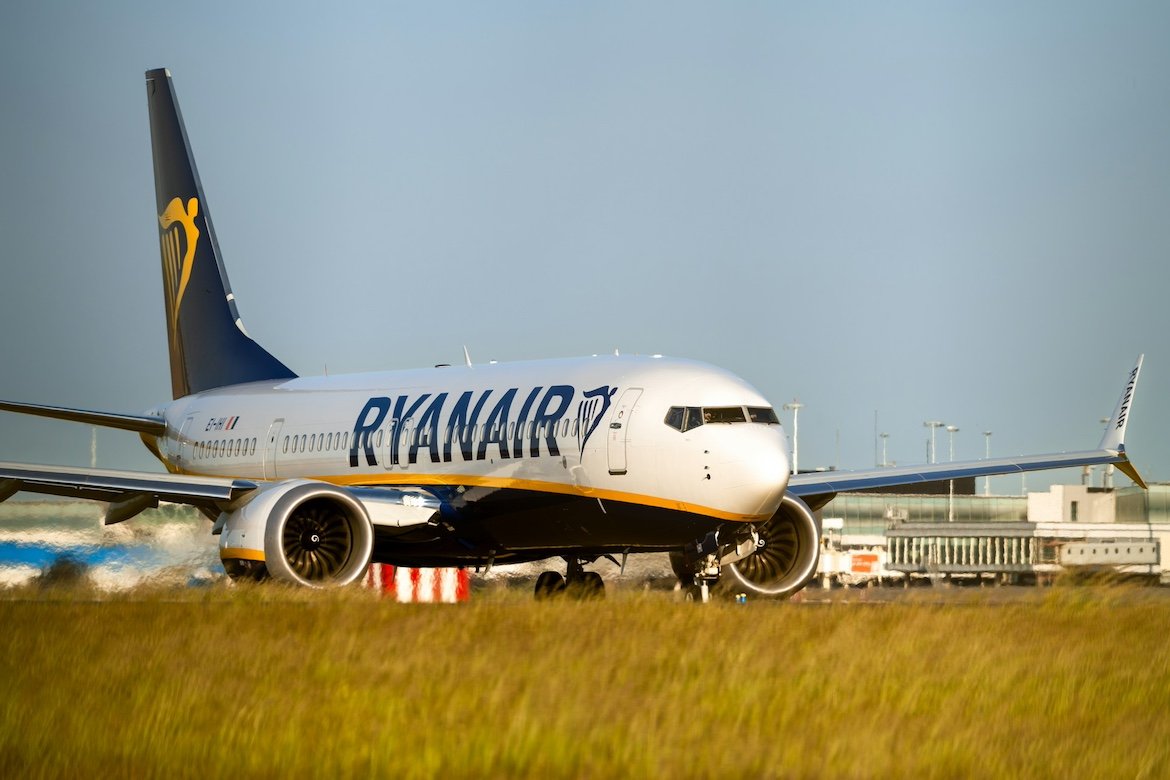
Ryanair has credited a highly publicized online feud with tech billionaire Elon Musk for delivering a short-term boost in ticket sales, underlining how controversy can translate into commercial momentum in the travel industry. According to Ryanair CEO Michael O’Leary, bookings have risen by between two and three percent in recent days following the very public exchange between the two outspoken executives.
The clash began after O’Leary rejected the idea of installing Musk’s satellite internet service, Starlink, on Ryanair aircraft. O’Leary argued that the technology would not make financial sense for a low-cost carrier, citing high installation costs, increased fuel consumption, and limited willingness among passengers to pay for onboard connectivity. Musk responded with personal insults and floated the idea of buying Ryanair, escalating the exchange across social media.
Rather than backing away, O’Leary embraced the attention. At a press conference in Dublin, he said he took no offense at Musk’s remarks and joked that being called an idiot was hardly unusual for him. More importantly, he said the publicity had been “wonderful” for Ryanair’s visibility and had directly translated into higher sales. The airline even launched a themed seat promotion tied to the spat, reinforcing its long-standing reputation for provocative and unconventional marketing.
O’Leary acknowledged that social media can be a hostile environment, but said it remains a powerful promotional tool. Ryanair has frequently used humor, mockery, and controversy to stand out in a crowded European aviation market, often leaning into criticism rather than avoiding it. In this case, the airline’s leadership appears to view the exchange as a mutually beneficial spectacle that boosted engagement on both sides.
The dispute also touched on broader industry trends. Several airlines have begun rolling out free onboard Wi-Fi, but O’Leary has remained skeptical that such services align with Ryanair’s ultra-low-cost model. He estimates that fitting Starlink across the fleet would cost hundreds of millions of euros annually and that only a small fraction of passengers would be willing to pay for access, making the investment difficult to justify.
While Musk has repeatedly joked about buying the airline, O’Leary pointed out that European regulations prevent non-European investors from owning a majority stake in EU-based carriers. Still, he said Musk would be welcome to invest if he chose to do so.
For Ryanair, the episode reinforces a familiar lesson. In an era where attention can be as valuable as advertising spend, a well-timed controversy can move bookings just as effectively as a fare sale.