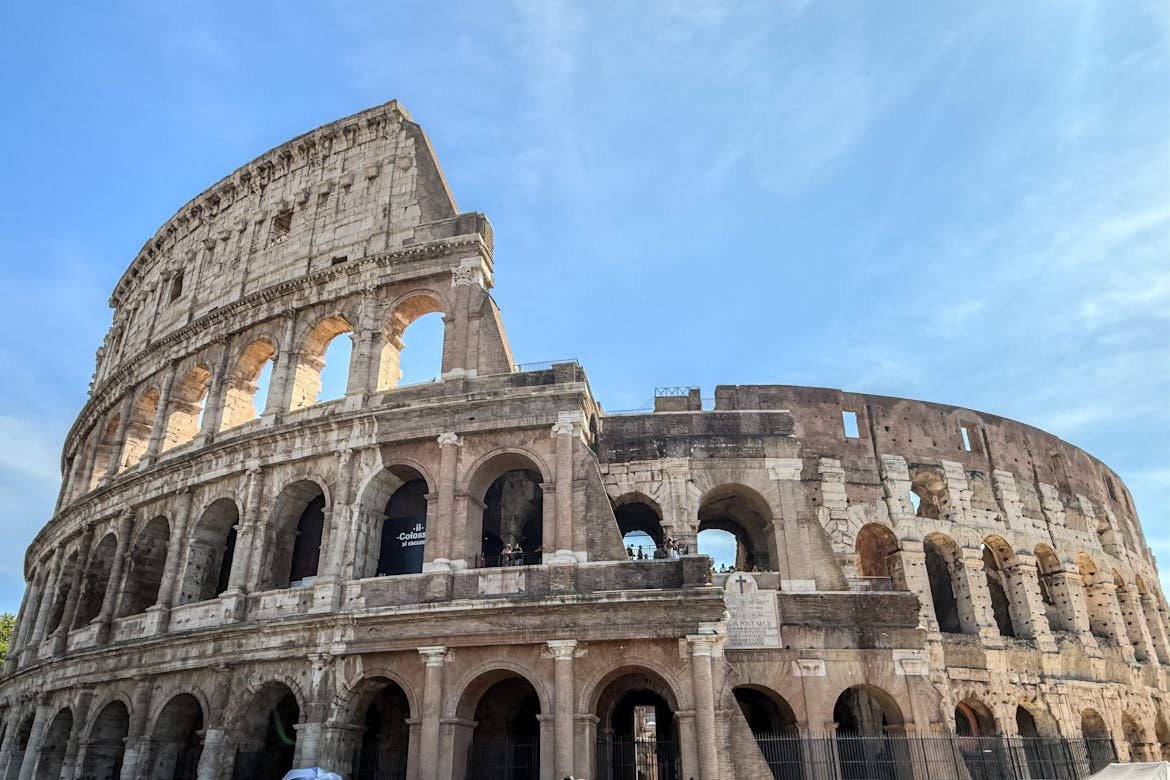
Rome’s Colosseum has entered a new phase in its long history, unveiling a restoration that reconnects visitors with the monument’s original architectural scale. Using the same travertine marble sourced by the ancient Romans, the project reconstructs elements of the structure’s outer arcades, offering a more immersive and historically grounded experience at one of the world’s most visited landmarks.
The Colosseum remains Italy’s top tourist attraction, drawing around 9 million visitors in 2025 alone. While its iconic facade has long dominated the skyline of Rome, the newly restored semicircular piazza outside the arena shifts attention to how spectators once approached and entered the amphitheater. The space, which had deteriorated over centuries and become overgrown with debris, has now been carefully reimagined to reflect its original form.
Recreating The Experience Of Ancient Rome
At the heart of the restoration is the recreation of the footprint of towering marble arcades that once framed the Colosseum’s entrance. These arches, which rose up to 50 meters high, collapsed over time due to earthquakes and unstable ground. Instead of rebuilding full columns, architects opted for a more subtle approach – placing large travertine slabs exactly where the original pillars once stood.
This design allows visitors to visualize the scale and proportions of the ancient structure while preserving the integrity of the site. The slabs also feature reproductions of Roman numerals that once guided spectators to their seating sections, adding another layer of historical context.
The restoration process revealed more than just architectural details. Excavations uncovered coins, statues, animal bones and even a gold ring, offering glimpses into daily life and activity around the arena nearly two millennia ago. Beneath the surface lies an underground passage linked to Emperor Commodus, which has recently been opened to the public, further expanding the site’s appeal.
The materials used in the project were sourced from the same quarries in Tivoli that supplied stone to ancient Rome, reinforcing the authenticity of the restoration. For local craftsmen, the project represents both a technical achievement and a cultural milestone, connecting generations of stonework tradition with one of the world’s most recognizable monuments.
The timing of the restoration also aligns with broader infrastructure improvements in Rome, including the opening of new metro stations near the Colosseum. Funded in part through these developments, the project reflects a wider effort to modernize access while preserving heritage.
As global tourism continues to rebound, projects like this highlight how historic sites are adapting to contemporary visitor expectations. By blending archaeological precision with modern design, the Colosseum’s latest transformation ensures that its story remains both accessible and relevant for future generations.