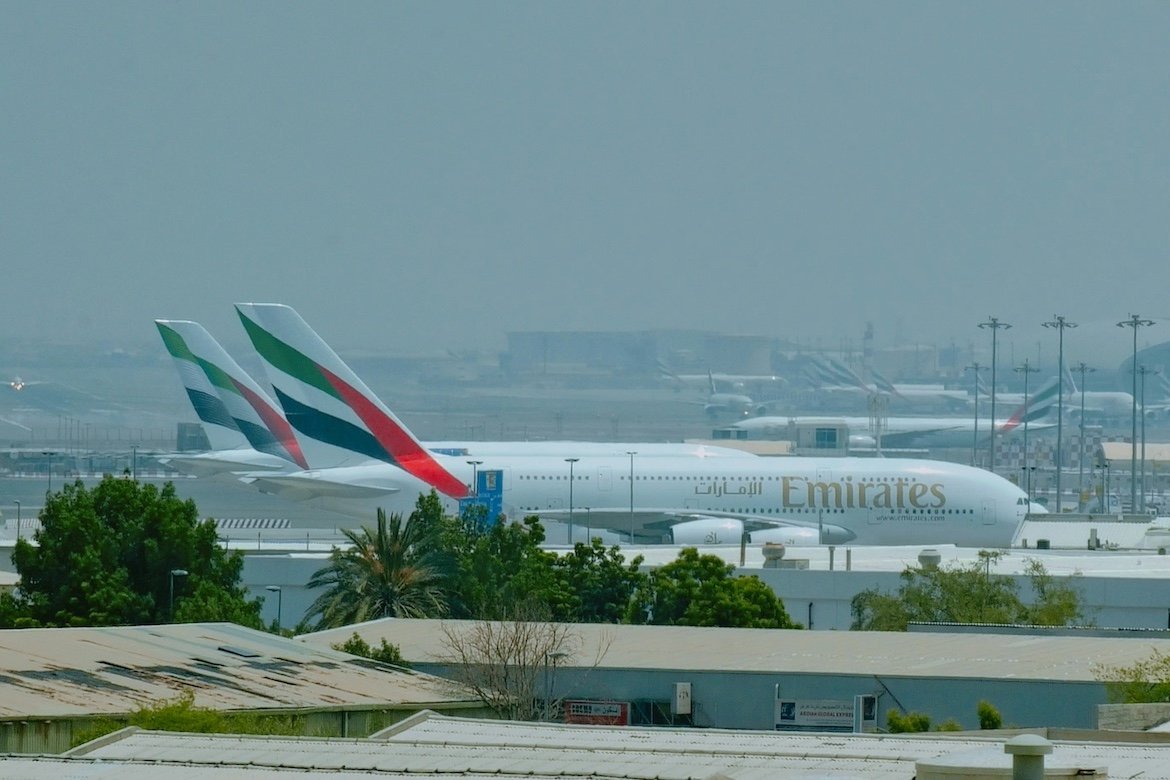
Dubai International Airport temporarily suspended all flight operations after a drone-related incident triggered a fire near one of the airport’s fuel facilities, disrupting travel at one of the world’s busiest aviation hubs.
The incident comes amid the escalating Middle East crisis, which has already begun affecting aviation and travel across the region. Rising tensions and security concerns have led airlines and airport authorities to increase precautionary measures as instability spreads across several Middle Eastern air corridors.
Authorities confirmed that debris from a drone strike caused a fire in the vicinity of a fuel tank near the airport early on March 16. Emergency services quickly responded to the incident, and Dubai Civil Defence teams later confirmed that the fire had been contained. Officials also stated that no injuries were reported and that the situation was under control.
Despite the fire being extinguished, airport authorities halted all flight operations as a precautionary measure while emergency teams secured the area and assessed the situation. Dubai International Airport, which normally handles a vast volume of international traffic, temporarily closed to both departing and arriving flights.
Dubai Airports advised travelers not to go to the airport unless they had been directly contacted by their airline with confirmed travel arrangements. With flights suspended, schedules are expected to remain fluid as airlines adjust operations and manage passenger disruptions.
Major airlines quickly issued advisories to passengers. Emirates, one of the airport’s primary carriers, confirmed that all flights to and from Dubai had been suspended until further notice. Other airlines, including Air India and Air India Express, canceled flights scheduled to operate to and from the airport, offering affected passengers the option to rebook their travel or receive a full refund.
Flights Diverted and Regional Travel Disrupted
Some incoming flights were diverted to Al Maktoum International Airport, Dubai’s secondary airport, as authorities worked to restore safe operations at Dubai International Airport. Diversions and cancellations have disrupted travel plans for thousands of passengers moving through the region.
The incident also triggered broader transportation disruptions around the airport. Dubai Police temporarily closed several major roadways near the airport, including Airport Road and the Airport Tunnel, to allow emergency services to operate safely. Authorities urged residents and travelers to use alternative routes while emergency operations were underway.
The temporary shutdown has affected not only local travelers but also international transit passengers. Dubai International Airport serves as one of the world’s largest global aviation hubs, connecting Europe, Asia, Africa and the Americas through its extensive network of long-haul routes.
Airlines across the Middle East have already been adjusting operations due to the ongoing Middle East Crisis, with some carriers suspending flights to certain destinations and others extending route cancellations as a precaution.
For example, regional airline flynas recently extended its suspension of flights to several Middle Eastern cities, including Abu Dhabi, Dubai, Bahrain, Doha, Sharjah, Syria, Kuwait and Iraq, through the end of March.
Travelers scheduled to fly through Dubai are being advised to closely monitor updates from their airlines and airport authorities, as flight schedules may continue to change while operations gradually return to normal.
Dubai International Airport remains the world’s busiest airport for international passengers, meaning even temporary disruptions there can quickly affect global travel flows and airline networks.