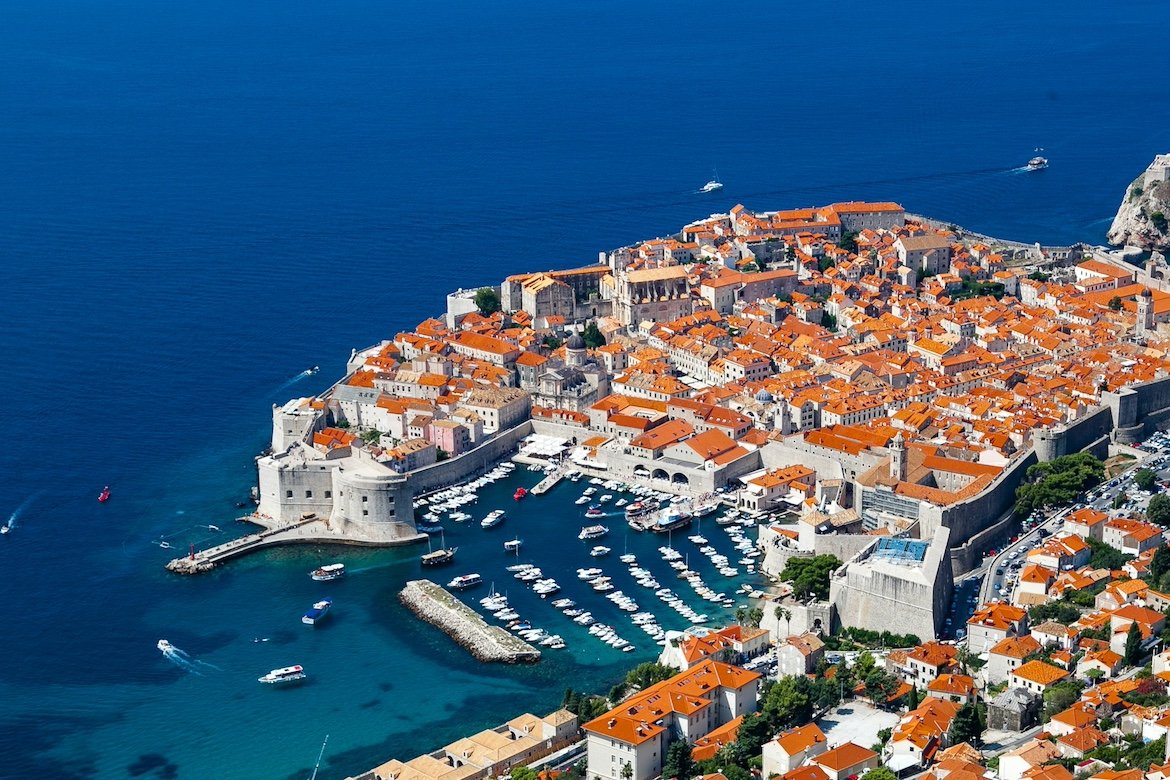
Dubrovnik has been named the European Green Pioneer of Smart Tourism 2026, one of the European Union’s highest recognitions for smaller destinations focused on sustainability, digital management, and heritage protection.
For a city that spent much of the last decade associated with cruise congestion and overcrowded streets, the award marks a notable change in how Dubrovnik is being positioned within European tourism policy. It also suggests that the city’s long effort to move from overtourism cautionary tale to managed destination is now being taken seriously beyond Croatia.
The award is important not because it declares Dubrovnik solved, but because it validates a different approach to tourism growth. City officials have argued for years that the problem was never just the total number of visitors. It was how those numbers were concentrated across the day, the season, and the urban core. That view has shaped the city’s response, which has focused less on attracting more demand and more on regulating when and how tourism enters the historic center.
From Overtourism Symbol to Policy Case Study
That shift is visible in the city’s practical measures. Dubrovnik’s Respect the City program has become the best-known example, combining local coordination, digital monitoring, and traffic management tools to reduce the pressure of mass tourism. The city has also used the Dubrovnik Pass and visitor tracking systems to better manage crowd flows, while carrying-capacity research with the University of Dubrovnik has helped frame decisions around infrastructure strain, sustainability, and visitor behavior.
Cruise tourism remains central to the story. Rather than trying to eliminate it, Dubrovnik has imposed limits designed to make it more manageable, capping cruise arrivals at two ships or around 4,500 passengers at one time. That is a significant policy signal in a Mediterranean market where many destinations still depend heavily on cruise volume while struggling with its local consequences. The city’s argument is that tourism remains welcome, but only within rules that preserve urban life and protect the old town.
The award also reflects a broader environmental agenda that goes beyond visitor numbers. Dubrovnik has expanded greener transport with new buses, including electric vehicles, while also investing in climate resilience through park renovations, roadside planting, and the addition of mature trees. It has introduced measures to reduce plastic waste at city-sponsored events and public institutions, and it has linked parts of its sustainability effort to heritage preservation through lower-emission infrastructure such as solar panels and seawater heat pumps at historic sites.
That broader framing matters because the city is now presenting tourism management as part of urban management rather than a separate industry problem. In other words, the question is no longer just how many visitors Dubrovnik can attract, but how tourism interacts with housing, mobility, public services, and the daily experience of residents.
The EU recognition gives Dubrovnik greater visibility, but it also raises expectations. Other destinations will now look at the city as a model, which means its policies will be judged by whether they hold up under continued demand. Dubrovnik’s award is therefore less an endpoint than a test. It suggests Europe is beginning to reward destinations not simply for popularity, but for showing they can put limits, data, and local quality of life at the center of tourism policy.