
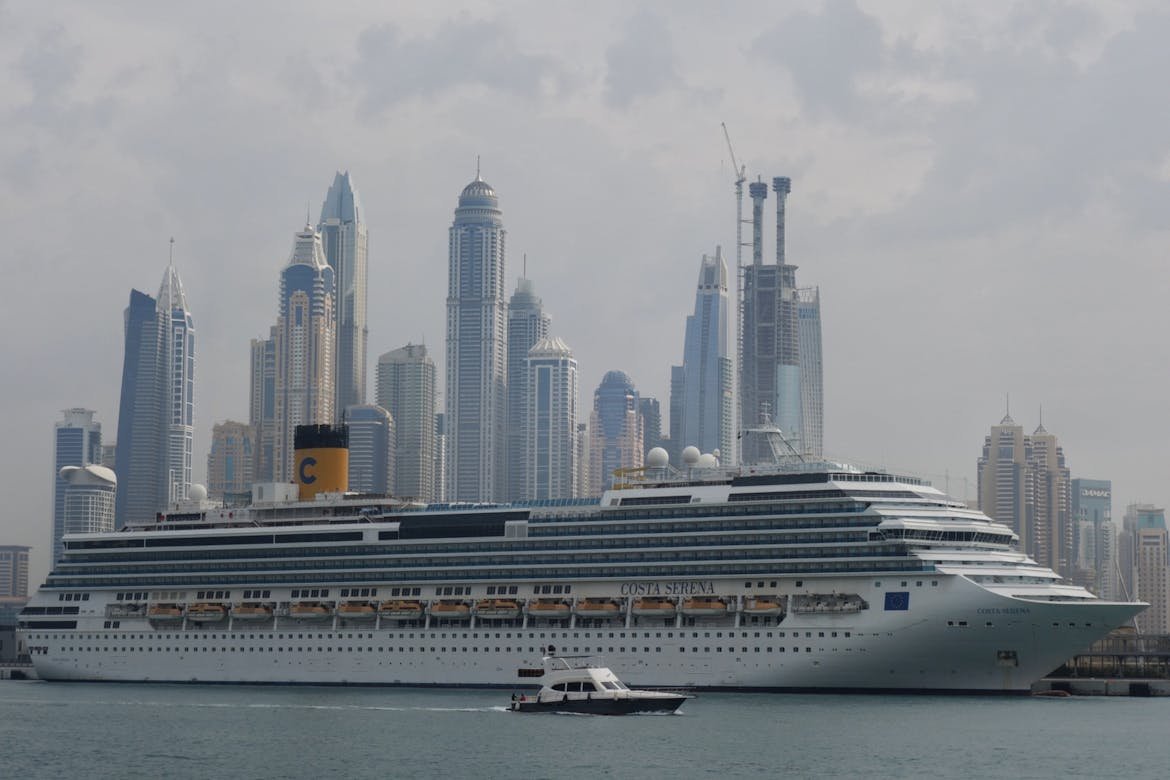
Cruise lines operating in the Persian Gulf have cancelled sailings, kept vessels in port, and begun repositioning ships as military conflict in the Middle East intensifies.
The disruption follows coordinated US-Israel strikes in Iran and subsequent retaliatory attacks across the region, which have led to widespread airspace closures, airport shutdowns, and heightened security concerns.
Industry body CLIA confirmed that cruise tourism itineraries in the Middle East are not operating at this time. Ships currently in the region are adjusting operations in line with official guidance, prioritizing safety in coordination with maritime security authorities and government partners. Operators are assessing contingency plans as the situation evolves, with safety of guests and crew cited as the primary concern.
Airlines have cancelled thousands of flights, compounding challenges for passengers seeking to return home. Dubai airport has been operating a limited number of flights, contributing to a significant backlog. Trade bodies including ABTA and Advantage Travel Partnership have highlighted the scale of disruption, calling it the most significant global air travel interruption since the pandemic and urging travelers to check directly with airlines before heading to airports.
MSC Euribia Cancels Remaining Dubai Season
MSC Cruises has confirmed the cancellation of the remaining winter sailings of MSC Euribia from Dubai. The ship had already cancelled its March 7 embarkation and has now scrapped the March 14, March 21, and March 28 departures, including all related segments from Doha and Abu Dhabi.
The vessel, which can accommodate more than 6,000 guests, remains docked in Dubai under guidance from regional authorities. MSC stated that its priority is the safety and wellbeing of guests and crew, and that it continues to work closely with airlines to facilitate onward travel as flights gradually resume. Given the scale of cancellations and limited capacity, repatriation is expected to take time.
All impacted guests will receive a full refund for cancelled sailings. However, independently arranged travel components such as airfare and hotels fall outside the cruise line’s responsibility. Guests currently onboard retain access to ship services and facilities while arrangements are made. MSC has confirmed that the ship’s upcoming European season, beginning in May from Kiel, remains unchanged.
Wider Gulf Impact on Cruise Operations
Other operators have also been affected. Celestyal cancelled two departures from Dubai and Abu Dhabi, offering guests either a full refund or future cruise credit. One of its ships will remain alongside in Doha until at least March 7, while disembarkation in Dubai is pending authorization from local authorities.
TUI Cruises has reportedly cancelled multiple sailings for two vessels in the region, while efforts are underway to fly guests home. Saudi-based Aroya Cruises has also been cited among affected operators.
Cruise itineraries in the Gulf have included ports such as Bahrain, Doha, Abu Dhabi, Dubai, and private island destinations. With air travel heavily disrupted and some regional energy operations halted, cruise lines have opted to suspend operations rather than risk further instability.
Industry representatives have emphasized that cruise ships are mobile and self-sufficient assets capable of repositioning when necessary. For now, however, Gulf deployments remain paused as operators await clearer security conditions before resuming itineraries in the region.