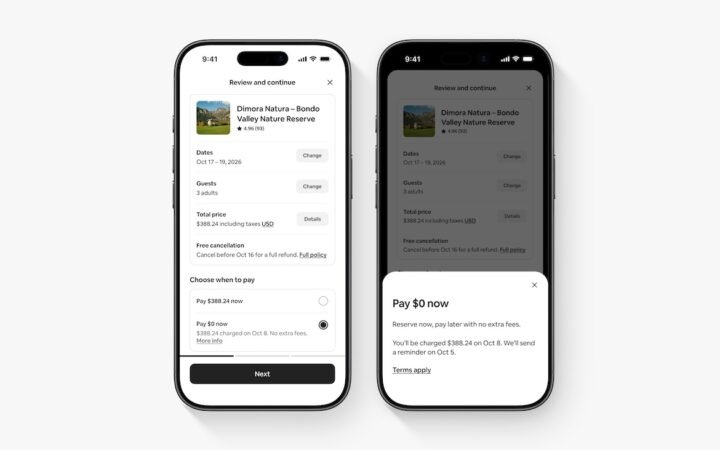


Airbnb has expanded its Reserve Now, Pay Later feature to guests worldwide, allowing travelers to secure eligible stays without making an upfront payment at the time of booking. The option, first introduced in the United States last summer for domestic trips, is now available globally for both domestic and international reservations on listings with moderate or flexible cancellation policies.
The move reflects growing demand for flexible payment options in travel. According to Airbnb, more than 70 percent of eligible bookings in the fourth quarter of 2025 adopted the Reserve Now, Pay Later feature during its U.S. pilot phase. The company said the option contributed to an acceleration in nights and experiences booked compared with the previous quarter, suggesting that payment flexibility can directly influence booking behavior.
Survey data cited by Airbnb underscores that trend. In research conducted with Focaldata among U.S. travelers, 60 percent of respondents said flexible payment options are important when booking a holiday.
More than half reported using such options when available, and one in ten said they always choose flexible payments. Notably, 42 percent said they had delayed or even missed out on preferred accommodations because of the time spent coordinating payments with travel companions.
Flexible Payments as a Competitive Strategy
By removing the requirement for immediate payment, Airbnb is positioning the feature as a way to reduce friction during the planning phase. Travelers can lock in availability early, particularly for high-demand periods such as major global events, international city breaks and peak summer travel, without committing funds upfront.
The eligibility requirement that listings carry moderate or flexible cancellation policies helps balance risk for both guests and hosts. Properties with strict cancellation terms are not included, limiting exposure in the event of cancellations while preserving host control.
Reserve Now, Pay Later complements Airbnb’s broader payment ecosystem, which includes Pay Part Now, Part Later and Pay Over Time options offered through Klarna. Together, these features place Airbnb in more direct competition with hotels and online travel agencies that have long offered deferred payment models.
Financial Strength and Market Position
The global rollout comes as Airbnb maintains a strong financial position. The company operates more than eight million active listings and connects travelers with over five million hosts worldwide. Revenue growth and profitability remain solid, supported by high gross margins and a relatively low debt-to-equity ratio.
Airbnb’s Altman Z-Score, a measure of financial health, indicates stability, and institutional ownership levels reflect continued investor confidence. While analysts note some recent insider selling activity, overall sentiment remains moderately positive, with expectations that strategic initiatives such as payment flexibility and international expansion will support future growth.
By extending Reserve Now, Pay Later to international markets, Airbnb is reinforcing its focus on reducing booking barriers and encouraging earlier trip planning. In a competitive travel environment where flexibility increasingly drives consumer choice, the ability to reserve accommodation without immediate payment could become a decisive advantage.