Starwood’s 1 Hotels has relaunched its loyalty program with new tiered perks, sustainability-driven benefits and a focus on elevated eco-luxury travel experiences.
By Yuliya Karotkaya
Published:
Updated:
Lobby interior at a 1 Hotels property featuring natural materials and eco-inspired design. Photo: Starwood Hotels
Starwood’s 1 Hotels has officially relaunched its loyalty program, introducing a refined structure designed to match the brand’s upscale, sustainability-driven identity.
Known for its eco-luxury ethos, natural design language and commitment to environmental responsibility, 1 Hotels is using this rebuild to elevate both the guest experience and its position in the premium hospitality market.
For travelers who value thoughtful design, responsible travel and elevated comfort, the update reflects a major step forward.
Enhanced Benefits with a Sustainability Focus
The refreshed loyalty program features a clear tier system, with benefits that grow meaningfully as members advance. Early check-in, late check-out and exclusive offers form the base level, while upper tiers add suite upgrades, guaranteed room availability and priority access during peak travel periods.
Unique to 1 Hotels, members can also redeem or contribute rewards toward sustainability initiatives, including carbon offsets and environmental impact projects. This blend of luxury perks and eco-driven benefits allows members to align their stays with their values.
A notable component of the relaunch is the status-match and fast-track period. Guests with elite status in other hotel programs can gain similar standing with 1 Hotels, encouraging loyalty travelers from larger chains to explore the eco-luxury brand. With new hotel openings planned around the world, the company is positioning the refreshed program as a gateway for travelers seeking premium stays with a lighter environmental footprint.
A Growth Strategy Aligned With Premium Travelers
The loyalty overhaul arrives as Starwood’s 1 Hotels continues an ambitious expansion plan, adding properties in major cities and resort destinations that appeal to high-end leisure and business travelers. As sustainable luxury becomes a defining trend in global hospitality, the timing reinforces the brand’s commitment to bridging upscale travel with environmental purpose.
For travelers planning future stays, the updated program offers tangible advantages – promotional earning opportunities, stronger perks for early adopters, and a more seamless experience across the brand’s growing portfolio. Industry analysts note that loyalty programs are becoming a central differentiator for premium hotel brands, especially those catering to travelers who want authenticity, design excellence and meaningful benefits.
In today’s travel landscape, guests expect more than points and upgrades – they look for a brand identity that reflects their lifestyle. The relaunched 1 Hotels loyalty program responds to that shift, presenting travelers with a blend of high-touch service, personalized rewards and sustainability-driven values.
As Starwood’s eco-luxury brand continues to expand globally, the new program enhances its appeal for guests who want both elevated comfort and purpose-driven travel experiences.
Apple has launched Digital ID for U.S. passports, allowing travelers to pass TSA checkpoints using only an iPhone or Apple Watch. Here’s how it will streamline domestic travel.
By Yuliya Karotkaya
Published:
Updated:
A close-up of the Apple Wallet interface displaying the new Digital ID setup screen on an iPhone. Photo: Apple
Apple has introduced its new Digital ID feature, marking a major shift in how travelers verify their identity at airports across the United States.
The feature allows users to create a secure digital identification card inside Apple Wallet using information from their U.S. passport, making it possible to pass through TSA checkpoints without ever reaching for a physical document.
As travel rebounds and airports prepare for busy periods, the arrival of Digital ID promises to simplify the domestic travel experience for millions of passengers.
A New Step Toward Seamless Airport Travel
With Digital ID now accepted at more than 250 TSA checkpoints nationwide, travelers on domestic U.S. flights can present their identity using only an iPhone or Apple Watch.
The setup process involves scanning the passport’s photo page, reading the embedded chip to verify authenticity and taking a selfie along with several facial movements for security checks. Once the Digital ID is added, presenting it at airport security requires just a double-click to open the Wallet app, followed by Face ID or Touch ID authentication.
Apple emphasizes that Digital ID is not a replacement for a physical passport and cannot be used for international travel or border crossings. Instead, it expands the range of options available to travelers who may not yet have a REAL ID-compliant driver’s license or prefer to keep their physical documents safely tucked away.
As domestic airports brace for holiday crowds, this feature could ease congestion at security checkpoints by reducing the time spent handling physical IDs.
Beyond airports, Apple plans to expand Digital ID acceptance to additional businesses and organizations. In the future, travelers may use their Digital ID for age verification, hotel check-ins or app-based identity confirmations, further integrating digital identification into everyday life.
Enhanced Security Designed for Travelers
Apple’s approach to Digital ID focuses heavily on privacy and security – two concerns that matter deeply to frequent travelers. According to the company, all passport data added during setup is stored only on the user’s device and never uploaded to external servers. Digital ID information is encrypted, and Apple cannot track when or where someone uses their ID.
Another key feature is selective data sharing. When presenting their Digital ID, travelers see exactly which information is being requested and must confirm with biometric authentication before it is shared. This process eliminates the need to hand over a phone or unlock a device, reducing risks during identity verification.
Digital ID builds on Apple’s earlier rollout of digital driver’s licenses and state IDs, already active in a dozen states and Puerto Rico. The launch also follows the introduction of digital ID support in Japan, where users can store their national My Number card on iPhone.
With the addition of U.S. passport-based Digital ID, Apple strengthens its position in transforming the airport experience. While the feature currently applies only to domestic travel, its expansion signals a future in which digital identity could play a central role in how people move through airports, hotels and travel services worldwide.
Airbnb is testing a new grocery delivery feature with Instacart, allowing guests to pre-order groceries before their stay and have hosts stock the kitchen.
By Yuliya Karotkaya
Published:
Updated:
Grocery bags ready for stocking at an Airbnb rental. Photo: Maria Lin Kim / Unsplash
Airbnb is launching a pilot program that could make travel stays more seamless for guests: grocery delivery powered by Instacart, available directly through the Airbnb app.
The three-month trial, beginning January 5, will allow travelers to order groceries ahead of their arrival and have participating hosts stock the kitchen before check-in. The program will be tested in select U.S. markets including Phoenix, Orlando, and Los Angeles.
For travelers, this offers a new layer of convenience, especially during busy trips, family vacations, or holiday gatherings. Instead of rushing to a supermarket after landing, guests can simply place an order up to three weeks in advance. Items – whether breakfast staples or supplies for a barbecue – can be waiting in the rental, making arrival day far easier.
How the Pilot Works for Guests and Hosts
During the pilot, Airbnb users can browse and order groceries via Instacart within the Airbnb app. Pre-arrival orders will be fulfilled by hosts, who will receive $25 for each completed stocking request. Hosts are responsible for receiving the delivery, unpacking the groceries, and ensuring everything is properly stored before the guests arrive.
Guests can also continue using the service during their stay, though in-stay orders will be delivered directly to them, and they will handle the groceries themselves. Airbnb noted that only “select hosts” will be part of this test phase to ensure smooth execution and gather feedback before considering a broader rollout.
A Broader Push Into Travel Services
This pilot marks another step in Airbnb’s evolving strategy to integrate more travel-related services into its app. The company has been steadily expanding beyond accommodations, experimenting with features such as in-home meal preparation, fitness sessions, and partnerships focused on enhancing the guest experience. This new grocery delivery option fits directly into that larger shift toward offering a more complete, trip-planning ecosystem.
Airbnb’s move aligns with a pattern of recent announcements centered on improving the convenience and practicality of stays. For example, the company recently introduced its new “Airbnb More” advertising campaign, which highlights how Airbnb is branching into additional services that support travelers before and during their stays. The grocery delivery pilot complements that message, reinforcing Airbnb’s intent to go beyond lodging and embed itself in the full travel journey.
For Instacart, the partnership reflects its strategy to expand through new channels as competition in the grocery delivery market intensifies. The company has recently teamed up with other platforms to broaden its reach and capture more travel-based demand.
If successful, Airbnb’s grocery delivery feature could influence how travelers prepare for their trips – particularly families, long-term guests, and groups seeking a smooth arrival. By easing one of the more tedious parts of travel, Airbnb is positioning itself not just as a rental platform but as a comprehensive, service-focused companion for modern travelers.
The 2025 Travvy Awards have honoured the best all-inclusive resorts across the globe, naming standout properties in key categories from couples to wellness and luxury.
By Yuliya Karotkaya
Published:
Updated:
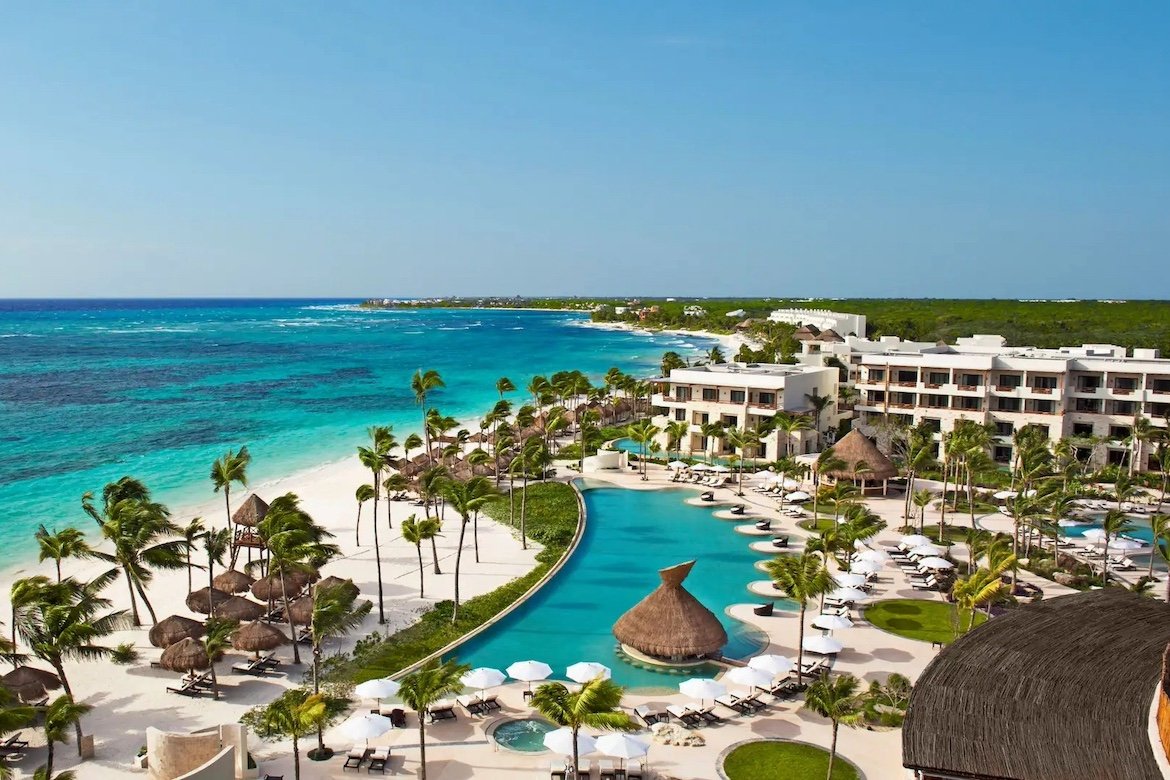
Secrets Akumal Riviera Maya, one of the 2025 Travvy Award-winning all-inclusive resorts in Mexico. Photo: Inclusive Collection
The 2025 Travvy Awards, presented by travAlliancemedia, have announced their latest winners in the highly competitive all-inclusive resort category. Celebrating properties that deliver elevated service, immersive experiences and strong guest satisfaction, this year’s awards underscore how the all-inclusive model is evolving.
Leading the pack are well-known brands such as Sandals, Secrets Resorts & Spas, and Hyatt’s Inclusive Collection, each recognised across multiple categories.
Winners at a Glance
Here are some of the standout winners from the 2025 Travvy Awards:
Best All-Inclusive Resort – Couples (Caribbean & Central America): Sandals Resorts (multiple locations)
Best All-Inclusive Resort – Families (Caribbean & Central America): Hyatt Inclusive Collection (selected properties)
Best All-Inclusive Resort for Spa & Wellness: Secrets Bahia Mita Surf & Spa (Mexico)
Each of these winners demonstrates excellence in design, amenities and an increasingly refined understanding of guest expectations. For example, the spa & wellness winner delivers curated treatments, mindfulness programming and local-culture integrations, while luxury winners emphasise high-end accommodations, elevated dining and exclusive experiences.
The sheer range of categories reflects the fact that “all-inclusive” is no longer a single product type but a spectrum of offerings tailored to different traveller segments.
Why These Awards Matter for Travellers & Industry
For travellers in search of an all-inclusive escape, the Travvy Awards provide a credible and timely guide. With the market growing and competition intensifying, award winners serve as a useful benchmark when comparing resorts. For the industry, the awards highlight shifting consumer preferences: demand is rising for immersive cultural connections, wellness offerings, and premium accommodations – not just unlimited meals and drinks.
What’s more, the breadth of winners shows that the all-inclusive concept is reaching maturity. Resorts are innovating with local-inspired design, destination-immersive excursions and multi-generational appeal. By recognising leading properties across categories, the 2025 Travvy Awards signal to operators and travellers alike that quality matters – and that the best resorts are those offering true value, flexibility and unforgettable experiences.
With this year’s winners revealed, travellers have a curated shortlist of top all-inclusive resorts to consider in their next booking. Whether you’re planning a couples’ retreat in the Caribbean, a family-friendly resort in Mexico, or a luxury wellness escape abroad, the Travvy Awards winners provide a trusted starting point for a remarkable stay.
A major Pokemon leak hints at the franchise’s long-term gaming roadmap, while Tokyo prepares to open the world’s first permanent Pokémon theme park in 2026.
The Pokémon universe is entering a major new chapter, and the developments are creating fresh buzz among travelers, especially those planning future trips to Japan.
Two major stories are unfolding at once: a new wave of leaked information about upcoming Pokémon games from Game Freak, and the confirmed opening of PokéPark Kanto, the world’s first permanent outdoor Pokémon theme park, arriving in Tokyo in February 2026.
For fans, families and pop-culture travelers, both updates point to a future where Pokémon tourism may become bigger than ever.
The first update comes from a new batch of alleged leaks tied to Game Freak. According to the information circulating online, a hacker has reportedly surfaced datamined files outlining several Pokémon projects the developer may have in the works.
While none of these details are confirmed – and some allegedly originate from early documents dating back to 2020 – they have still generated significant attention among fans.
The most discussed project is what the leaker claims to be the next mainline game: Pokémon Wind and Waves, reportedly planned for 2026 with additional content set for 2027. The supposed theme of the game is “infinity,” and early development builds allegedly experimented with MMO-inspired ideas, including shared lobby spaces, interactive quest boards, underwater exploration and large raid-style encounters.
The leak also mentions a return to Galar through another Pokémon Legends title expected sometime after 2027, and an ambitious multi-region remake referred to as Project Seed, which could allow players to walk between multiple classic regions. Additionally, the leak suggests that Pokémon Pokopia may receive new DLC. While none of this is guaranteed to appear in final releases, the rumors alone have fueled renewed interest in Pokémon-themed travel.
That excitement aligns perfectly with the second major development: the launch of PokéPark Kanto, opening February 5, 2026, inside Yomiuriland, an amusement park in suburban Tokyo. It will be the first-ever permanent outdoor Pokémon attraction, unlike earlier pop-up parks that operated only for limited periods. Covering 26,000 square meters, the new destination is designed to immerse visitors in a real-world Pokémon environment.
Guests will enter through the Pokémon Research Lab and then explore two themed zones. Pokémon Forest features shaded walking paths, rocky trails, tall grass, tunnels and life-sized Pokémon statues arranged as if they inhabit the landscape naturally.
Nearby, Sedge Town serves as the lively hub with a Pokémon Center, Poké Mart–style shops, food options and event spaces. The park will also introduce themed rides, including Pika Pika Paradise and Vee Vee Voyage, designed for children and nostalgic adults alike.
For travelers planning a trip to Japan in 2026, PokéPark Kanto is set to become a major new cultural attraction – especially with advance tickets allocated by lottery through March 31. Combined with continued global interest in Pokémon games, Tokyo may soon see a tourism boost driven by this iconic franchise.
Amid the US government shutdown, flight disruptions are pushing millions of Americans to switch to trains, buses, and car rentals ahead of Thanksgiving.
By Yuliya Karotkaya
Published:
Updated:
Passengers pass through New York’s railway station, capturing a calm but steady flow of travelers before the holiday crowds arrive. Photo: Guy Hurst / Pexels
The ongoing US government shutdown has created one of the most disruptive travel periods in years, prompting millions of Americans to rethink how they’ll reach their Thanksgiving destinations. With thousands of flights canceled daily and long security lines stretching through major airports, many are turning to trains, buses, and even one-way car rentals as more reliable options.
According to travel search engine Wanderu, bookings for rail and bus travel are up 12 percent compared to last year, with certain routes – including New York City, Washington, D.C., and St. Louis – seeing increases as high as 30 percent. Amtrak is preparing for what it expects will be its busiest Thanksgiving season ever, reporting double-digit growth in early bookings. To accommodate this surge, the company is expanding capacity along its high-traffic Northeast Corridor routes.
Intercity bus operators such as Flix and Megabus have also seen record demand. “We anticipate more travelers may turn to ground transportation in the days ahead,” said Kai Boysan, CEO of Flix North America. “We’re monitoring demand closely and prepared to add capacity where needed to ensure people can keep moving.”
Meanwhile, the nation’s airlines continue to struggle under flight reductions of up to 10 percent, leaving millions stranded. As one traveler from Boston put it, “It’s probably easier to say no to Thanksgiving this year.”
Travel Industry Raises Alarm Over Shutdown’s Impact
The surge in alternative travel modes highlights how deeply the US shutdown has shaken confidence in air travel. The U.S. Travel Association has warned that the ongoing government stalemate is already inflicting billions of dollars in economic losses on the nation’s travel sector. Airlines for America reports that flight bookings have fallen sharply, while car rental companies like Hertz have seen a 20 percent spike in one-way rentals since flight cuts began.
This comes just days after nearly 500 travel organizations – including airlines, hotels, and destination associations – signed a letter urging Congress to reopen the government before Thanksgiving.
As covered in another recent report on TravelCapybara, the U.S. travel industry is calling for immediate action to prevent “economic devastation” across communities nationwide, warning that continued shutdown-related disruptions could derail the busiest travel week of the year.
Ground transportation prices, meanwhile, are climbing. Bus fares have risen 11 percent and train tickets 10 percent compared to two weeks ago, according to Wanderu. Travelers who booked early in October avoided a 16 percent increase that continues to grow as the holiday approaches.
While the shift from skies to rails might seem temporary, it underscores a larger truth about how fragile the U.S. travel infrastructure can be when politics intervene. For now, with planes grounded and terminals packed, Thanksgiving 2025 is shaping up to be the year Americans rediscovered the rails – and the highways – as their best route home.
Singapore will introduce a new green fuel levy of up to US$32 for travelers departing Changi Airport, marking a major step in its sustainable aviation strategy.
By Yuliya Karotkaya
Published:
Updated:
A calm view of Singapore’s skyline as the city prepares to introduce its new green fuel levy for departing travelers. Photo: Hu Chen / Unsplash
Singapore is set to introduce a new green fuel levy for all air travelers departing the country, marking a landmark moment in global aviation sustainability efforts. Beginning next year, passengers flying out of Changi Airport will pay between S$1 and S$41.60 (up to US$31.95), depending on their travel class and destination.
As one of the world’s most important aviation hubs, Singapore’s move is expected to draw global attention and potentially influence other major markets.
The levy will apply to tickets sold from April 1 for flights departing as of October 1. Economy and premium economy travelers will see only modest increases – around S$1 for flights within Southeast Asia and S$10.40 for long-haul routes to the Americas.
Business and first class passengers, however, will pay roughly four times more, reflecting their larger per-passenger emissions footprint. Notably, transit passengers will not be subject to the new fee, ensuring Singapore’s competitiveness as a connecting hub remains intact. Cargo flights will also face a levy, calculated on a per-kilogram basis.
All funds collected through this initiative will go toward centralized purchases of sustainable aviation fuel (SAF), a key part of Singapore’s strategy to support greener air travel. SAF, typically produced from waste oils, agricultural byproducts, or other renewable feedstocks, remains significantly more expensive than traditional jet fuel.
By pooling funds and coordinating procurement, Singapore aims to stabilize costs and encourage broader adoption. The country has set a target to achieve a 3 to 5 percent SAF blend by 2030 – a goal aligned with international carbon-reduction commitments.
While aviation represents just 1.2 percent of global greenhouse gas emissions, demand for air travel continues to rise, placing pressure on governments and airlines to develop cleaner alternatives. Despite doubling its output last year, SAF accounts for only about 0.3 percent of global jet fuel supply, according to industry estimates.
High production costs, sourcing challenges, and scalability concerns remain major hurdles. Singapore’s green levy arrives at a key moment, coinciding with climate negotiations at COP30 in Brazil, where aviation sustainability is a central topic.
For travelers, the new duty may come as a surprise, though the final rates are lower than originally anticipated. Earlier projections suggested levies between S$3 and S$16, but a recent decline in SAF prices allowed authorities to adjust figures downward. The announcement also comes as Changi Airport is expected to reach record passenger numbers, surpassing its pre-pandemic peak of 68.3 million travelers in 2019.
Travel industry observers say the levy represents a pivotal shift: passengers will now directly contribute to the cost of transitioning toward greener skies. Whether other major aviation markets will adopt similar models remains to be seen, but Singapore’s decision underscores a growing global push toward sustainable travel practices.
Ryanair has officially eliminated paper boarding passes, requiring all passengers to use digital passes via its app – a move hailed as faster and greener but raising accessibility concerns.
By Yuliya Karotkaya
Published:
Updated:
Passengers prepare to board a Ryanair flight using digital passes on their smartphones. Photo: Marty Sakin / Unsplash
Ryanair has officially completed its transition to 100% digital boarding passes, marking a major shift in the way passengers fly with Europe’s largest budget airline.
Starting this week, travelers are no longer able to print out paper passes and must instead use the Ryanair app on their smartphones to check in and board their flights.
The move, which the airline describes as a “faster, smarter, and greener” experience, makes Ryanair the first major carrier in Europe to go entirely paperless.
A Greener, Cheaper, and Faster Experience
According to Ryanair, more than 85–90% of its 206 million annual passengers already used digital boarding passes before the change, making the shift a logical next step.
The airline says going fully paperless will help lower airport operating costs and reduce environmental waste, with an estimated 300 tons of paper saved each year. The company claims these savings will eventually translate into lower fares for customers.
The move is also part of a broader push to modernize the passenger experience through technology. Digital passes will allow travelers to receive real-time updates about boarding times, gate changes, and delays directly through the Ryanair app, offering a more streamlined and responsive travel process.
Passengers who lose their phones, experience dead batteries, or are not smartphone users will still be able to receive a boarding pass at the airport – provided they have checked in online in advance.
Ryanair CEO Michael O’Leary defended the decision, describing it as a practical update to how people already travel. “It’s patronizing to assume older people can’t adapt,” he said, noting that the airline has been preparing for this change since launching mobile boarding passes in 2014.
He added that passengers who check in before arriving at the airport will face “no issues” boarding their flights, even if technical problems arise with their phones.
Mixed Reactions and Accessibility Concerns
While Ryanair frames the move as a major sustainability milestone, not everyone is convinced it benefits all passengers equally. Advocacy group Age Action has raised concerns about digital exclusion, particularly for older travelers who may not have smartphones or internet access.
Camille Loftus, the group’s Head of Advocacy and Public Affairs, argued that “flying is already stressful enough,” and requiring passengers to navigate an app adds unnecessary pressure for those unfamiliar with digital systems.
The airline maintains that its Digital Boarding Pass (DBP) system meets all accessibility standards and that special assistance is available at every airport it serves. Still, critics argue that such policies risk alienating some customers, especially in regions with unreliable mobile service or limited digital literacy.
Despite the criticism, industry observers believe Ryanair’s move could set a new standard for the aviation industry. Other airlines, such as Delta and Wizz Air, have already experimented with biometric boarding and digital ID systems.
If successful, Ryanair’s model could accelerate the transition toward fully digital air travel, where printed tickets and physical documents become relics of the past.
For now, Ryanair passengers can expect a more tech-driven – and paper-free – experience every time they fly, signaling a future where digital travel becomes not just convenient but inevitable.
Exodus Adventure Travels is set to launch The Signature Collection in 2026, offering immersive, high-end itineraries in Japan, Morocco, Costa Rica, and beyond, designed for travelers seeking authenticity and comfort.
By Yuliya Karotkaya
Published:
Updated:
Travelers ride camels across the golden dunes of the Moroccan desert at sunset. Photo: Tomáš Malík / Pexels
Exodus Adventure Travels, renowned for its small-group adventure tours, is entering a new era of luxury exploration. The Toronto-based operator has announced the upcoming launch of The Signature Collection, a premium series of immersive journeys that elevate adventure travel to new heights.
Set to debut in early 2026, the collection will feature a curated portfolio of trips to Japan, Morocco, Costa Rica, India, and Jordan, blending authenticity, cultural depth, and elevated comfort for discerning travelers.
A New Standard in Luxury Adventure
According to Sally Cowdry, Managing Director of Exodus Adventure Travels, The Signature Collection aims to create experiences that go beyond sightseeing. “The world should be felt and not just seen,” she said, underscoring the collection’s philosophy of slow and meaningful travel. Each itinerary emphasizes quality over quantity – fewer stops, longer stays, and deeper engagement with local traditions, communities, and landscapes.
The new portfolio builds on the success of Premium Adventures, introduced by the company in 2022, which saw strong demand for curated, upscale travel. With The Signature Collection, Exodus is pushing this concept further – offering unique cultural access and regionally inspired accommodations that immerse guests in the spirit of each destination. From luxury riads in Marrakesh to traditional ryokans in Kyoto, each stay is selected to reflect the local character and charm.
Sample itineraries showcase this thoughtful design. In the “Signature Morocco: Echoes of the Minaret” journey, travelers explore Marrakesh, the Atlas Mountains, and the Sahara Desert, staying in boutique riads, mountain casbahs, and luxury desert camps. Experiences include sharing tea with a Berber family and riding camels at sunset across the dunes.
Similarly, the “Signature Japan: Through Temples & Time” itinerary invites guests to discover Japan’s spiritual and cultural contrasts—spending a night in a mountaintop temple, taking part in a private tea ceremony, and meeting an apprentice geisha in Kyoto.
Elevated Travel with Purpose
Beyond comfort and design, The Signature Collection is guided by a purpose: to help travelers connect deeply with the destinations they visit. Each tour is led by expert guides, chosen for their knowledge of local culture and ability to interpret it in meaningful ways. Rather than rushing through a checklist of landmarks, the itineraries promote a slower rhythm, allowing travelers to experience places in a more immersive and sustainable way.
Ben Colbridge, the company’s Product and Commercial Director, said the approach was deliberate: “These are not designed to be your classic first-time highlights of a country. They are slower, richer, and more intentional experiences.”
While the collection offers luxury accommodations and curated experiences, it maintains a focus on authenticity and cultural respect. The itineraries emphasize community engagement and sustainability, aligning with the company’s ethos of responsible travel.
As Exodus Adventure Travels prepares to roll out The Signature Collection in 2026, it signals not just an expansion of its product line but a redefinition of what luxury adventure travel means. By combining high-end comfort with authentic experiences and local connection, Exodus is setting a new benchmark for travelers who want both sophistication and soul in their journeys.
Air France is expanding its European winter network, offering North American travelers more frequent connections and improved access to destinations across the continent.
By Yuliya Karotkaya
Published:
Updated:
Air France aircraft at Paris-Charles de Gaulle preparing for departure. Photo: Pixabay
Air France is expanding its European network this winter, giving North American travelers a more seamless gateway to destinations across the continent. The timing is especially notable as travelers continue to navigate disruptions linked to the ongoing US Shutdown, which has pushed many to rethink their travel plans and consider more reliable international connections.
Against this backdrop, Air France’s expanded schedule strengthens Paris-Charles de Gaulle as a stable transfer hub for passengers arriving from the United States and Canada.
Expanded Domestic and European Connections
A major part of the expansion centers on France’s domestic network. Toulouse will see up to 11 daily flights from Paris-Charles de Gaulle, while Marseille will receive up to nine and Nice up to eight. These increases offer transatlantic passengers more flexibility when connecting onward to southern and southwestern France, reducing the need for long layovers and optimizing timing for both business and leisure travelers.
Air France is also elevating service within Europe. London-Heathrow will now be connected by seven daily flights, with a new early-morning option designed to match arrivals from overnight transatlantic routes. Flights to Cork will continue through the winter with four weekly operations, expanding access to Ireland’s southern region.
Italy is receiving significant attention as well. Daily flights to both Milan-Linate and Milan-Malpensa are being added, offering improved access to one of Europe’s busiest commercial hubs. Verona will operate through the winter with five weekly flights, opening more opportunities for travelers heading to northern Italy’s cultural destinations.
Meanwhile, Düsseldorf will see up to six daily flights, Munich up to five and Zurich up to four, enhancing connectivity to major business centers in Germany and Switzerland.
Growth in Leisure Routes and New Long-Haul Service
Beyond central Europe, Air France is increasing flights to popular leisure destinations. Tangier will receive up to three weekly flights throughout winter, while Tenerife will operate four weekly flights during the holiday season. These routes create easier access to North Africa and the Canary Islands for travelers seeking warm-weather getaways.
Supporting the mainline network is Transavia France, which will operate 227 routes to 109 destinations across 29 countries from its Paris-Orly base. For budget-focused travelers from North America, this offers a broad range of affordable options for reaching secondary European cities.
Looking ahead, Air France will launch a new direct service between Paris-Charles de Gaulle and Las Vegas beginning April 15, 2026. Operating three times per week on Airbus A350-900 aircraft, the route will become the airline’s 19th U.S. destination.
With these additions, Air France is creating a stronger and more versatile European network, giving North American travelers smoother connections and expanded access to destinations across the continent.
Nearly 500 travel organizations have urged Congress to reopen the government before the Thanksgiving rush, warning of massive delays, cancellations, and severe economic losses if the shutdown continues.
By Yuliya Karotkaya
Published:
Updated:
The U.S. Capitol building in Washington, D.C., during the ongoing government shutdown. Photo: Tim Mossholder / Unsplash
As the U.S. government shutdown enters its second month, the nation’s travel industry is sounding the alarm ahead of the Thanksgiving holiday rush. Nearly 500 organizations, including major hotel chains, airlines, and destination marketing bodies, have signed a joint letter urging Congress to immediately reopen the government.
The coalition, led by the U.S. Travel Association, warns that continued inaction could cause travel chaos, crippling airports and tourism-dependent communities across the country.
Mounting Delays and Growing Economic Losses
According to the U.S. Travel Association, the shutdown has already cost the travel economy more than $4 billion, with disruptions rippling through every sector. Thousands of federal employees – including air traffic controllers and TSA officers – are currently working without pay, leading to severe staffing shortages that have already caused longer airport wait times, flight delays, and cancellations.
Airports in major hubs such as New York, Dallas, and Washington, D.C. are experiencing growing pressure, while smaller airports are being forced to reduce operations altogether. With Thanksgiving – the busiest travel week of the year – fast approaching, experts say the situation could escalate quickly. Last year, more than 20 million passengers flew during Thanksgiving week, generating billions in spending that support local jobs, small businesses, and tourism-related tax revenue.
Geoff Freeman, president and CEO of the U.S. Travel Association, warned that if the shutdown continues, “travelers will pay a heavy and completely unnecessary price in terms of delays, cancellations, and lost confidence in the air travel experience.” He added that safety remains the top priority, but the system is under “extraordinary strain” that could undermine public trust.
Industry Unites to Pressure Congress
The letter to congressional leaders calls for passage of a “clean continuing resolution” to restore federal operations before Thanksgiving. Travel executives emphasized that the shutdown threatens not just travel plans but also the broader U.S. economy. Many hotels, airlines, and local tourism boards have already reported downturns in bookings, with the American Hotel and Lodging Association estimating $650 million in lost hotel business in just the first month of the shutdown.
In Washington, D.C., hotel revenue per available room dropped nearly 24% year-over-year, among the steepest declines nationwide. The ripple effects have been felt across the hospitality and service sectors, where thousands of workers depend on steady holiday travel demand.
Freeman emphasized that 60% of Americans say they would consider canceling or avoiding air travel during a shutdown, further eroding confidence at a crucial moment for the industry. “Thanksgiving should be about spending time with family, not worrying about canceled flights or endless delays,” he said.
This latest warning echoes broader concerns within the industry about the economic impact of prolonged federal gridlock. Recent analysis has shown that the U.S. travel economy has already lost more than $1 billion since the shutdown began, affecting airlines, hotels, and local destinations alike. That report highlights how the shutdown is not only disrupting air travel logistics but also undermining traveler confidence and spending habits across the nation.
The travel sector, already facing challenges from inflation and fluctuating demand, fears that if Congress does not act soon, the shutdown could derail one of the most economically vital weeks of the year. With billions of dollars and millions of travel plans at stake, industry leaders say the message to lawmakers is clear: reopen the government now – before Thanksgiving turns into a nationwide travel nightmare.
Iberostar Hotels & Resorts has opened the five-star Iberostar Selection Riviera Cancun, expanding its presence in Mexico and emphasizing sustainability through its Wave of Change initiative.
By Yuliya Karotkaya
Published:
Updated:
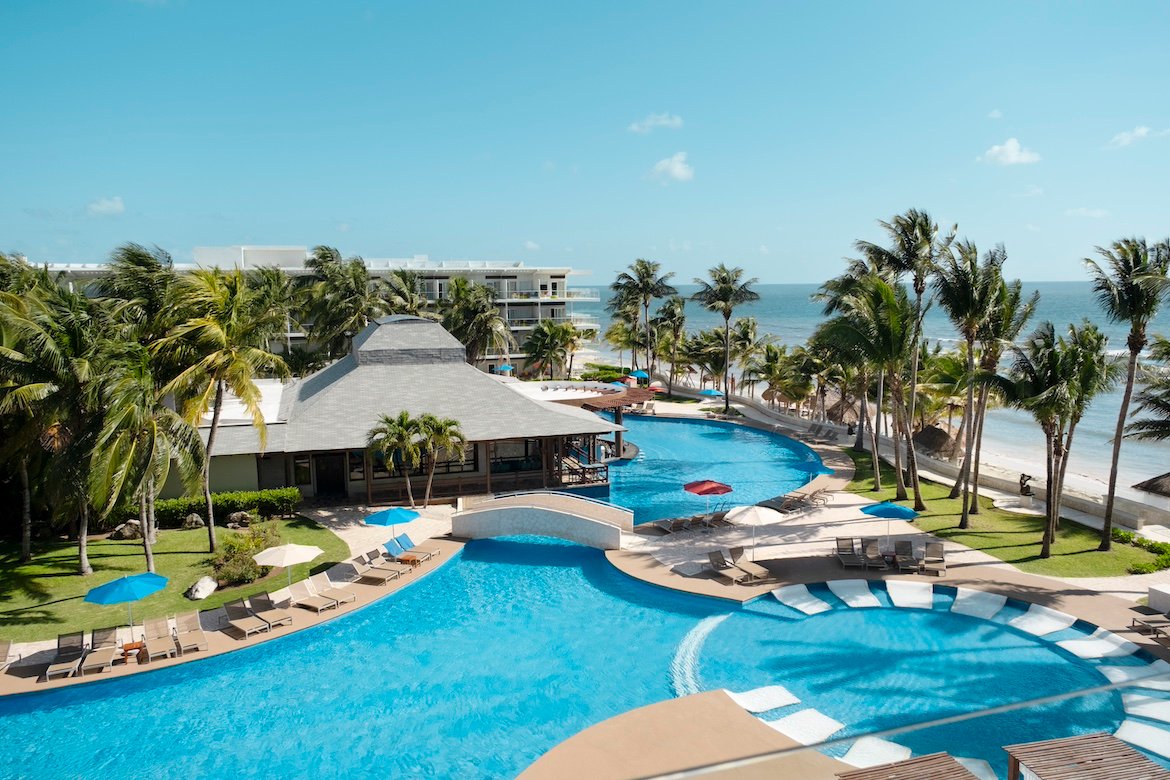
The new Iberostar Selection Riviera Cancun brings beachfront luxury and sustainable design to the Mexican Caribbean. Photo: Iberostar Hotels & Resorts
Iberostar Hotels & Resorts has expanded its footprint in Mexico with the opening of the Iberostar Selection Riviera Cancun, a five-star all-inclusive resort located near Puerto Morelos in the heart of the Riviera Maya. This latest addition marks the company’s 12th property in the country, bringing Iberostar’s total number of rooms in Mexico to over 4,400.
A New Benchmark for Caribbean Luxury
The Iberostar Selection Riviera Cancun offers 444 spacious suites, each featuring a private jacuzzi and elegant modern design. Guests can choose from several accommodation types, including family rooms, oceanfront suites, and swim-up suites with direct access to semi-private pools. Designed for both couples and families, the resort blends comfort and sophistication with the natural beauty of its beachfront location just 20 minutes from Cancun International Airport.
The culinary experience at the new property celebrates both local and international flavors. In addition to an international buffet and a wood-fired pizzeria, the resort features four specialty restaurants – L’Oliveto for Italian cuisine, Nopal for modern Mexican dishes, a Caribbean restaurant highlighting seafood and local recipes, and Martinete, which focuses on Spanish specialties. Guests can also enjoy six bars, including three swim-up options, and the signature Star Café.
CEO Phil Mc Aveety said the new opening underscores Iberostar’s commitment to excellence and innovation in hospitality. “This project reflects our mission to create unique guest experiences while reinforcing our dedication to responsible tourism and local development,” he stated. The resort is also positioned as a gateway to some of the Riviera Maya’s most stunning attractions, including the Great Mayan Reef and the Route of the Cenotes, offering travelers an ideal mix of relaxation and adventure.
Responsible Tourism and Local Impact
With the opening of Iberostar Selection Riviera Cancun, the company continues to promote its Wave of Change initiative – a sustainability program centered on reducing waste, improving coastal health, and fostering responsible consumption. The resort operates without single-use plastics, provides purified water stations, and serves responsibly sourced seafood. A dedicated 3R Team (Reduce, Reuse, Recycle) oversees waste management with the goal of achieving zero waste to landfill.
The new resort also contributes significantly to the local economy. Iberostar estimates that the property will create approximately 650 new jobs, adding to its existing team of more than 5,800 professionals in Mexico. The company also launched an intensive training program for all new staff members before opening, focusing on Iberostar’s values, guest service standards, and sustainability practices.
This opening highlights Iberostar’s strategic approach to sustainable expansion and its long-standing relationship with Mexico as a core destination. Combining Caribbean elegance, culinary diversity, and eco-conscious design, Iberostar Selection Riviera Cancun embodies the brand’s philosophy of “caring for people and the environment.”
As travelers increasingly seek meaningful, sustainable experiences, this new property represents a perfect blend of luxury, responsibility, and authentic Mexican hospitality – setting a new standard for all-inclusive resorts in the region.
New Orleans has been officially named a UNESCO Creative City of Music, celebrating its global musical influence and unlocking new international opportunities for its artists and creative economy.
By Yuliya Karotkaya
Published:
Updated:
A street musician plays the violin in the heart of New Orleans, capturing the city’s vibrant rhythm and spirit. Photo: William Recinos / Unsplash
New Orleans, long hailed as the birthplace of jazz and one of the world’s most influential music capitals, has officially been named a UNESCO Creative City of Music.
The announcement, made on World Cities Day 2025, places New Orleans among only ten U.S. cities and 408 worldwide recognized by the UNESCO Creative Cities Network (UCCN) for their commitment to fostering creativity as a pillar of sustainable development.
Global Recognition for a Living Musical Heritage
The designation honors not only New Orleans’ extraordinary contribution to global music – from jazz and blues to bounce and rock and roll – but also its continued innovation and cultural stewardship. The successful application was the result of years of collaboration between New Orleans & Company, the City of New Orleans, and an advisory board of cultural leaders who submitted the bid in March 2025.
Mayor LaToya Cantrell called the moment “a milestone for the city’s creative economy,” noting that music and its culture bearers are “the soul of New Orleans.” The designation, she said, will help amplify the social and economic vitality of the local music industry and open new doors for artists to connect globally.
Walt Leger III, President and CEO of New Orleans & Company, echoed her words, calling the achievement “a well-deserved recognition for our music community and a vital step in ensuring New Orleans’ rightful place on the global stage.”
The city’s inclusion in the UCCN will allow for partnerships, cultural exchanges, and participation in UNESCO-led initiatives that link creativity with education, sustainability, and economic growth.
Cultural icons such as Bruce “Sunpie” Barnes, Big Chief of the Northside Skull and Bone Gang, emphasized that the status will help preserve and protect New Orleans’ cultural traditions for future generations. “New Orleans is home to some of the world’s most unique cultural heritage,” he said. “Through this recognition, we can perpetuate and protect our legacy for generations to come.”
Strengthening Creative Collaboration and Cultural Tourism
For New Orleans, the UNESCO title is more than symbolic – it is a strategic opportunity to strengthen cultural diplomacy and expand creative tourism. The designation connects the city with a network of global peers, from Paducah (USA) to Rovaniemi (Finland) and Cuenca (Ecuador), all committed to using culture as a catalyst for innovation and inclusion.
Alyssa Phares, of Paducah’s UNESCO Creative City of Crafts & Folk Art, praised New Orleans’ achievement as a moment that “celebrates a legacy that has long inspired artists and audiences around the world.” The honor reinforces the city’s role as a cultural bridge, where creativity continues to unite people across borders.
To mark the milestone, the city plans to host major cultural celebrations, including a performance by Rockin’1000, the world’s largest rock band ensemble, set to take the stage at the Caesars Superdome in January 2026. Bringing together 1,000 musicians from around the world, the event will serve as a fitting tribute to New Orleans’ enduring rhythm and its newly strengthened role as a global music hub.
As one of UNESCO’s newly designated Creative Cities, New Orleans stands not only as a guardian of tradition but as a living, evolving example of how culture fuels community, innovation, and global connection. Its sound, soul, and spirit continue to define the heartbeat of a city – and now, the world is officially listening.
United Airlines has unveiled the MileagePlus Debit Rewards Card, allowing customers to earn miles not just for spending on travel but also for saving in a linked account, opening a new chapter in airline loyalty.
By Yuliya Karotkaya
Published:
Updated:
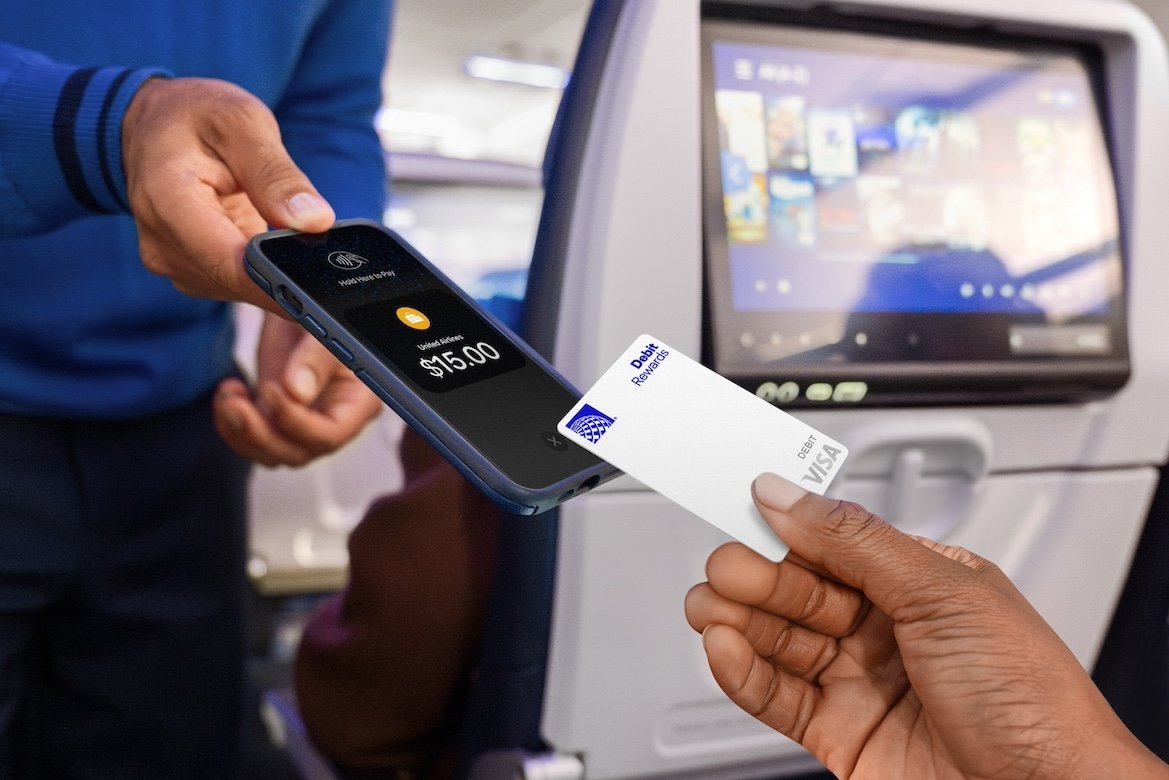
United’s new MileagePlus Debit Rewards Card enables airline miles through everyday purchases and account balances, signaling a broader loyalty strategy beyond credit cards. Photo: United Airlines
United Airlines has broadened its loyalty ecosystem with the launch of the MileagePlus Debit Rewards Card, a Visa debit card that offers members ways to earn airline miles through both everyday purchases and savings account balances.
The card, powered by Galileo’s fintech platform and issued by Sunrise Banks, targets customers who prefer debit cards over traditional co-branded credit cards and opens the airline’s MileagePlus program to a broader audience.
How the Card Works and What It Offers
Under the new program, cardholders earn one MileagePlus mile per dollar spent on United purchases – such as flights, checked bags, onboard snacks and other branded services – and one mile per two dollars spent on all other eligible purchases. For a limited time, new members can earn a 10,000‐mile bonus after opening the account and spending at least $500 within the first four months.
In addition to spending rewards, the debit card introduces savings-linked mileage bonuses: account holders can receive up to 70,000 miles annually based on their average daily balance.
For example, balances between $10,000 and $24,999 trigger 15,000 bonus miles, while $50,000 or more earns 70,000 miles per year. The monthly fee is waived if the account maintains an average daily balance of $2,000 or more, otherwise a $4 monthly fee applies.
The product does not require a credit check, making it accessible to a segment of consumers who may prefer or need a debit option rather than a credit card. Card controls allow locking/unlocking the card and setting spending limits.
According to United, the move marks a strategic expansion of its loyalty offering, designed “to add value and optionality for our members,” especially those who may not hold or wish to use credit cards.
The card supports seamless integration into the MileagePlus ecosystem: Miles earned do not expire, no blackout dates apply for award travel in many cases, and miles may be pooled with others in joint accounts. United sees this debit product as an entry point for users who spend, save and travel without relying on credit cards.
With this launch, United aims to turn everyday banking into a potential travel-reward mechanism. Its messaging emphasizes the idea that account balances and purchases can contribute to flying benefits, not just ticket bookings. The approach aligns with shifting consumer habits – particularly among younger travelers – who increasingly prefer debit over credit.
From a loyalty strategy standpoint, United’s move is significant: Rather than sticking solely to the travel wallet (flights/hotels), the airline is now inserting itself into the everyday financial behaviors of consumers. By building a banking-linked product, it deepens customer engagement and broadens revenue streams beyond traditional ticket sales.
Of course, preference will depend on individual financial behaviour. Travelers accustomed to premium credit-card benefits – such as lounge access, elite status credits or increased miles per dollar on certain spend categories – may find co-branded credit cards more rewarding. But for debit-centric users, the new MileagePlus card offers a compelling alternative to convert routine spending and savings into travel rewards.
In short, United’s debit card launch signals a clear shift: Travel rewards are no longer just about booking flights – they are about integrating with everyday financial life. For those looking to earn miles through debit spending and account balances, this product offers a new door into the world of airline loyalty.
The corporate travel giant TravelPerk has rebranded as Perk, expanding beyond travel management to eliminate time-wasting ‘shadow work’ through AI-driven automation.
By Yuliya Karotkaya
Published:
Updated:
The new Perk brand reflects a broader mission to simplify corporate workflows with AI-powered automation. Photo: Perk
Barcelona-based corporate travel platform TravelPerk has unveiled a major rebrand, adopting the new name Perk to reflect its evolution beyond travel management. The move marks a new chapter in the company’s growth, driven by its ambition to eliminate what it calls “shadow work” – the invisible, non-core tasks that drain employee time and productivity.
According to new research commissioned from Forrester Consulting, such tasks – from filing expenses to chasing approvals – cost businesses around $1.7 trillion annually in lost productivity.
The study, based on feedback from more than 700 business decision-makers and 8,000 employees across six major economies, found that employees spend an average of seven hours a week on these repetitive administrative duties. Perk’s CEO and co-founder Avi Meir said the results highlight an urgent need for smarter automation.
“More than a decade ago, we started by removing the friction from traveling for work,” Meir explained. “Over time, we realized those small, frustrating tasks weren’t just hiding in travel – they were everywhere. Perk gives companies the tools to make work simpler and give people their time back.”
Expanding Beyond Travel Through AI Innovation
Perk’s transformation centers on its AI-native spend management platform, which automates expense filing, invoice coding, and approvals. A key part of this system is Perk Pay, a new feature that enables companies to issue physical payment cards, centralizing oversight of employee spending while reducing fraud risk and streamlining expense reconciliation.
The rebrand also reflects Perk’s global ambitions. The company is establishing dual headquarters in London and Boston, expanding from its Barcelona roots to strengthen its U.S. and European operations. The move follows a string of high-profile acquisitions, including Chicago-based AmTrav and Swiss expense management firm Yokoy, both integrated to build a unified travel and expense ecosystem.
Over the past 18 months, Perk has secured $200 million in new funding, bringing its total valuation to one of the highest among travel management companies. With more than 1,800 employees across 12 offices worldwide, it currently ranks among Europe’s top travel management firms, with a strong presence in the U.K., Germany, and the U.S.
The company’s mission now extends well beyond travel booking. By leveraging artificial intelligence, Perk aims to automate the repetitive, manual tasks that slow down workflows in finance, operations, and HR departments. The company describes its new identity as a symbol of simplification – merging technology, travel, and financial management into one cohesive platform.
As Meir noted, “We’re not just about travel anymore. We’re about giving people their time back – wherever they lose it.” With its rebrand, Perk is positioning itself at the intersection of productivity and technology, redefining how companies approach both travel and everyday administrative work in the AI era.
Join our list to receive latest Blockchain, Crypto & Fintech news:
WordPress database error: [Table 'u752143311_aXVuj.wp_coingecko_coins' doesn't exist]
            SELECT coins.*, meta.post_id as post_id
            FROM `wp_coingecko_coins` coins
            INNER JOIN wp_postmeta meta ON (meta.meta_key = 'wpcf-coin-main-tag' AND meta.meta_value = coins.slug )
            ORDER BY market_cap_usd
            DESC LIMIT 9